


 русский
 Español
 عربى
عربى italiano
Content
- 1 Why "Stainless" Isn't Enough: The Grade That Matters at Sea
- 2 316 vs 304: The Metallurgy Behind the Decision
- 3 Reading the Spec: A2, A4, and ISO Grade Markings
- 4 Choosing the Right Head Style for Marine Applications
- 5 Galvanic Corrosion: The Hidden Risk of Mixing Metals
- 6 Installation Best Practices and Maintenance Tips
Why "Stainless" Isn't Enough: The Grade That Matters at Sea
A dock builder in Florida once replaced every screw on a client's boat deck—twice in three years. Both times he used fasteners labeled simply "stainless steel." Both times they failed. The third time, he switched to 316 grade, and the deck has held without issue for over a decade since.
The story isn't unusual. The marine industry is full of fasteners that are technically stainless steel but functionally wrong for saltwater use. The word "stainless" describes a broad family of alloys with wildly different corrosion performance. In a coastal garage, the difference between grades is barely noticeable. On a boat hull or dock exposed to seawater spray year-round, it can mean the difference between a fastener that lasts ten years and one that fails in ten months.
For anyone specifying, buying, or installing stainless boat screws, the grade stamped on the spec sheet matters far more than the price on the invoice.
316 vs 304: The Metallurgy Behind the Decision
Both 304 and 316 stainless steel belong to the austenitic family—they share a similar chromium-nickel base and both form a protective chromium oxide layer when exposed to oxygen. That passive layer is what makes stainless steel "stainless." The critical difference is what happens when chloride ions attack that layer.
Saltwater is loaded with chloride ions. They are extraordinarily aggressive at penetrating passive oxide films, especially at microscopic surface defects. Once chloride breaks through, corrosion accelerates rapidly beneath the surface in a process called pitting—and pitting is particularly dangerous because it is invisible until the damage is already severe.
The element that changes this equation is molybdenum. Grade 316 contains 2–3% molybdenum, which stabilizes the passive film against chloride attack and dramatically raises the alloy's resistance to pitting and crevice corrosion. Grade 304 contains no meaningful molybdenum, leaving its passive layer far more vulnerable in chloride-rich environments.
| Property | Grade 304 (A2) | Grade 316 (A4) |
|---|---|---|
| Chromium content | 18–20% | 16–18% |
| Nickel content | 8–10.5% | 10–14% |
| Molybdenum content | None | 2–3% |
| Pitting resistance (PRE) | ~18–20 | ~24–26 |
| Saltwater suitability | Limited (above-water only) | Full marine use |
| Typical application | Indoor, light outdoor | Boats, docks, coastal builds |
The practical implication: 304 screws can survive light outdoor exposure, but in any application that sees regular saltwater contact—deck hardware, hull fittings, dock structures, or below-waterline fasteners—316 is the only appropriate choice. Using 304 in these locations is not a cost saving; it is a deferred replacement cost with interest.
Reading the Spec: A2, A4, and ISO Grade Markings
Walk through any fastener catalog and you will encounter both numerical grades (304, 316) and ISO letter grades (A2, A4). They describe the same materials through different classification systems, but knowing how they correspond prevents costly purchasing errors—especially when sourcing from international suppliers.
Under ISO 3506, austenitic stainless fasteners are classified by steel group and strength class. A2 corresponds to 304 stainless, the general-purpose grade suitable for most indoor and light outdoor applications. A4 corresponds to 316 stainless, the marine-grade alloy with molybdenum. A product marked A4-70 is 316 stainless with a tensile strength of 700 MPa—the most common specification for structural boat screws.
When reviewing a supplier's data sheet, look for explicit grade identification. A listing that says only "stainless steel" without specifying A2, A4, 304, or 316 should be treated with caution. Reputable manufacturers mark their fasteners clearly, because the grade is a functional specification, not just a marketing label. If a product cannot be traced to a confirmed alloy composition with a material test report, it should not go on a boat.
One additional note on strength: A4 (316) has slightly lower yield strength than A4-80 variants, but for the fastener sizes used in most marine hardware—deck screws, cleat bolts, and panel fastenings—this difference is rarely a design constraint. Corrosion performance, not tensile strength, is the governing factor in marine screw selection.
Choosing the Right Head Style for Marine Applications
Grade is the most important decision, but head style is the next. Boats use a wider variety of fastener head types than most structures, because the applications range from flush deck surfaces to structural through-bolts to lightweight panel attachments—each demanding a different load distribution and tool access profile.
Pan head screws have a low, rounded profile with a flat bearing surface underneath. They work well for securing hardware to vertical or interior surfaces—instrument panels, cable clips, vent covers—where a protruding head is acceptable and broad clamping area is useful. stainless machine screws for through-bolted deck hardware in pan head configurations are a reliable choice for interior mountings that require precise thread engagement.
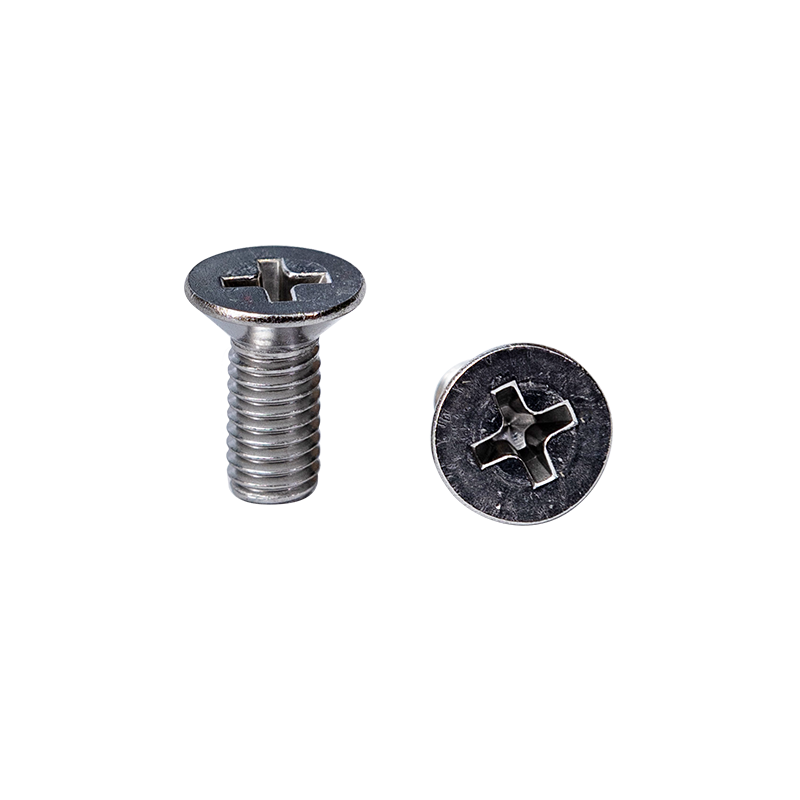
Countersunk (CSK) flat head screws sit flush with the surface when driven into a countersunk hole. On decks, teak trim, and any surface where a projecting head creates a trip hazard or aesthetics matter, flush-mount fasteners are standard. They also eliminate the snag points that catch lines and cause chafe. Self-tapping versions in 316 are particularly useful for securing fiberglass panels, rub rails, and hatches without pre-tapping.
Hex head cap screws are used wherever torque demands exceed what a Phillips or Torx drive can deliver—structural keel bolts, engine mounts, and through-hull fittings where controlled tightening with a wrench is necessary. They are not screwed flush and are intentionally accessible for periodic inspection and re-tightening.
For most above-deck hardware fastenings—cleats, stanchion bases, sheet leads, and winch bases—self-tapping stainless steel screws for marine panel installation offer speed and holding strength in fiberglass and composite substrates without the need for a backing nut. Where load-bearing applications demand it, pair them with a backing plate and a locking fastener.
Galvanic Corrosion: The Hidden Risk of Mixing Metals
Stainless steel screws can corrode rapidly even when the grade is correct—if they are installed in contact with the wrong neighboring metal. This is galvanic corrosion, and it is driven by a simple electrochemical principle: when two dissimilar metals share an electrolyte (saltwater serves perfectly), the less noble metal gives up electrons and degrades while the more noble metal is protected.
Stainless steel sits high on the galvanic series, which means it is the protected metal in most pairings. The problem is that the sacrificial metal in these pairings is often the surrounding structure. Aluminum is the most common victim. When stainless screws are driven directly into aluminum alloy without isolation, the aluminum corrodes aggressively, with visible white oxidation forming around the fastener base within months in a saltwater environment. Bronze and brass fair better, as they are closer to stainless on the galvanic series, but pairings still warrant attention.
As BoatUS technical experts explain in their widely cited analysis of how stainless steel fasteners corrode in real marine conditions, even correctly graded stainless can fail when water is trapped between the fastener and the surrounding material, cutting off oxygen and collapsing the passive film. This crevice corrosion is especially common under deck hardware that lacks proper bedding compound.
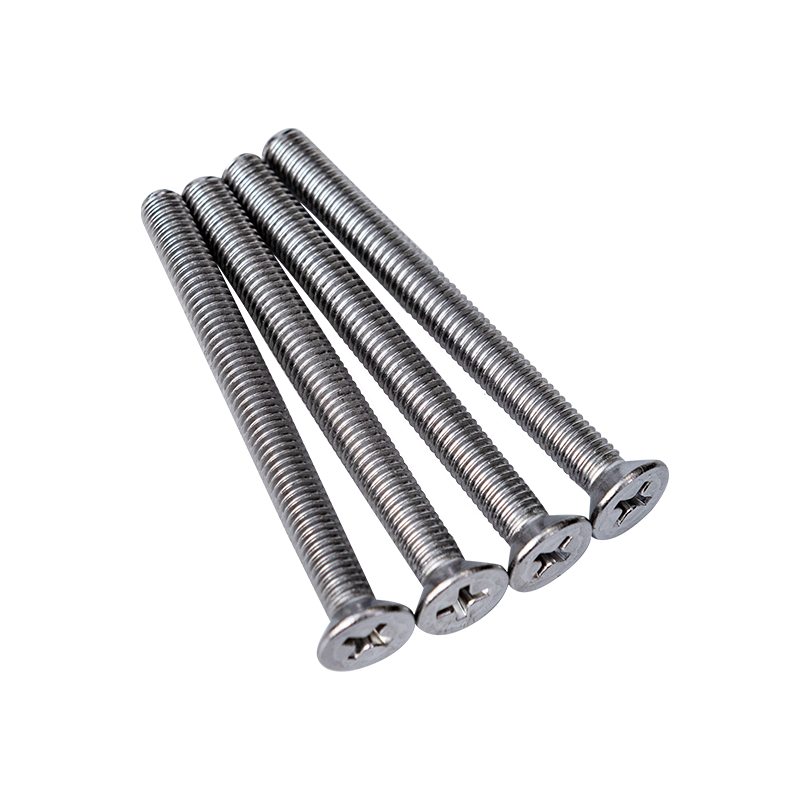
The mitigation strategy is straightforward. Use stainless flat washers to isolate dissimilar metal contact where direct fastener-to-metal contact would create a galvanic couple. Bed all deck hardware with a marine-grade polysulfide or polyurethane sealant to exclude water and maintain the oxygen environment around the fastener shank. In aluminum-to-stainless joints, a nylon or PTFE isolating bushing prevents direct metal contact entirely.
Installation Best Practices and Maintenance Tips
Even the best 316 A4 screws fail early when installed carelessly. A few engineering-level installation habits extend fastener life dramatically in marine environments.
Always pre-drill. Driving stainless screws into fiberglass or hardwood without a pilot hole creates excessive friction, heats the screw shank, and can strip the drive recess before the screw is fully seated. The pilot hole diameter should match the screw's root diameter, not its thread outer diameter. In softwood or composite decking, slightly undersizing the pilot preserves thread engagement while still protecting the fastener during installation.
Use an anti-seize lubricant. Stainless steel is prone to galling—a phenomenon where the passive oxide layers on mating threads weld together under friction and heat, locking the fastener permanently. A thin application of Tef-Gel, Duralac, or dedicated stainless anti-seize compound on the threads before installation prevents galling without compromising corrosion protection. This is not optional for any fastener intended to be removable later.
Control torque at the final drive. Stainless screws have lower yield strength than carbon steel equivalents of the same size. Overtightening with a high-speed driver strips threads and can fracture smaller gauge screws. Drive at low speed and finish by hand or with a torque-limited driver set to the manufacturer's specification. For structural fastenings, pair with self-locking nuts to resist vibration loosening in marine assemblies rather than relying solely on fastener friction.
Inspect on a seasonal schedule. Even correctly installed 316 fasteners deserve an annual inspection in high-exposure locations—waterline fittings, deck hardware, and keel bolts. Check for surface staining (early-stage corrosion), weeping discoloration around hardware bases (water intrusion), and any visible pitting around screw heads. A fastener showing active pitting should be replaced immediately; the corrosion front below the surface is always larger than the visible damage suggests.
Replace sealant when removing hardware. The bedding compound around deck hardware degrades over time and loses adhesion. Whenever a screw is removed for inspection or hardware replacement, clean the hole thoroughly, apply fresh sealant, and re-bed the fitting before re-fastening. Skipping this step turns what was a well-protected fastener into a water intrusion point.
The right stainless boat screw, correctly specified and properly installed, should outlast the hardware it secures. The shortcut of using generic "stainless" at lower cost almost always costs more across the life of the boat—in replacement hardware, in structural damage from water ingress, and in the labor of a repair that was entirely preventable.

 No. 2 Bridge, Chuangxin Road, Dainan Town, Xinghua City, Taizhou City, Jiangsu Province
  +86-17315333748(Wechat)
 +86-17315333748(Wechat/Whatsapp)

