


 русский
 Español
 عربى
عربى italiano
A maintenance technician pulls an M10 bolt from a mixed bin, spins a nut onto it by hand, and feels it seize after two turns. The shank diameter is right. The pitch is not. Thread pitch — the axial distance from one thread crest to the next — decides whether a bolt and a nut become one working assembly or two scrapped parts, and it is the dimension most often left off a shorthand label.
The rule worth keeping: always specify diameter and pitch together. "M10" is an incomplete callout; "M10 x 1.5" is not. The sections below cover what pitch actually measures, how coarse and fine series behave in service, how to identify an unmarked bolt at the bench, and how to write a callout a supplier can build to.
Content
- 1 What Thread Pitch Actually Measures
- 2 Coarse or Fine Pitch? Decide Before You Order
- 3 Three Ways to Measure Pitch at the Bench
- 4 Metric and Inch Pitches That Almost Match
- 5 Where Pitch Decisions Cause Real Failures
- 6 Pitch, Material and Corrosion: Two Separate Choices
- 7 How to Write Pitch on a Purchase Order
What Thread Pitch Actually Measures
Pitch is the distance between adjacent thread crests, measured parallel to the bolt axis. Metric threads state it directly: an M10 x 1.5 bolt advances 1.5 mm along its axis for each full turn. Inch threads invert the logic and count crests per inch, so a 1/2-13 UNC bolt carries 13 threads in one inch, a pitch of roughly 1.954 mm. A larger number after the diameter therefore means a coarser thread in metric sizes and a finer thread in inch sizes — the single most common source of confusion between the two systems.
Diameter and pitch are independent variables. The same M10 body can be cut at 1.5, 1.25, 1.0 or 0.75 mm pitch, and only one of those will accept the nut already in your hand.
| Nominal size | Coarse pitch (mm) | Common fine pitch (mm) |
|---|---|---|
| M6 | 1.00 | 0.75 |
| M8 | 1.25 | 1.00 |
| M10 | 1.50 | 1.25 |
| M12 | 1.75 | 1.25 |
| M16 | 2.00 | 1.50 |
| M20 | 2.50 | 1.50 |
| M24 | 3.00 | 2.00 |
Coarse series — the larger pitch for a given diameter — is the catalog default across ISO, DIN and GB standards. Fine series sits alongside it, usually as a stocked item in stainless steel lines and a special order in carbon steel.
Coarse or Fine Pitch? Decide Before You Order
Conclusion first: unless something in the joint demands fine pitch, specify coarse. Coarse threads assemble faster, tolerate dirt and minor damage, resist cross-threading, and are stocked almost everywhere. Fine threads solve specific problems and introduce specific risks in exchange.
When coarse pitch is the safer choice
- Soft or low-strength materials. Deeper thread engagement resists stripping in aluminium, brass and castings.
- Field service and dirty environments. Fewer, deeper threads shrug off grit, paint and light burrs.
- Assembly speed. A 1.5 mm pitch needs fewer turns than a 1.25 mm pitch to reach the same clamp length.
- Standard structural work, where DIN 933, ISO 4017 or GB/T 5783 hardware is expected.
When fine pitch earns its cost
- Vibration. The shallower lead gives a stronger self-locking tendency, which is why fine threads appear on machinery that shakes.
- Thin walls. A shallower thread depth leaves more material in a tube or boss.
- Adjustment and sealing. Fine pitch moves less per turn and is common on fluid and pneumatic fittings.
- Tensile capacity. For the same nominal diameter, a fine thread has a larger stress area and a higher breaking load.
One warning is worth repeating: coarse and fine threads of the same diameter will engage for about one turn and then bind. Forcing them shears metal off both threads. If a nut does not spin on by hand through its full length, stop and check the pitch.
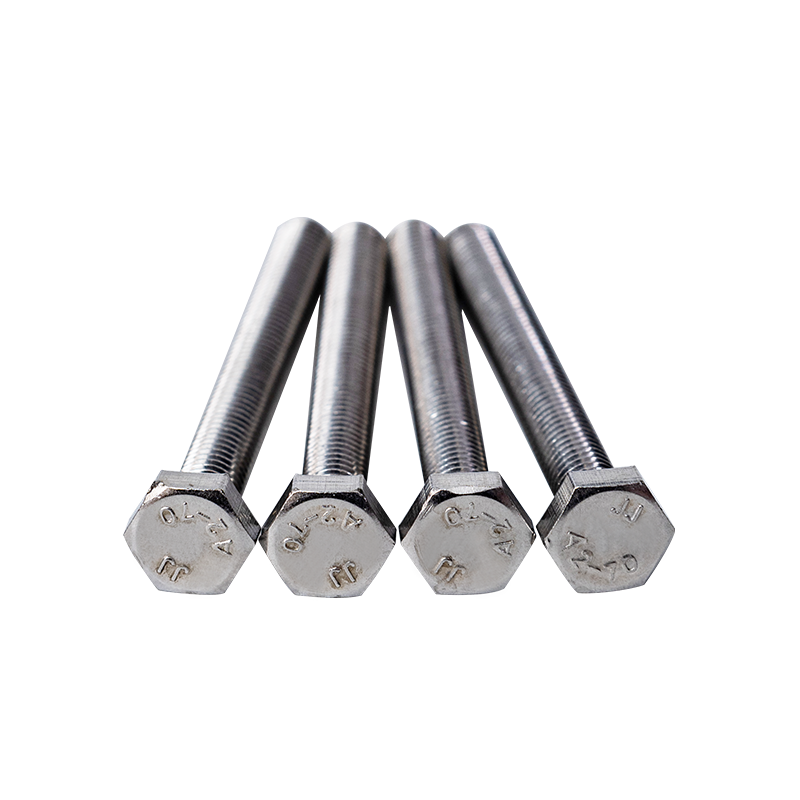 SS304 DIN933 M10 Hexagon Head Bolts, Stainless Steel A2-70Check this SS304 DIN933 M10 hex bolt when verifying metric thread pitch, with A2-70 grade, DIN standard, and 16–200 mm lengths.View Product →
Three Ways to Measure Pitch at the Bench
- Use a thread pitch gauge. Hold the leaves against the thread and find the one that seats with no visible gap. Metric gauges read in millimetres, inch gauges in threads per inch. It takes seconds and never damages the part.
- Count and divide. Measure across ten crests with a caliper, then divide by ten. For inch fasteners, measure exactly 25.4 mm along the thread and count the crests inside that span.
- Test against a known mate. A nut from a labelled bin that threads on smoothly and seats fully confirms the pitch; one that stops after a turn or two rules it out.
The count-and-divide result should land within about 0.05 mm of 1.0, 1.25, 1.5, 1.75, 2.0 or 2.5 mm for standard metric sizes. If it sits between two of those values, the thread is damaged, worn, or not what the label claims.
Metric and Inch Pitches That Almost Match
The pairs below cause real trouble at the parts counter, because the diameters are close enough to start threading.
| Designation | Major diameter | Pitch |
|---|---|---|
| M8 x 1.25 | 8.00 mm | 1.25 mm |
| 5/16-18 UNC | 7.94 mm | 1.41 mm |
| M10 x 1.5 | 10.00 mm | 1.50 mm |
| 3/8-16 UNC | 9.53 mm | 1.59 mm |
| M12 x 1.75 | 12.00 mm | 1.75 mm |
| 1/2-13 UNC | 12.70 mm | 1.95 mm |
A 3/8-16 nut will begin to thread onto an M10 x 1.5 bolt: the major diameters differ by only 0.47 mm and the pitches by under 0.1 mm. It will not seat, and two turns are enough to flatten both threads. Treat any metric-to-inch substitution as a design change, not a hardware swap.
Where Pitch Decisions Cause Real Failures
Three patterns repeat in the field.
- Vibration loosening. Coarse threads on engines, pumps and vibrating frames back out over time. Fine pitch, a nylon-insert lock nut or a threadlocker addresses this; tightening harder does not.
- Cross-threading at assembly. Power tools drive a coarse nut onto a fine bolt in under a second. The first two turns feel normal, and the thread is already ruined.
- Galling in stainless assemblies. Austenitic grades such as SS304 and SS316 can cold-weld to themselves during tightening, and deep engagement with fine pitch accelerates it. Slower driving speed and a nickel-based anti-seize compound reduce the risk.
Engagement length matters as much as pitch. A practical target is at least one times the nominal diameter of thread engagement in steel, and more in softer materials. A joint with the correct pitch but half the needed engagement fails just as reliably as one with the wrong thread.
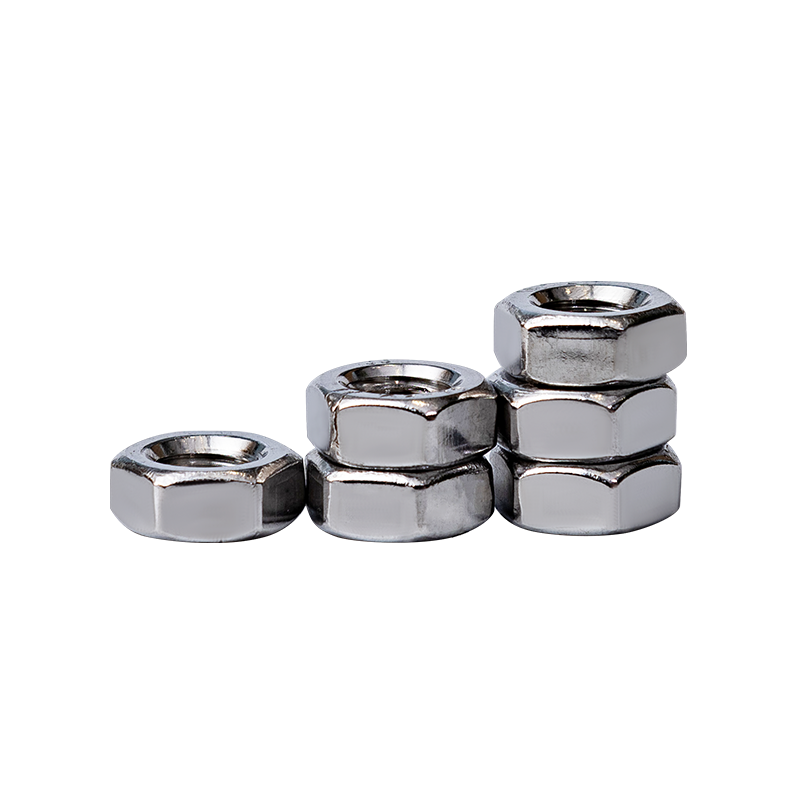 SS304 DIN934 M10 Hex Nuts, A2-70 Stainless SteelCompare this M10 hex nut for secure clamping; nearby notes explain pitch geometry and how SS304 differs from SS316 in chloride service.View Product →
Pitch, Material and Corrosion: Two Separate Choices
Pitch is geometry; alloy is chemistry. Changing one never fixes the other. An M10 x 1.5 thread is identical whether it is cut into SS304 or SS316 — what changes is how the fastener behaves in chlorides, marine air and process chemicals. Buyers weighing the two grades against a project specification can compare real service conditions in our note on choosing between 304 and 316 stainless steel hex bolts before locking in a purchase order.
How to Write Pitch on a Purchase Order
A complete callout has five fields, and pitch is the one most often dropped.
| Field | Example | What goes wrong when it is omitted |
|---|---|---|
| Diameter and pitch | M12 x 1.75 | The supplier ships the default coarse pitch and a fine-pitch nut will not fit |
| Standard | DIN 933, ISO 4017, GB/T 5783 | Head dimensions, thread length and tolerances may not match the drawing |
| Material grade | A2 (SS304) or A4 (SS316) | The wrong alloy arrives and corrosion performance in coastal or chemical service changes |
| Length | 60 mm, measured under the head | Ambiguity between full-thread and part-thread lengths |
| Tolerance class | 6g external, 6H internal | Loose or tight fits, especially after coating or plating |
Adding "x 1.5" to a callout costs nothing and prevents most returns. Suppliers running DIN, ISO and GB tooling on the same floor can turn out both coarse and fine series in a single shipment, so there is rarely a reason to leave the pitch off the drawing.
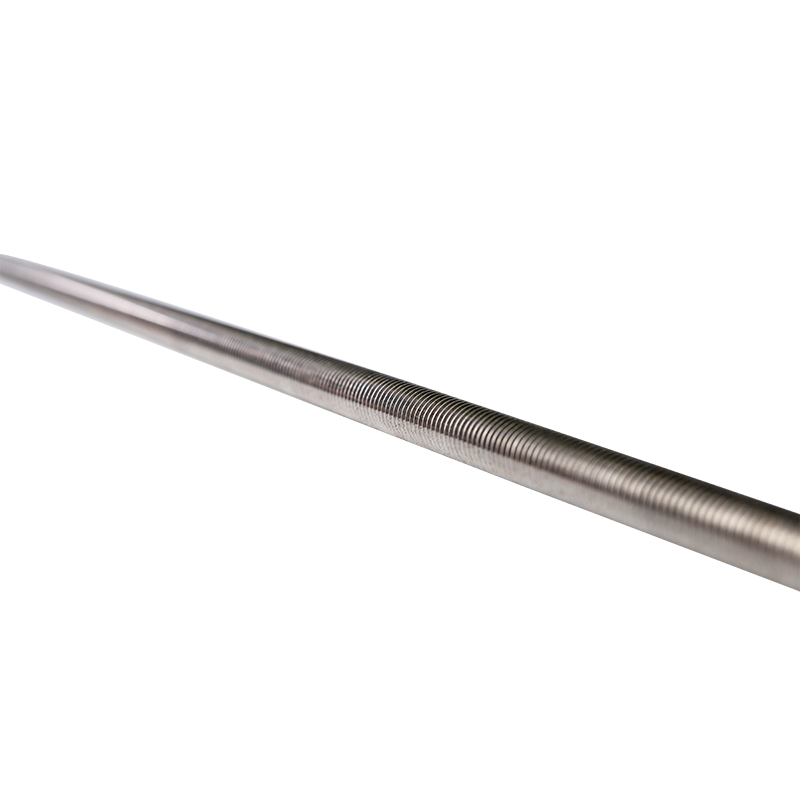 SS304 DIN975 M10 Threaded Rods, Coarse Full ThreadReview this M10 threaded rod for full-thread fastening; the following note stresses stating pitch and avoiding metric/inch near-misses when ordering.View Product →
Thread pitch is a small number with an outsized effect on assembly cost. Check it when a bolt arrives, state it when you order, and treat any near-miss between metric and inch sizes as a hard stop rather than a workable compromise. A thread gauge on the bench and one extra field on the purchase order prevent most of the failures described above — and when volumes justify consolidation, a stainless steel fastener supplier that stocks both coarse and fine series removes a second purchase order entirely.

 No. 2 Bridge, Chuangxin Road, Dainan Town, Xinghua City, Taizhou City, Jiangsu Province
  +86-17315333748(Wechat)
 +86-17315333748(Wechat/Whatsapp)

