


 русский
 Español
 عربى
 italiano
Thread size is not one number. An M10 bolt can be M10 x 1.5, M10 x 1.25, or M10 x 1.0, and all three read close to 10 mm across the outside of the thread. The quick answer is: measure the major diameter, measure the pitch or threads per inch, then confirm the result against a standard thread chart or gauge. For a screw or bolt, also measure length from the correct reference point. That sequence takes a few minutes and prevents most wrong-part orders.
Content
- 1 The three measurements that define thread size
- 2 How to measure the major diameter without a false reading
- 3 How to measure thread pitch or TPI
- 4 When the thread is a pipe thread
- 5 Check the result against a standard, not just the caliper
- 6 From measurement to a standard stainless fastener
- 7 What to put in a purchase request
The three measurements that define thread size
Start with the thread, then the part. Thread size is defined by nominal diameter and pitch; length only tells you whether the part fits the joint.
- Major diameter: the outside diameter across the crests of an external thread. This is the reading most people mean when they put calipers on a bolt.
- Pitch or TPI: the distance between thread crests in millimetres, or the number of full threads in one inch.
- Length: for most bolts, from under the head to the end; for countersunk screws, overall length; for studs and threaded rods, overall length and thread length both matter.
For external threads, the caliper reading across the crests should be close to nominal. For internal threads, a caliper reading inside a nut or threaded hole is the minor diameter, not the nominal size. An M10 nut will not measure 10 mm across the inside of its thread. Use a pitch gauge, a known mating bolt, or a thread plug gauge for internal threads.
How to measure the major diameter without a false reading
A caliper is accurate enough for identification when you use it carefully. The risk is not the tool; it is measuring the wrong part of the thread or rounding the result to the size you expected.
- Clean the thread with a cloth and remove burrs, plating flakes, or dried sealant.
- Close the caliper jaws and check that the display returns to zero.
- Place the jaws across the thread crests, not in the valleys, and keep the caliper square to the axis of the screw.
- Take two or three readings about 90 degrees apart and use the largest stable reading.
- Compare the result with a thread chart, then verify pitch separately.
A 10 mm nominal thread does not have to measure exactly 10.000 mm. A 6g external thread is intentionally smaller than nominal, and rolled threads can sit slightly under the ideal crest. If the caliper shows 9.78 mm on an M10, that does not make it an M9.8. It may be a normal M10 within tolerance. The pitch and standard confirm it.
How to measure thread pitch or TPI
A thread pitch gauge is the fastest reliable tool. Match the leaves to the thread until the teeth sit flat in the valleys without rocking. Read the pitch in millimetres or TPI from the gauge. For metric threads, the number is the distance from one crest to the next. For imperial threads, count how many full threads fit in one inch.
Metric coarse and fine threads can look almost identical to the eye. M10 coarse is 1.5 mm pitch; M10 fine may be 1.25 mm or 1.0 mm. M12 coarse is 1.75 mm; common fine pitches include 1.5 mm and 1.25 mm. A caliper alone will not separate them cleanly because the diameter is the same. A pitch gauge, a known nut, or a thread chart is needed.
| Nominal size | Coarse pitch (mm) | Nominal major diameter (mm) | Typical external reading |
|---|---|---|---|
| M6 | 1.0 | 6.0 | Usually slightly under 6 mm |
| M8 | 1.25 | 8.0 | Usually slightly under 8 mm |
| M10 | 1.5 | 10.0 | Commonly around 9.8 to 9.97 mm |
| M12 | 1.75 | 12.0 | Commonly around 11.7 to 11.95 mm |
| M16 | 2.0 | 16.0 | Commonly around 15.7 to 15.95 mm |
When the thread is a pipe thread
Pipe threads are the common trap. A 1/4 NPT fitting does not measure 0.250 inch across the thread; it is about 0.540 inch with 18 TPI. A 1/4 BSP thread is about 0.518 inch with 19 TPI. The thread angle also differs: NPT is 60 degrees, BSP is 55 degrees. If you are measuring a hydraulic or pneumatic fitting, identify the pipe standard before you use a metric or UNC chart.
For tapered pipe threads, the diameter changes along the thread, so a single caliper reading is only a starting point. Check the thread form, TPI, and sealing method. A thread that fits by diameter but has the wrong angle or taper will leak or seize under pressure.
Check the result against a standard, not just the caliper
Convert the measurement into the same language as the part number. Metric external threads are written as M10 x 1.5; imperial unified threads as 3/8-16 UNC. Then confirm the thread class. Metric external threads are commonly 6g and internal threads 6H; imperial threads may be marked 2A or 2B. A caliper can identify the family, but it cannot prove that a thread will pass a go/no-go gauge.
For production, safety-related joints, or repeated assembly, use ring gauges for external threads and plug gauges for internal threads. For one-off repair work, a known mating nut or bolt is often enough, provided it is in good condition. Check coating as well: plated threads can measure slightly larger than bare threads, and damaged crests can make a correct thread look undersized.
From measurement to a standard stainless fastener
Once the size is confirmed, choose the product by standard and material, not by appearance. A stainless hex bolt to DIN933 is specified by nominal diameter, pitch, length, and material; a mating nut to DIN934 must share the same pitch. A coarse M10 nut will not seat correctly on an M10 x 1.25 fine-thread bolt even though both are called M10.
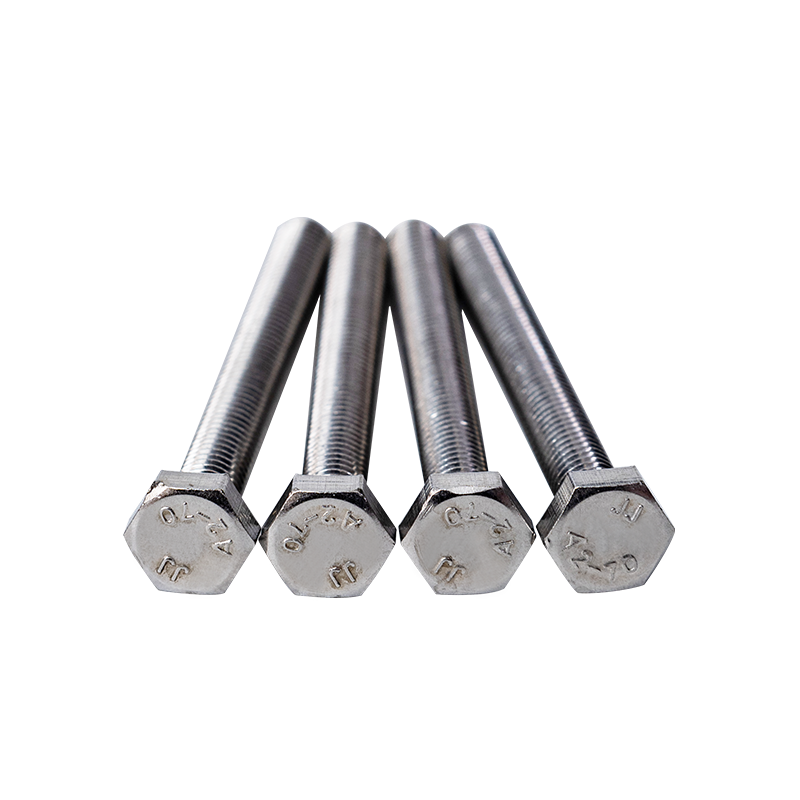 SS304 DIN933 M10 Hexagon Head BoltsView these SS304 DIN933 M10 hex bolts in lengths from 16 to 200 mm when matching standard, material, pitch, and thread size.View Product →
On the nut side, check the internal thread with a known bolt or a thread plug gauge. A caliper reading inside an M10 nut is the minor diameter, not 10 mm. If the nut must match a measured M10 x 1.5 bolt, confirm the pitch and thread class before ordering, especially when mixing suppliers or standards.
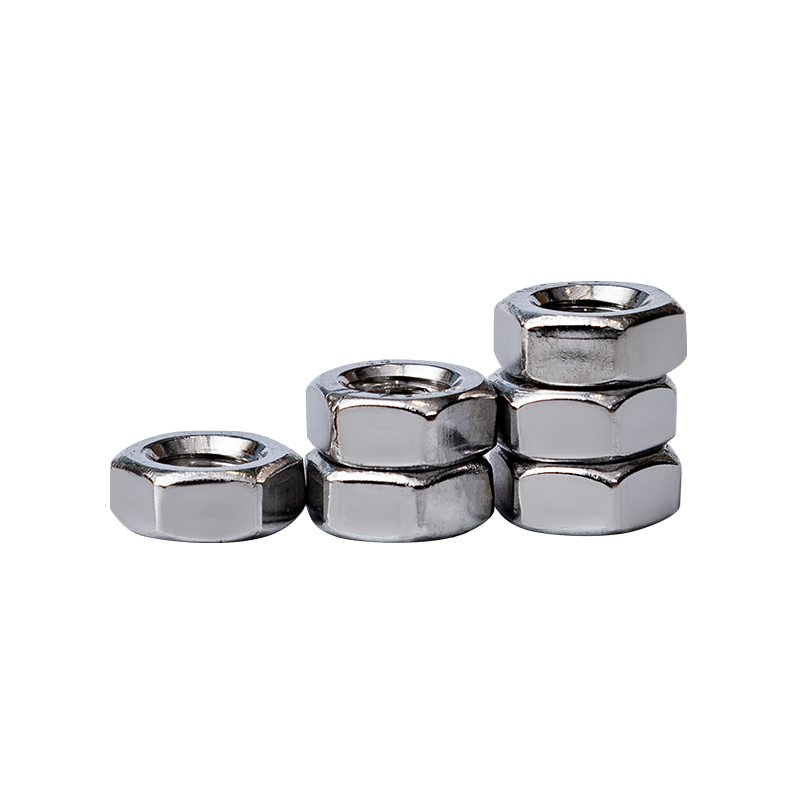 SS304 DIN934 M10 Hex NutsCheck these SS304 DIN934 M10 coarse-thread hex nuts when pairing with a confirmed M10 bolt pitch and thread class.View Product →
Threaded rods and studs follow the same diameter and pitch rules, but length and end finish matter more because they are often cut, coupled, or anchored. Check whether the rod is fully threaded, confirm the material grade, and protect stainless threads from galling during assembly when the joint will be disassembled later.
What to put in a purchase request
When you send a thread size to a supplier, include the details that a caliper cannot show:
- Nominal diameter and pitch, for example M10 x 1.5
- Thread standard and class, such as ISO 965 6g/6H or UNC 2A/2B
- Length and length reference, such as under-head or overall
- Material, such as SS304 or SS316
- Product standard, such as DIN933, DIN934, or DIN975
- Quantity and any inspection or certification requirement
This prevents the common “M10 is M10” mistake. The diameter gets the part close; the pitch and standard make it fit.

 No. 2 Bridge, Chuangxin Road, Dainan Town, Xinghua City, Taizhou City, Jiangsu Province
 +86-17315333748(Wechat)
 +86-17315333748(Wechat/Whatsapp)

