


 русский
 Español
 عربى
عربى italiano
Content
- 1 Why Aluminum Punishes the Wrong Screw Choice
- 2 Matching Screw Material to Aluminum
- 3 Self-Tapping vs Machine Screws for Aluminum
- 4 Pilot Hole Sizing and Installation Technique
- 5 Isolating Fasteners to Prevent Galvanic Corrosion
- 6 Choosing Between 304 and 316 for Outdoor Aluminum Assemblies
- 7 Common Mistakes That Strip or Corrode Aluminum Joints
Why Aluminum Punishes the Wrong Screw Choice
Two aluminum panels held together with the wrong screw can look perfectly fine on installation day and show rust streaks and pitted holes eighteen months later. Aluminum causes more fastener headaches than almost any other common metal, and it comes down to two separate problems that get lumped together as "just use stainless."
The first is galvanic corrosion. Aluminum sits high on the anodic end of the galvanic series, which means that when it touches a more noble metal — stainless steel, brass, copper — in the presence of moisture, the aluminum sacrifices itself to protect the other metal. SSINA's technical overview of galvanic corrosion notes that aluminum's corrosion rate accelerates sharply once it's directly coupled to a more cathodic metal with an electrolyte regularly present — exactly the condition created by an uncoated screw sitting in a damp joint.
The second problem is mechanical, not chemical. Aluminum is soft relative to steel, so a screw with the wrong thread profile or an oversized pilot hole strips out long before the joint sees its rated load. Solving for corrosion and solving for strip-out require different decisions, and treating them as one problem is where most screw selection goes wrong.
Matching Screw Material to Aluminum
The safest material match for aluminum is aluminum itself — an aluminum screw in an aluminum base metal creates no galvanic couple at all, though it trades away strength that some joints need. Beyond that, the right choice depends on environment as much as load:
- Aluminum screws — zero galvanic risk, best for lightweight, low-stress assemblies
- Zinc-plated carbon steel — acceptable for dry, indoor use; the zinc coating sacrifices itself before the aluminum does, but it wears through over time
- Stainless steel (304 or 316) — strong and corrosion-resistant in its own right, but reactive with aluminum and needs isolation in wet or outdoor settings
- Brass or copper — among the most aggressive pairings with aluminum; avoid outright in any application exposed to moisture
Uncoated carbon steel is the one combination to rule out entirely. It corrodes aluminum through galvanic action and rusts on its own, failing on both fronts at once.
Self-Tapping vs Machine Screws for Aluminum
Which screw type fits depends on whether the aluminum already has a threaded hole. Thin aluminum sheet, extrusion, or tubing without a pre-cut thread calls for stainless steel self-tapping screws, which cut their own thread as they're driven in and eliminate a separate tapping step.
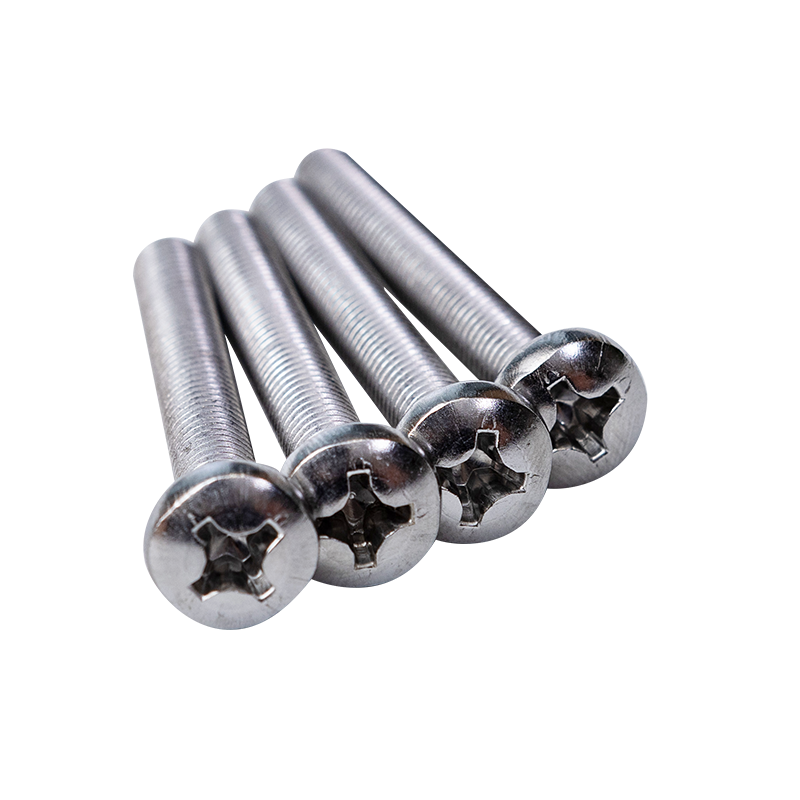
Where the aluminum part already has a machined or tapped hole — cast housings, extruded profiles with pre-formed channels, or assemblies that need to be disassembled and reassembled repeatedly — cross-recessed machine screws for pre-tapped aluminum holes hold up better over repeated cycles, since they aren't cutting new thread material each time they're removed and reinstalled.
For assemblies that see continuous vibration — enclosures near motors, panels on mobile equipment — pair either screw type with spring washers for vibration-prone aluminum assemblies rather than relying on thread friction alone to keep the joint tight.
Pilot Hole Sizing and Installation Technique
A pilot hole drilled too small strips the aluminum thread on the first installation; drilled too large, and the screw never develops proper holding force. The general target is 85 to 90 percent of the screw's minor diameter for self-tapping screws in aluminum — smaller than the ratio used for steel, since aluminum's lower shear strength means it needs a bit more clearance to avoid cracking around the hole.
Driving technique matters as much as hole size. Low-speed, high-control drivers with a torque limiter prevent the two most common installation failures: cross-threading from driving too fast, and stripped threads from over-torquing past the point where the aluminum can hold. As a rule of thumb, engage at least 1.5 times the screw diameter in thread depth to get adequate pull-out resistance from a metal this soft.
Isolating Fasteners to Prevent Galvanic Corrosion
When a stainless screw is the right choice for strength but aluminum can't be swapped out, isolation closes the gap. Stainless steel flat washers to isolate dissimilar metals — paired with a nylon or rubber sleeve, not used alone — break the direct metal-to-metal contact that lets the galvanic cell form in the first place.
Beyond washers, an anti-seize compound or a dielectric coating on the screw threads adds a second barrier, and it pays off twice: it slows corrosion and keeps stainless screws from galling in aluminum threads, a separate problem that has nothing to do with electrochemistry and everything to do with stainless steel's tendency to seize under friction. Fastenal's fastener compatibility and plating reference lays out which coating combinations hold up best across common metal pairings. Our guide to stainless steel flat washers and galvanic corrosion prevention covers washer selection and installation in more depth.
Choosing Between 304 and 316 for Outdoor Aluminum Assemblies
Once isolation is handled, the remaining decision is which stainless grade to specify. 304 covers general indoor and mildly humid use at a lower cost, but its resistance to chloride-driven pitting corrosion is limited. 316 adds molybdenum to the alloy, which meaningfully improves resistance to salt exposure and makes it the standard choice for coastal, marine, or de-icing-salt environments.
The distinction matters more with aluminum in the picture than it does with steel-to-steel joints, since a pitted 304 screw develops a rougher, more reactive surface over time — accelerating the very galvanic process the isolation measures were meant to control. Our detailed comparison of 304 versus 316 stainless steel fasteners breaks down the alloy differences and where each grade holds up.
Common Mistakes That Strip or Corrode Aluminum Joints
- Drilling a pilot hole undersized for the screw, which strips the soft aluminum thread on first installation
- Using uncoated stainless or carbon steel directly against aluminum in any outdoor or humid setting
- Over-torquing self-tapping screws past the point the aluminum thread can hold, especially with power drivers on high torque settings
- Skipping isolation washers because the joint "isn't near water," ignoring ambient humidity as a sufficient electrolyte
- Reusing self-tapping screws in the same hole after disassembly, when the original thread has already been cut and won't re-engage cleanly
Most aluminum fastening failures trace back to one of these rather than a fundamentally wrong material choice — which is why getting the pilot hole, torque, and isolation right often matters more than debating stainless grade alone.

 No. 2 Bridge, Chuangxin Road, Dainan Town, Xinghua City, Taizhou City, Jiangsu Province
  +86-17315333748(Wechat)
 +86-17315333748(Wechat/Whatsapp)

