


 русский
 Español
 عربى
عربى italiano
What Is a Self-Tapping Bolt for Steel?
A self-tapping bolt for steel is a fastener engineered to cut or form its own mating threads directly into a steel substrate as it is driven in. Instead of requiring a pre-tapped hole — a separate operation that adds time, tooling, and potential error — a self-tapping bolt performs the threading and fastening in a single step. The thread-forming geometry on the shank does the work that a tap would otherwise do, displacing or cutting the surrounding steel to create a tight, load-bearing thread engagement.
This capability makes self-tapping bolts one of the most efficient fastener choices in steel fabrication, assembly, and maintenance. They are widely used across construction, HVAC, automotive body work, electrical enclosures, metal studs, and light structural applications. Their primary constraint is material thickness: self-tapping bolts perform best in steel up to approximately 6mm (¼") gauge for thread-cutting types, though heavier-duty variants and self-drilling designs extend this range meaningfully. In thicker steel sections where conventional machine screw threads are required, standard bolt-and-nut or tapped-hole configurations remain the preferred solution.
Content
- 1 Self-Tapping vs Self-Drilling: The Difference That Matters
- 2 Types of Self-Tapping Bolts for Steel (With Thread Form Guide)
- 3 Head Styles and Drive Types: Choosing for Torque and Access
- 4 Pilot Hole Sizing for Steel: A Practical Reference Chart
- 5 Material Grade: Why Stainless Steel Self-Tapping Bolts Outperform Carbon Steel
- 6 Common Installation Mistakes and How to Avoid Them
- 7 Selecting the Right Self-Tapping Bolt: A Decision Checklist
Self-Tapping vs Self-Drilling: The Difference That Matters
These two terms are used interchangeably in casual conversation and in many supplier catalogs — which causes genuine specification errors in the field. The distinction is precise and operationally important.
Self-tapping bolts cut or form threads into a pre-drilled pilot hole. They require a hole to already exist before installation. The bolt's thread geometry does the tapping; a separate drill step provides the clearance hole. They cannot penetrate undrilled steel on their own.
Self-drilling bolts (TEK screws) have a fluted, drill-bit-shaped tip that drills its own pilot hole through the steel before the threads engage. They combine drilling and thread-cutting into a single operation with no pre-drilling required. The drill point is sized and rated for specific steel thicknesses, typically denoted by a numbered point designation (Point 1 through Point 5, with higher numbers suited to thicker steel).
The practical rule: if you are working with pre-punched, pre-drilled, or CNC-processed steel components, self-tapping bolts are the efficient choice. If you are attaching to unprepared steel in the field, self-drilling bolts save the pre-drilling step. As the technical breakdown at SendCutSend's engineering guide on self-drilling vs self-tapping screws notes, self-tapping types should generally be reserved for applications that do not require frequent disassembly, since repeated removal gradually degrades the formed threads in the base material.
Types of Self-Tapping Bolts for Steel (With Thread Form Guide)
Self-tapping bolt types are defined primarily by their thread form and point geometry. Each type is suited to a specific range of steel thicknesses and assembly conditions. The main classifications in commercial use are:
- Type A — coarse thread with a sharp tapered point. Designed for thin sheet metal (typically under 1.5mm). The aggressive thread pitch bites quickly but provides less thread engagement depth, limiting pull-out resistance in thicker material.
- Type AB — fine thread with a sharp tapered point. A versatile improvement on Type A, suitable for thin to medium sheet metal and brittle materials. The finer thread pitch increases thread engagement and reduces the risk of material splitting.
- Type B — fine thread with a blunt point. Designed for use in pre-drilled holes in light-gauge metal, plastics, and non-ferrous materials. The blunt point prevents tip deflection during entry into a drilled hole and suits production environments where holes are pre-punched.
- Type BT (Thread-Cutting) — features cutting flutes at the tip that remove material chips as the bolt advances, rather than displacing them. Essential for harder steel grades and thicker gauges where thread-forming displacement would generate excessive torque or crack the base material.
- Thread-Forming (Thread-Rolling) — no chip removal; the thread is formed by displacing the steel radially outward. Creates a stronger thread than cutting types in ductile materials, with no loose chips. Requires higher installation torque but produces superior pull-out strength.
| Type | Thread | Point | Best For | Steel Thickness |
|---|---|---|---|---|
| Type A | Coarse | Sharp taper | Thin sheet metal, quick assembly | Up to 1.5mm |
| Type AB | Fine | Sharp taper | Thin to medium sheet metal, brittle material | Up to 3mm |
| Type B | Fine | Blunt | Pre-drilled light gauge metal, plastics | Up to 3mm |
| Type BT / Thread-Cutting | Fine | Fluted cutting tip | Harder / thicker steel sections | 3–6mm+ |
| Thread-Forming | Fine / coarse | Blunt or taper | Ductile steel, high pull-out requirement | 1.5–5mm |
Head Styles and Drive Types: Choosing for Torque and Access
Head geometry determines how much torque can be applied during installation and what clearance is available around the fastening point. In steel applications where installation torque requirements are higher than in wood or plastic, head selection is a functional decision rather than an aesthetic one.
- Hex washer head — the dominant choice in structural and industrial steel applications. The six-sided head accepts a nut driver or spanner for high-torque installation, and the integral washer distributes clamping load over a larger bearing area. Preferred for roofing, cladding, and steel framing.
- Pan head — a low-profile rounded head with a flat underside. Common in electrical enclosures, HVAC panels, and general sheet metal where flush clearance on the fastener side is needed but countersinking is not required.
- Countersunk (flat) head — sits flush with or below the material surface when installed in a countersunk hole. Used where a smooth surface is required for aesthetic or functional reasons, such as automotive trim panels, signage, or components subject to sliding contact.
- Truss head — a wide, low-profile domed head that maximizes bearing area without the height of a hex head. Suited to applications where the fastener must resist pull-through in softer or thin materials.
For drive type, Phillips and Pozidriv drives are common in light-duty and commercial applications but risk cam-out under high torque. Hex socket (Allen) and Torx (star) drives handle significantly higher torque without cam-out and are preferred in industrial or structural steel fastening. For background on hex fastener configurations and standards, the complete guide to stainless steel hex bolts covers head geometry and standard specifications in detail.
Pilot Hole Sizing for Steel: A Practical Reference Chart
Correct pilot hole diameter is one of the most critical — and most frequently overlooked — variables in self-tapping bolt installation into steel. A hole that is too small generates excessive torque, risks stripping the drive recess or snapping the bolt. A hole that is too large fails to provide sufficient material for thread engagement, reducing pull-out strength dramatically.
The general rule: the pilot hole diameter should be approximately equal to the minor diameter (root diameter) of the screw thread. For thread-forming types, the pilot hole should be slightly larger than for thread-cutting types, since the forming action displaces material outward and requires a tighter initial fit. The table below provides a practical reference for common self-tapping bolt sizes in steel:
| Bolt Size | Thread-Cutting Pilot Hole | Thread-Forming Pilot Hole | Notes |
|---|---|---|---|
| M3 / #6 | 2.4–2.5mm | 2.6–2.7mm | Thin panel fastening |
| M4 / #8 | 3.2–3.3mm | 3.4–3.5mm | General sheet metal |
| M5 / #10 | 4.0–4.2mm | 4.3–4.5mm | Medium gauge steel |
| M6 / #12 | 4.9–5.1mm | 5.2–5.4mm | Structural light steel |
| M8 | 6.7–6.9mm | 7.0–7.2mm | Heavier gauge, high-load |
| M10 | 8.5–8.7mm | 8.8–9.0mm | Structural applications |
Always verify pilot hole sizes against the specific fastener manufacturer's recommendation, as thread form geometry varies by manufacturer and product series. Hardened steel substrates generally require the upper end of the pilot hole range to prevent excessive torque buildup during installation.
Material Grade: Why Stainless Steel Self-Tapping Bolts Outperform Carbon Steel
For indoor, dry applications, carbon steel self-tapping bolts with zinc or phosphate coating provide adequate performance at the lowest cost. Once the application involves moisture, outdoor exposure, chemical contact, or marine environments, the calculus changes entirely.
Carbon steel, even when coated, relies on the surface treatment for corrosion protection. Scratches, thread-cutting abrasion during installation, and edge exposure all compromise that coating — and in a self-tapping application, the thread-forming action always creates bare metal contact at the thread roots. Rust initiation at these points is a known failure mode in coastal, industrial, or high-humidity installations.
Stainless steel self-tapping bolts are inherently corrosion resistant throughout the full cross-section of the fastener, not just at the surface. The passive chromium oxide layer reforms even when abraded, providing continuous protection across the formed thread contact. Two grades dominate practical selection:
- Grade 304 (A2) — the standard specification for atmospheric, freshwater, and general industrial environments. Suitable for construction, HVAC, signage, food equipment, and architectural applications where chloride exposure is minimal.
- Grade 316 (A4) — adds molybdenum for significantly enhanced resistance to chloride-induced pitting and crevice corrosion. The correct choice for marine, coastal, chemical processing, and swimming pool environments where 304 would develop surface corrosion within months.
For a full breakdown of how alloy composition and strength class interact in stainless fastener selection, the guide to stainless steel bolt grades and strength classes explained covers ISO 3506 and ASTM standards in depth — essential reading before specifying stainless self-tapping bolts for structural or safety-critical applications.
Common Installation Mistakes and How to Avoid Them
Most self-tapping bolt failures in steel trace back to one of a small number of installation errors. Recognizing them in advance prevents costly rework:
- Incorrect pilot hole diameter — the most frequent cause of stripped drive recesses and snapped bolts. Always match the pilot hole to the fastener's specified range for the material thickness being used.
- Excessive installation speed — high-speed power drivers generate heat at the thread-cutting interface, which can work-harden the steel and accelerate bit or bolt tip wear. Use a controlled, moderate speed with sufficient axial pressure to keep the tip engaged.
- Overtorquing — self-tapping threads in steel have a finite torque capacity. Exceeding it strips the formed threads, permanently weakening the joint. Always use a torque-limiting driver or clutch setting appropriate to the bolt size and steel grade.
- Repeated removal and reinstallation — unlike tapped machine threads, self-tapping threads in steel degrade with each removal cycle. If the joint requires frequent disassembly, consider a rivnut insert (which provides a permanent threaded anchor) or a tapped-and-bolted solution instead.
- Mismatched material grades — using carbon steel bolts in stainless steel substrate (or vice versa) creates galvanic corrosion risk at the interface. Always match fastener material to the base material or apply appropriate isolation where dissimilar metals must be joined.
Selecting the Right Self-Tapping Bolt: A Decision Checklist
Before placing any order for self-tapping bolts for steel, work through these five questions:
- Is the steel pre-drilled or unprepared? Pre-drilled → self-tapping. Field installation into bare steel → self-drilling (TEK).
- What is the steel thickness? This determines the thread type (A, AB, B, or thread-cutting) and the minimum engagement length needed for adequate pull-out resistance.
- What is the environment? Indoor/dry → carbon steel with coating. Outdoor/coastal/chemical → Grade 304 or 316 stainless.
- What torque and head access is available? High-torque requirement → hex washer head with nut driver. Flush finish required → countersunk head with countersunk hole preparation.
- Will the joint be disassembled? Occasional disassembly → self-tapping with care. Frequent disassembly → consider a rivnut or tapped insert instead.
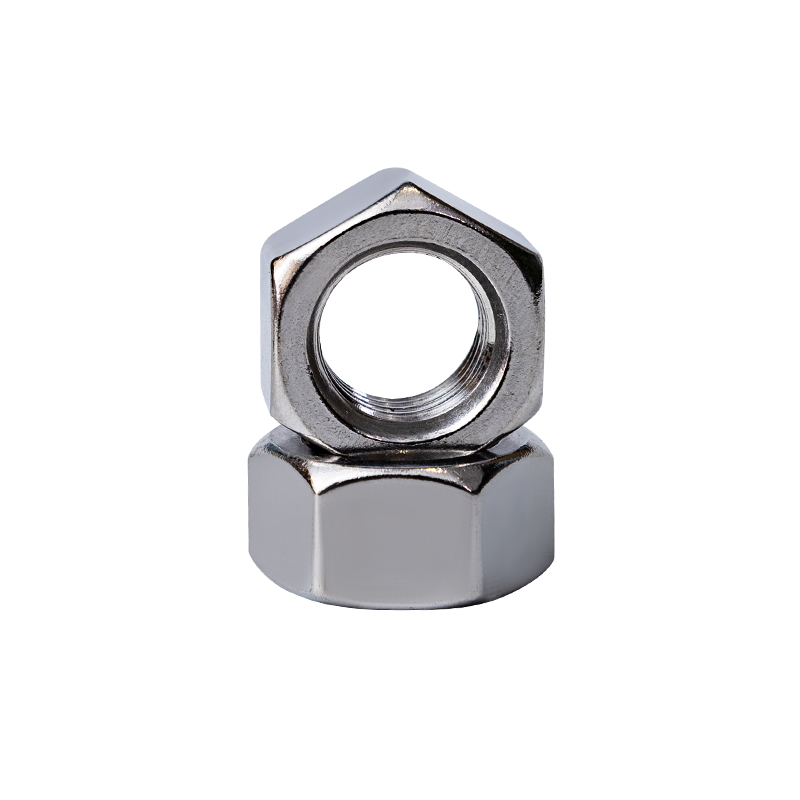
For projects requiring stainless self-tapping bolts across a range of sizes and head configurations, the stainless steel self-tapping screws product range covers the full spectrum of thread forms and head styles in both 304 and 316 grades. Where self-tapping bolts are used alongside nuts or threaded inserts in the same assembly, the stainless steel hex nuts for mating fastener assemblies provides compatible hardware to complete the joint specification.

 No. 2 Bridge, Chuangxin Road, Dainan Town, Xinghua City, Taizhou City, Jiangsu Province
  +86-17315333748(Wechat)
 +86-17315333748(Wechat/Whatsapp)

