


 русский
 Español
 عربى
عربى italiano
Content
- 1 Why Head Style Matters More Than Grade
- 2 Hex Head Bolts: The Default Choice
- 3 Socket (Allen) Head Bolts: Built for Tight Spaces
- 4 Cup Head Square Neck Bolts: One-Sided, Anti-Rotation
- 5 Hex Flange Bolts: The Washer Built In
- 6 Side-by-Side Comparison
- 7 A Simple Way to Decide
- 8 Getting the Grade Right, Whichever Head You Choose
Why Head Style Matters More Than Grade
Most buying guides for stainless steel bolts jump straight to grade: 304 versus 316, tensile strength, corrosion resistance. Those numbers matter, but they answer a different question than the one most people are actually stuck on. Grade tells you how strong and how rust-resistant a bolt is. Head style tells you whether it fits the space you have, whether it needs a tool on both ends to install, and whether it stays put under vibration.
Get the grade right and the head style wrong, and the bolt still won't work for the job. A perfectly corrosion-resistant hex bolt is useless in a recessed hole that only fits a low-profile socket head. This guide walks through the four head styles worth knowing, what each one is actually built for, and a simple way to land on the right one.
Hex Head Bolts: The Default Choice
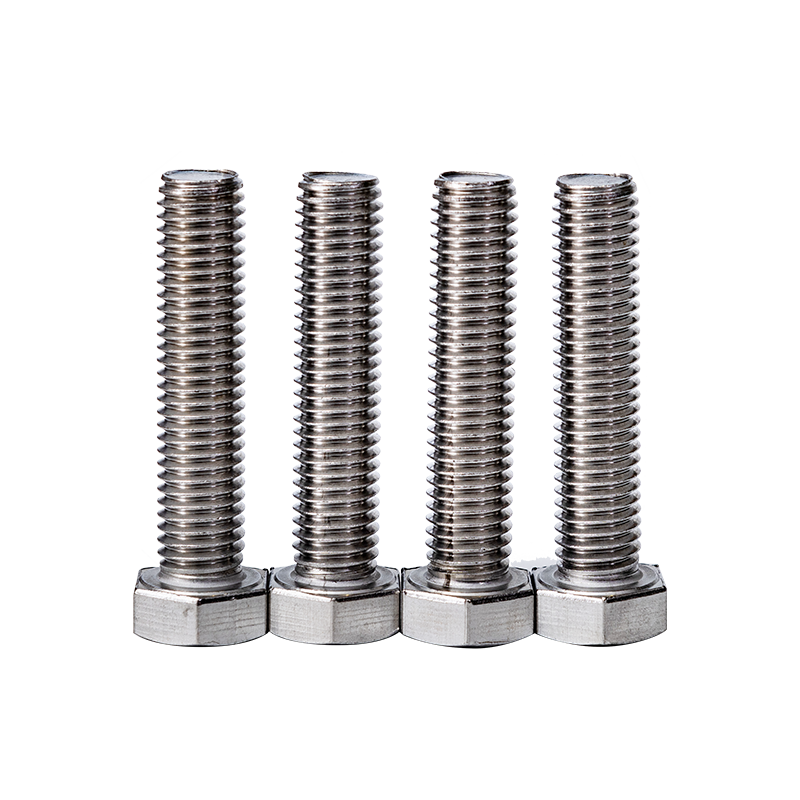
The six-sided head is the shape most people picture when they hear the word "bolt," and for good reason. A wrench or socket grips all six flats at once, which spreads the tightening force evenly and lets a wrench swing through a smaller arc than it would on a square head — useful in tight assembly lines where clearance is limited.
Hex bolts need access from both sides during installation: a wrench or socket on the head, and something to hold or tighten a nut on the other end. That two-sided requirement is the main tradeoff for a fastener that otherwise works in almost any material — metal, concrete, plastic — and almost any load-bearing situation, from structural steel connections to general machinery assembly.
Grade and corrosion resistance matter most here since hex bolts see the widest range of environments. For the full breakdown of grades, corrosion resistance, and torque specs, that's covered in depth separately — this guide stays focused on how the head shapes compare.
Socket (Allen) Head Bolts: Built for Tight Spaces
Socket head bolts flip the drive to the inside: a cylindrical head with a recessed hex socket that takes an Allen key instead of a wrench. That design does two things a hex head can't. First, the head diameter stays small relative to its strength, so it fits into counterbored holes or recesses where a hex head simply wouldn't clear. Second, the deep internal drive engages more contact surface than an external hex, which lets it handle higher torque without rounding off.
That combination makes socket head bolts the standard choice in machine tool construction, precision equipment, and anywhere a flush or low-profile fastener matters — robotics assemblies, jigs, and fixtures in particular. The tradeoff is installation access: an Allen key needs a clear straight shot into the socket, which can be awkward in cramped or angled spaces where a wrench would actually swing more easily.
Stainless steel versions carry the same galling risk as any stainless-on-stainless thread, so anti-seize on the threads is worth using during installation. Our stainless steel socket head (Allen) bolts cover the common M5–M16 range for exactly this kind of precision assembly work.
Cup Head Square Neck Bolts: One-Sided, Anti-Rotation
This head style solves a completely different problem: how to tighten a bolt when only one side is accessible. A cup head square neck bolt has a smooth, domed head with a short square section directly beneath it. When the bolt is dropped into a matching square hole, that square neck bites into the material and stops the bolt from spinning — so the nut can be tightened from the other side without anyone holding the head at all. The square neck also happens to resist loosening under vibration better than a plain shank does, since it's mechanically locked against rotation rather than relying on friction alone. That makes cup head square neck bolts a natural fit for fencing, decking, wood-to-metal connections, and machinery mounts where vibration is a constant. The domed head has a side benefit too: no sharp edges or flats to snag on, which matters in railings and other surfaces people actually touch.
The tradeoff is versatility. The square neck needs a square hole to work as intended — in round holes or hard metal, it loses its anti-rotation advantage entirely. Stainless steel cup head square neck bolts are typically used where wood, thin sheet, or punched holes are already part of the design.
Hex Flange Bolts: The Washer Built In
A hex flange bolt looks like an ordinary hex bolt with a wide integrated collar under the head. That flange does the job a separate flat washer would otherwise do: it spreads the clamping force over a larger bearing area, which reduces the chance of the head digging into softer materials or crushing a gasket unevenly.
Because the washer is molded into the bolt itself, assembly is faster — one less part to keep track of, and no risk of a washer getting knocked loose or installed backward. That makes hex flange bolts a common choice in automotive assembly, machinery frames, and any high-volume production line where reducing part count actually speeds up the build. Some flange designs add small serrations under the flange face specifically to bite into the mating surface and resist loosening under vibration, similar in spirit to what the square neck does for cup head bolts.
The head is still hexagonal, so installation tooling is identical to a standard hex bolt — no special tools needed, just standard wrenches and sockets. Stainless steel hex flange bolts are available across a wide size range for exactly this kind of frame and structural assembly work.
Side-by-Side Comparison
| Head Style | Installation | Vibration Resistance | Best For |
|---|---|---|---|
| Hex Head | Wrench/socket, two-sided access | Standard (needs lock washer/nut if critical) | General-purpose, widest material range |
| Socket (Allen) | Allen key, straight-line access | Standard | Tight clearances, precision machinery |
| Cup Head Square Neck | One-sided, self-locking neck | Strong (mechanical anti-rotation) | Wood, thin sheet, visible/decorative joints |
| Hex Flange | Wrench/socket, two-sided access | Good (built-in bearing surface, some serrated) | High-volume assembly, soft or gasketed materials |
A Simple Way to Decide
With four solid options, narrowing it down usually comes down to three questions asked in order:
- How much clearance do you have? Tight, recessed, or low-profile spaces point straight to a socket head. If clearance isn't a constraint, move to the next question.
- Can you access both sides of the joint? If only one side is reachable, a cup head square neck bolt (into a square hole) is often the only style that installs cleanly without someone holding the head.
- Does the joint need to resist vibration, or bear on a soft or uneven surface? A hex flange bolt covers both with its built-in bearing surface. A plain hex head works fine when the surface is solid metal and vibration isn't a major concern, especially with a lock washer added.
Most projects land on hex heads by default simply because they're the most flexible option — but running through these three questions first often turns up a better-suited style before defaulting to the familiar one.
Getting the Grade Right, Whichever Head You Choose
Head style and material grade are independent decisions — every style covered here is available in stainless steel, and the same 304-versus-316 tradeoffs apply regardless of which head shape ends up on the bolt. General indoor or mild outdoor use is well served by 304; anything coastal, marine, or exposed to harsh chemicals calls for 316's added molybdenum.
Dimensional standards also carry across head styles — hex and square head bolts in particular follow ASME B18.2.1, the standard covering dimensional requirements for square, hex, and hex flange head bolts, which is worth checking when matching a replacement bolt to existing hardware. For the full detail on grade selection, corrosion resistance, and torque specifications, the full breakdown of grades, corrosion resistance, and torque specs covers that ground thoroughly.

 No. 2 Bridge, Chuangxin Road, Dainan Town, Xinghua City, Taizhou City, Jiangsu Province
  +86-17315333748(Wechat)
 +86-17315333748(Wechat/Whatsapp)

