


 русский
 Español
 عربى
عربى italiano
Content
Stainless Steel Bolt Markings Explained
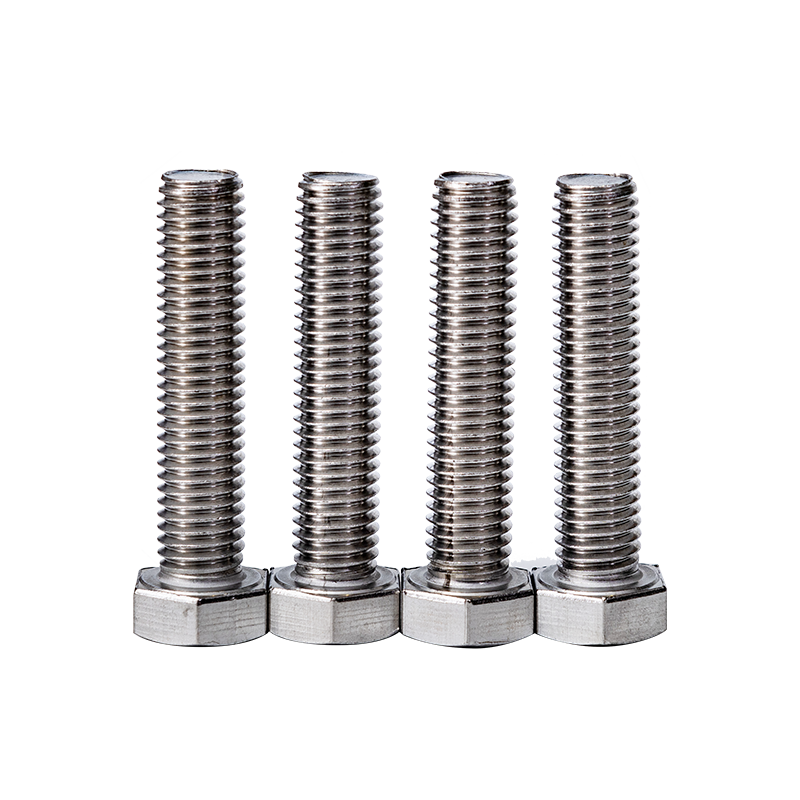
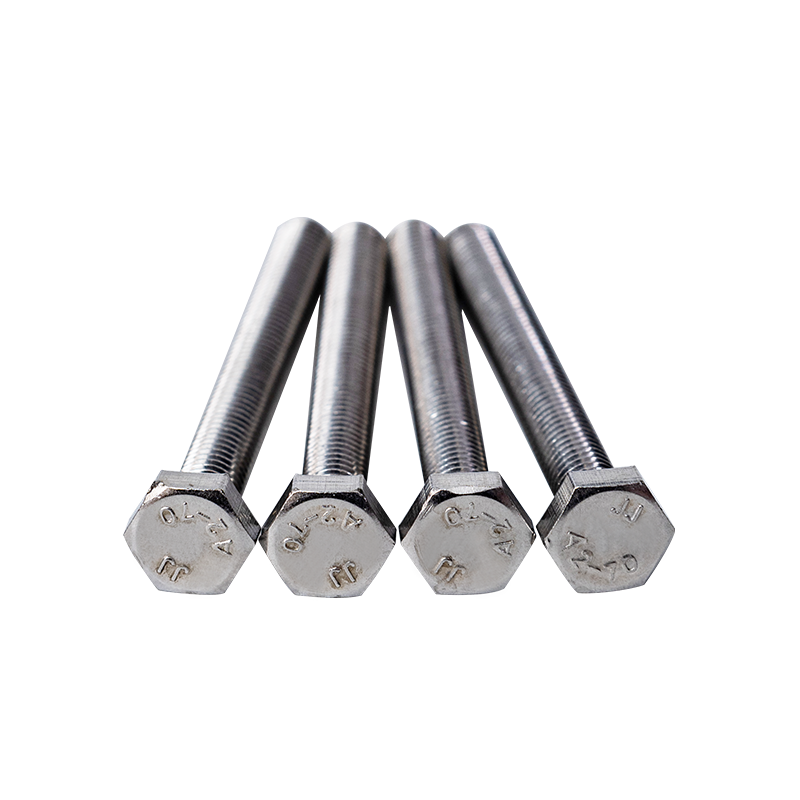
Stainless steel fasteners do not follow the same head marking system as carbon steel bolts. Most stainless steel bolts carry no raised grade marks on the head — instead, they are identified by material designation stamps, which can be easy to misread or overlook entirely. Knowing what to look for prevents costly specification errors on the job.
Common Head Markings and What They Mean
Unlike SAE or ASTM carbon steel bolts that use raised radial lines to indicate grade, stainless bolts typically use letter codes stamped or cold-formed into the head:
- A2 — 304 stainless steel (18-8). The most common grade, suitable for general indoor and mild outdoor use. Corrosion resistant but not ideal for saltwater or chloride environments.
- A4 — 316 stainless steel. Contains 2–3% molybdenum, giving it significantly better resistance to chlorides. Standard for marine hardware, coastal construction, and chemical equipment.
- A2-70 / A4-70 — The number indicates minimum tensile strength in units of 10 MPa. A2-70 means 700 MPa tensile strength, equivalent roughly to a Grade 5 carbon steel bolt.
- A2-80 / A4-80 — 800 MPa tensile strength, comparable to a Grade 8 carbon steel bolt. Used in higher-load structural applications.
- SS or 18-8 — A generic material stamp indicating stainless steel, but without a specific property class. Treat these with caution in load-bearing applications since strength is unverified.
ASTM vs. ISO Marking Systems
The A2/A4 designations follow the ISO 3506 standard, which is widely used in Europe and internationally. North American hardware may instead reference ASTM F593 (for bolts) and F594 (for nuts), which use alloy group designations like CW (cold worked) or SH (strain hardened) rather than the simpler A2/A4 shorthand. When sourcing fasteners across markets, confirm which standard applies to avoid mixing incompatible specifications.
| Marking | Alloy | Min. Tensile Strength | Typical Application |
|---|---|---|---|
| A2-70 | 304 SS | 700 MPa | General hardware, indoor use |
| A2-80 | 304 SS | 800 MPa | Higher-load structural joints |
| A4-70 | 316 SS | 700 MPa | Marine, coastal, chemical use |
| A4-80 | 316 SS | 800 MPa | High-load marine/industrial |
Using Stainless Screws in Aluminum: Galvanic Corrosion Is the Real Risk
Stainless steel and aluminum can be used together, but galvanic corrosion is a genuine concern — particularly in wet or outdoor environments. The two metals sit apart on the galvanic series: stainless steel is more noble (cathodic), while aluminum is more active (anodic). When an electrolyte like water or salt spray bridges them, aluminum corrodes preferentially. The rate depends on the area ratio, the electrolyte, and exposure duration.
How Serious Is the Galvanic Reaction?
In dry indoor environments, the galvanic risk between stainless and aluminum is negligible — without an electrolyte, no electrochemical circuit forms. In marine or constantly wet conditions, aluminum surrounding a stainless screw can show measurable pitting within 6 to 12 months if no barrier is applied. The cathode-to-anode area ratio matters enormously: a large stainless bolt in a small aluminum plate accelerates corrosion far more than a small stainless screw in a large aluminum extrusion.
Practical Ways to Reduce Galvanic Corrosion
- Use an isolating barrier: Apply zinc chromate paste, anti-seize compound, or a PTFE-based thread sealant before installation. These displace moisture and interrupt the electrolytic path.
- Use nylon or neoprene washers: Isolating washers placed under the bolt head and nut prevent direct metal-to-metal contact at the clamped surfaces.
- Anodize or paint the aluminum: A well-maintained anodized or painted surface provides a physical barrier that slows ionic transfer significantly.
- Choose 316 over 304 stainless: In chloride-rich environments, 316 SS is more stable and generates a lower corrosion potential differential with aluminum compared to 304.
- Consider aluminum or coated fasteners for low-stress joints: If structural load is modest, 5000-series aluminum screws or zinc-plated steel eliminate the dissimilar metal issue entirely.
Galling: The Other Problem with Stainless Screws in Aluminum
Separate from galvanic corrosion, stainless steel fasteners are prone to galling — a cold-welding phenomenon where thread surfaces seize during installation. Stainless is particularly susceptible because its oxide layer breaks down under friction, and the metal work-hardens rapidly. In aluminum threads this can strip the female thread or permanently seize the fastener. Prevent galling by applying anti-seize lubricant (nickel-based for high-temperature applications, copper-based for standard use) and driving stainless screws slowly, especially in tapped aluminum holes.
How to Paint Stainless Steel So It Actually Sticks
Paint does not bond naturally to stainless steel. The passive chromium oxide layer that makes stainless corrosion-resistant is also what causes paint adhesion to fail. Without proper surface preparation, even high-quality coatings will peel within months. The process is achievable, but it requires more preparation than painting bare steel or aluminum.
Step-by-Step Surface Preparation
- Degrease thoroughly: Wipe down the surface with acetone or isopropyl alcohol (IPA) using clean lint-free cloths. Oil, fingerprints, and machining residues will ruin adhesion even if the surface looks clean.
- Abrade the surface: Use 80–120 grit aluminum oxide sandpaper or a Scotch-Brite abrasive pad to scuff the surface uniformly. This breaks up the passive oxide layer and creates mechanical tooth for the primer to grip. Sand in one direction to avoid creating stress risers on thin material.
- Degrease again: After sanding, wipe again with acetone to remove all abraded particles. This step is non-negotiable — sanding dust left on the surface undermines bonding.
- Apply an etch primer or self-etching primer: For stainless steel, a wash primer (vinyl butyral-based) or two-part epoxy primer provides the best adhesion. Self-etching primers formulated for non-ferrous metals work adequately for lighter-duty applications. Apply thin coats and allow full cure time between coats.
- Apply topcoat: Two-part polyurethane or epoxy topcoats provide the most durable finish. Single-part acrylic paints can be used for decorative applications where long-term durability is less critical.
Paint Types That Work on Stainless Steel
| Paint Type | Adhesion to SS | Durability | Best Use |
|---|---|---|---|
| Two-part epoxy | Excellent | Very High | Industrial, marine, chemical exposure |
| Two-part polyurethane | Excellent | Very High | Exterior structures, UV exposure |
| Etch/wash primer + acrylic | Good | Moderate | Indoor decorative, light duty |
| High-temp ceramic coating | Good | High (up to 600°C) | Exhausts, BBQ, heat-exposed parts |
| Standard rattle-can spray | Poor (without primer) | Low | Temporary or non-critical cosmetic |
Common Mistakes That Cause Paint to Peel Off Stainless Steel
- Skipping abrasion: Painting over a smooth, unscratched stainless surface is the single most common reason for early adhesion failure. The oxide layer must be physically broken.
- Using latex or water-based paint directly: These do not bond to metal without a compatible primer, and on stainless they will delaminate under the first thermal cycle or moisture exposure.
- Painting in high humidity: Surface moisture prevents proper primer wetting. Ideal conditions are below 85% relative humidity and above 10°C substrate temperature.
- Applying coats too thick: Heavy single coats trap solvents and cause solvent pop or poor cure. Multiple thin coats of 50–75 microns dry film thickness each deliver far better long-term adhesion than one thick coat.
Identifying Unmarked or Unknown Stainless Fasteners in the Field
Not all stainless bolts arrive with clear markings, especially older hardware or fasteners sourced from non-ISO suppliers. Several quick field tests help distinguish stainless from plated carbon steel or other alloys:
- Magnet test: Austenitic stainless (304, 316) is weakly magnetic or non-magnetic in the annealed state. A strong magnet will not firmly attract it, unlike carbon or ferritic stainless steel. Note that cold-worked 304 can become slightly magnetic — so a partial attraction is not always disqualifying.
- Rust test: Leave the fastener exposed to moisture for 48–72 hours. Carbon steel develops visible surface rust quickly; genuine austenitic stainless will show no rust, only possible watermarks.
- Molybdenum spot test (Mo test kit): A chemical drop test that distinguishes 316 (Mo-positive) from 304 (Mo-negative). Kits cost under $30 and are standard in quality control environments where grade verification is critical.
- XRF analyzer: For high-value or safety-critical applications, a handheld X-ray fluorescence analyzer provides definitive alloy composition in seconds without damaging the fastener. Rental units are widely available through inspection equipment suppliers.
Choosing the Right Stainless Grade for the Job
Grade selection affects not just corrosion performance but also strength, machinability, and cost. The three most commonly encountered grades in fastener applications each have distinct trade-offs:
- 304 / A2: The workhorse grade. Good corrosion resistance, widely available, cost-effective. Sufficient for most indoor and dry outdoor applications. Avoid in chloride-heavy environments — salt spray can cause pitting within a season.
- 316 / A4: The marine and chemical grade. Molybdenum content boosts resistance to chloride pitting significantly. Costs roughly 20–30% more than 304 but is the correct choice for coastal, food processing, or pharmaceutical environments.
- 410 / Martensitic stainless: Magnetic, hardenable, and stronger than 304 or 316 — but lower corrosion resistance. Used in cutlery, valves, and applications where hardness and wear resistance matter more than corrosion resistance.
For mixed-environment projects — say, an outdoor structure near the coast but not directly saltwater-exposed — A4-70 is the practical default. It provides adequate strength and the corrosion protection buffer needed for environments that fluctuate between wet and dry over the service life of the fasteners.

 No. 2 Bridge, Chuangxin Road, Dainan Town, Xinghua City, Taizhou City, Jiangsu Province
  +86-17315333748(Wechat)
 +86-17315333748(Wechat/Whatsapp)

