


 русский
 Español
 عربى
عربى italiano
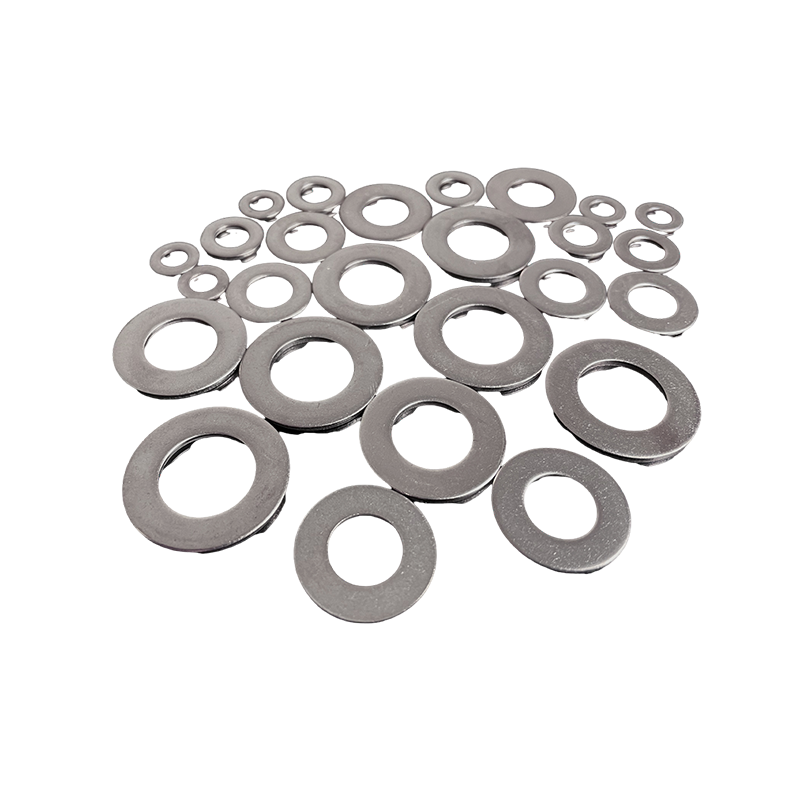
Stainless steel flat washers are indispensable components in mechanical assemblies, designed to distribute the load of a threaded fastener, such as a bolt or nut, over a larger surface area. This distribution prevents damage to the material being secured and ensures a stable, long-lasting connection. Beyond load distribution, these washers act as spacers, vibration dampeners, and protective barriers against corrosion, making them critical in industries ranging from construction to marine engineering. The choice of stainless steel, particularly grades 304 and 316, offers superior resistance to rust and chemical degradation compared to standard carbon steel washers.
Selecting the correct washer involves understanding not just the inner and outer diameters, but also the thickness and material grade. A mismatched washer can lead to joint failure, galvanic corrosion, or insufficient clamping force. For high-stress environments, using a hardened stainless steel washer is essential to prevent deformation under torque. Understanding these nuances ensures that assemblies remain secure and maintain their structural integrity over time.
Content
Material Grades: 304 vs. 316 Stainless Steel
The performance of a stainless steel flat washer is largely determined by its alloy composition. The two most common grades used in manufacturing are 304 and 316, each offering distinct advantages depending on the environmental conditions.
Grade 304 (A2 Stainless)
Grade 304 is the most widely used stainless steel for general-purpose applications. It contains approximately 18% chromium and 8% nickel, providing excellent corrosion resistance in mild environments. It is ideal for indoor use, automotive parts, and kitchen appliances. However, it is susceptible to chloride-induced corrosion, making it less suitable for coastal or marine environments where salt exposure is high.
Grade 316 (A4 Stainless)
Grade 316 stainless steel includes molybdenum (2-3%), which significantly enhances its resistance to chlorides and acidic environments. This makes it the preferred choice for marine hardware, chemical processing equipment, and outdoor structures in coastal areas. While more expensive than 304, the extended lifespan and reduced maintenance costs of 316 stainless steel flat washers often justify the initial investment in harsh conditions.
| Grade | Key Alloy Elements | Corrosion Resistance | Typical Application |
|---|---|---|---|
| 304 (A2) | 18% Cr, 8% Ni | Good (Indoor/Mild) | Appliances, Indoor Machinery |
| 316 (A4) | 16% Cr, 10% Ni, 2% Mo | Excellent (Marine/Chemical) | Boat Fittings, Coastal Structures |
Functional Roles in Mechanical Assemblies
While often overlooked, stainless steel flat washers perform several critical functions that ensure the reliability of a bolted joint. Their design is simple, but their impact on mechanical integrity is profound.
Load Distribution
The primary function of a flat washer is to spread the clamping force of a nut or bolt head over a larger area. This reduces the bearing stress on the substrate, preventing indentation, deformation, or cracking, especially in soft materials like aluminum, wood, or plastic. Without a washer, the concentrated force could compromise the structural integrity of the joined parts.
Surface Protection and Isolation
Stainless steel washers provide a smooth, hard surface for the nut or bolt to rotate against during tightening. This reduces friction and ensures that the applied torque is converted into clamping force rather than being lost to surface abrasion. Additionally, they can isolate dissimilar metals to prevent galvanic corrosion, although care must be taken to ensure the washer itself does not create a new galvanic couple.
Sizing Standards and Selection Criteria
Choosing the right size stainless steel flat washer is crucial for proper fit and function. Washers are typically specified by three dimensions: inner diameter (ID), outer diameter (OD), and thickness. These dimensions are governed by standards such as ANSI, DIN, and ISO.
- Inner Diameter (ID): Must be slightly larger than the bolt diameter to allow for easy insertion. For example, an M8 bolt requires a washer with an ID of approximately 8.4mm.
- Outer Diameter (OD): Determines the load-bearing area. A larger OD distributes load more effectively but may not fit in confined spaces. Standard wide washers offer greater surface area than regular pattern washers.
- Thickness: Thicker washers are more rigid and better suited for high-load applications. Thin washers may deform under heavy torque, reducing their effectiveness.
When selecting washers, always refer to the relevant standard (e.g., DIN 125 or ANSI B18.22.1) to ensure compatibility with your fasteners. Using non-standard sizes can lead to improper seating and potential joint failure.
Installation and Maintenance Best Practices
Proper installation of stainless steel flat washers ensures optimal performance and longevity. Even the highest quality washer can fail if installed incorrectly or used inappropriately.
Torque and Lubrication
Stainless steel has a tendency to gall (cold weld) under high pressure and friction. To prevent this, use a lubricant or anti-seize compound on the threads and washer surface. This ensures consistent torque application and prevents seizing. Always use a torque wrench to apply the manufacturer’s recommended torque, avoiding over-tightening which can flatten the washer and reduce its spring-back capability.
Inspection and Replacement
Regularly inspect washers for signs of corrosion, deformation, or cracking. In high-vibration environments, check for loosening or wear patterns. If a washer shows significant indentations or rust spots, replace it immediately to maintain joint integrity. For critical applications, consider using lock washers or thread-locking fluids in conjunction with flat washers to prevent unintentional loosening.

 No. 2 Bridge, Chuangxin Road, Dainan Town, Xinghua City, Taizhou City, Jiangsu Province
  +86-17315333748(Wechat)
 +86-17315333748(Wechat/Whatsapp)

