


 русский
 Español
 عربى
عربى italiano
Content
- 1 Introduction to Stainless Steel Eye Nuts
- 2 Lifting and Rigging Applications
- 3 Marine and Outdoor Applications
- 4 Construction and Industrial Uses
- 5 Safety and Load-Bearing Considerations
- 6 Specialized Applications
- 7 Comparison of Eye Nut Types and Applications
- 8 Maintenance and Inspection Practices
- 9 Conclusion: Versatile and Essential Fasteners
Introduction to Stainless Steel Eye Nuts
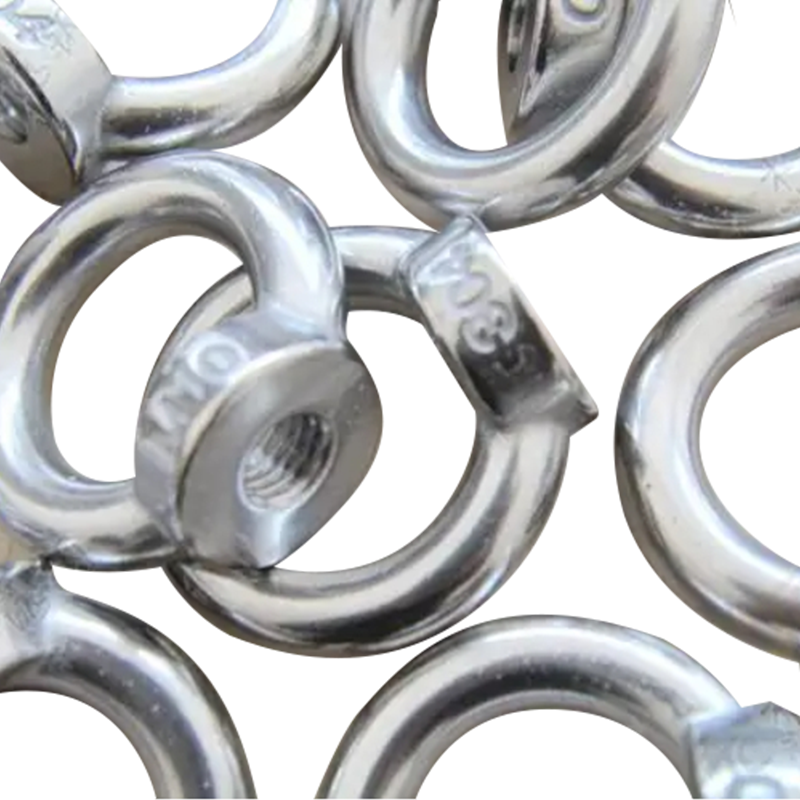
Stainless steel eye nuts are essential fasteners used in a wide range of industries for lifting, securing, and rigging applications. They are typically made from high-quality stainless steel, providing exceptional corrosion resistance, durability, and strength. The design of an eye nut consists of a threaded shank and a circular ring or eye, which allows for easy attachment of hooks, shackles, or ropes.
These components are commonly used where reliable load-bearing connections are required. Their versatility and robust design make them ideal for industrial, construction, marine, and commercial applications. Understanding their primary uses helps businesses select the right type and specification for their projects.
Lifting and Rigging Applications
One of the main uses of stainless steel eye nuts is in lifting and rigging operations. Eye nuts provide a secure attachment point for lifting equipment such as hoists, cranes, and slings. They ensure that heavy loads can be lifted safely and efficiently without risk of slippage or failure.
The threaded design allows the eye nut to be firmly fastened to machinery, equipment, or structural components. By connecting hooks or shackles to the eye, operators can lift, rotate, or position heavy objects with confidence. Stainless steel construction ensures that the eye nut maintains its strength even in harsh or outdoor environments.
Key benefits in lifting applications
- Secure attachment point for hoisting and lifting operations
- Corrosion resistance ensures durability in outdoor and marine settings
- Versatility for use with slings, hooks, and chains
- Reliable load-bearing capacity for safety-critical tasks
Marine and Outdoor Applications
Stainless steel eye nuts are extensively used in marine environments due to their excellent resistance to saltwater corrosion. They can be installed on boats, docks, and marine equipment to secure ropes, rigging lines, and anchor points. The corrosion-resistant properties of stainless steel prevent rusting, ensuring long-term performance even under continuous exposure to moisture and salt.
In outdoor applications, eye nuts provide a durable solution for securing cables, chains, or safety lines in construction sites, bridges, and outdoor installations. They offer a reliable fastening point in environments where weather and environmental conditions could otherwise compromise standard fasteners.
Construction and Industrial Uses
In construction and industrial settings, stainless steel eye nuts are frequently used for machinery installation, structural support, and lifting heavy components. They are ideal for attaching hoisting slings to steel beams, equipment frames, or structural panels. Their strong load-bearing capability ensures that equipment can be safely lifted, aligned, and positioned.
Additionally, eye nuts are used in industrial rigging for moving large machinery, securing parts during assembly, or suspending equipment in manufacturing plants. The threaded design provides a firm connection that prevents accidental loosening or detachment, which is critical in high-risk industrial operations.
Safety and Load-Bearing Considerations
Stainless steel eye nuts must be selected and installed according to the required load-bearing capacity. The rated working load depends on the size, thread type, and material grade of the eye nut. Proper installation is essential to prevent failure and ensure the safety of personnel and equipment.
When used in lifting or rigging, eye nuts should be paired with compatible hooks, shackles, or slings. Misalignment or improper threading can reduce their load capacity, which may lead to accidents. Regular inspection for wear, deformation, or corrosion is recommended to maintain safe usage.
Specialized Applications
Beyond general lifting and securing tasks, stainless steel eye nuts are used in specialized applications such as theater rigging, aerospace, and offshore engineering. In theaters, they provide attachment points for lighting, scenery, and stage equipment. In aerospace, they help secure components during assembly and maintenance.
Offshore platforms and oil rigs use stainless steel eye nuts to attach cables, lifelines, and safety equipment. The combination of corrosion resistance, mechanical strength, and reliability makes them an indispensable component in environments where safety and durability are paramount.
Comparison of Eye Nut Types and Applications
Different types of eye nuts are designed for specific applications. Standard eye nuts are suitable for general lifting, while heavy-duty or forged eye nuts provide higher load capacities. Swivel eye nuts allow rotation under load, making them ideal for lifting operations where alignment changes during movement.
| Type | Primary Use | Key Feature |
| Standard Eye Nut | General lifting & securing | Simple design, easy installation |
| Forged/Heavy-Duty Eye Nut | High-load lifting | Enhanced strength, heavy-duty construction |
| Swivel Eye Nut | Rotational lifting & alignment | Allows rotation to prevent sling twisting |
Maintenance and Inspection Practices
Proper maintenance is crucial for stainless steel eye nuts to ensure safe and long-term performance. Regular inspection includes checking for cracks, corrosion, deformation, and thread integrity. Eye nuts showing signs of wear should be replaced immediately to prevent accidents.
Lubricating threads periodically can help with installation and removal, especially in harsh environments. Keeping eye nuts clean and free of debris also ensures smooth operation and reduces stress concentrations during lifting or securing tasks.
Conclusion: Versatile and Essential Fasteners
Stainless steel eye nuts are versatile, durable, and essential fasteners used across industries for lifting, rigging, securing, and specialized applications. Their corrosion resistance, mechanical strength, and adaptability make them a reliable choice for both everyday and critical operations. Understanding their main uses helps engineers, contractors, and designers select the appropriate type to ensure safety, efficiency, and longevity in various environments.

 No. 2 Bridge, Chuangxin Road, Dainan Town, Xinghua City, Taizhou City, Jiangsu Province
  +86-17315333748(Wechat)
 +86-17315333748(Wechat/Whatsapp)

