


 русский
 Español
 عربى
عربى italiano
A production team had just received a shipment of stainless steel self-tapping screws for a solar racking system, and the first question was about pilot hole size for the #8 screws going into the frame. The practical answer is a 1/8 inch (3.2 mm) pilot hole for soft wood, plastics, and lightweight aluminum, and a 5/32 inch (4.0 mm) hole for hardwood and steel. For stainless steel sheet, start at 9/64 inch (3.6 mm). This approach works because the pilot hole has a single job: to make room for the thread to form without splitting the material or forcing the screw to work too hard.
Content
#8 Screw Pilot Hole Size at a Glance
The #8 screw is a common size in stainless steel fastening, with a nominal thread diameter of 0.164 inches (4.17 mm). It appears in wood screw, self-tapping, and machine screw variants, and it is used in everything from electrical enclosures to marine hardware. The metric close equivalent is M4.2, which is why the company stocks a range of SS304 DIN 7981 self-tapping screws in that size. The recommended pilot hole depends on the base material, so it helps to keep a quick reference nearby.
| Base Material | Pilot Hole Diameter | Drill Bit Size | Application Notes |
|---|---|---|---|
| Softwood (pine, fir, cedar) | 1/8" (3.2 mm) | 1/8" | Prevents splitting in soft grain |
| Hardwood (oak, maple, walnut) | 5/32" (4.0 mm) | 5/32" | Eases insertion in dense boards |
| Plastics and composites | 7/64" (2.8 mm) | 7/64" | Avoids cracking around the hole edge |
| Aluminum sheet metal | 7/64" (2.8 mm) | 7/64" | For Type AB self-tapping screws |
| Mild steel plate | 1/8" (3.2 mm) | 1/8" | For Type AB self-tapping screws |
| Stainless steel sheet | 9/64" (3.6 mm) | 9/64" | Reduces work-hardening in the screw |
These values are starting points. Always verify with a test piece first, especially if you are moving into production runs.
What Difference Does the Pilot Hole Make?
A pilot hole that is too small forces the screw to push more material out of the way, which increases insertion torque. For a #8 stainless steel screw, this can strip the threads inside the base material or break the screw head before it seats. The damage usually shows up as silvered threads on the screw and reworked holes on the part. A pilot hole that is too large does the opposite: it lets the screw rotate freely when it goes in, but the threads have too little material to grip, so the joint loses stiffness and can loosen under vibration.
The right pilot hole removes just enough material to let the screw form a clean, load-bearing thread. For stainless steel self-tapping screws, the target is roughly 75 to 85 percent of the screw's major diameter. That translates to a pilot hole of about 0.125 to 0.140 inches (3.2 to 3.6 mm) for a #8 screw. Staying inside that range gives the best combination of low insertion torque and high pull-out resistance.
- Undersized pilot hole: increased insertion torque, stripped threads, screw breakage.
- Oversized pilot hole: reduced clamping force, vibration-driven loosening.
- Correct pilot hole: clean thread formation and reliable load transfer.
Pilot Hole Size for #8 Self-Tapping Screws in Metal
In sheet metal work, Type AB self-tapping screws are the most common choice. They have a sharp point that allows the screw to thread into the metal after a small pilot hole has been drilled. The pilot hole for a #8 Type AB screw in steel should be about 0.136 to 0.140 inches (3.5 to 3.6 mm). Type B screws have a blunt point and need a slightly larger hole, around 0.140 to 0.150 inches (3.6 to 3.8 mm), especially when used with pre-drilled thicker sections.
| Thread Type | Pilot Hole Diameter | Drill Bit Size | Typical Application |
|---|---|---|---|
| Type AB (sharp point) | 0.136" - 0.140" (3.5 - 3.6 mm) | 9/64" | Sheet metal, thin sections |
| Type B (blunt point) | 0.140" - 0.150" (3.6 - 3.8 mm) | 9/64" - 5/32" | Thicker metal, pre-drilled holes |
| Type 25 thread cutting | 0.136" - 0.140" (3.5 - 3.6 mm) | 9/64" | Higher pull-out loads |
Stainless steel work-hardens faster than carbon steel. When a screw is driven into a too-small pilot hole, the material hardens around the thread, creating a situation where the screw can no longer turn. This results in shaved threads and a ruined fastener. A slightly larger pilot hole prevents that by letting the thread cut into the metal without excessive friction.
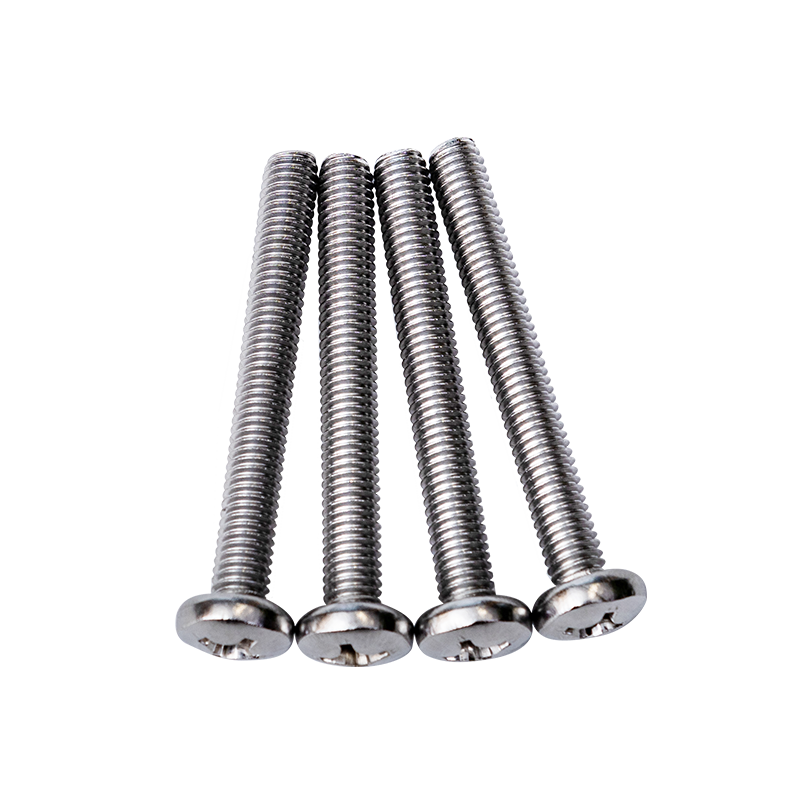 SS304 DIN7981 M4.2 Pan Head Self-Tapping ScrewsThese stainless steel self-tapping screws offer corrosion resistance and easy installation without pre-drilling, making them suitable for metal, wood, and plastic assemblies requiring durable fastening.View Product →
At Jiangsu Jiajie Special Screw, we manufacture stainless steel self-tapping screws in DIN 7981 and DIN 7982 profiles, available in SS304 and SS316 grades. For permanent fastening outside, it is worth checking the corrosion resistance of the stainless steel self-tapping screws before you commit to a design.
Pilot Hole vs Clearance Hole for #8 Machine Screws
Machine screws are different from self-tapping screws. A machine screw does not form its own thread, so it requires a clearance hole in the part it passes through, and a tapped hole in the part it threads into. The clearance hole is drilled to match the screw's shank diameter, while the pilot hole is used only in the threaded material.
| Fit Type | Clearance Hole Diameter | Drill Bit Size | Recommended Use |
|---|---|---|---|
| Close fit | 0.173" (4.4 mm) | #17 | Standard assembly |
| Free fit | 0.177" (4.5 mm) | #16 | Parts with looser tolerances |
For the threaded material, the pilot hole for a #8-32 machine screw should be around the thread minor diameter, which is about 0.137 inch (3.5 mm). This lets the tap cut a clean thread without excessive force. If you are using stainless steel machine screws, the same principle applies regardless of material grade.
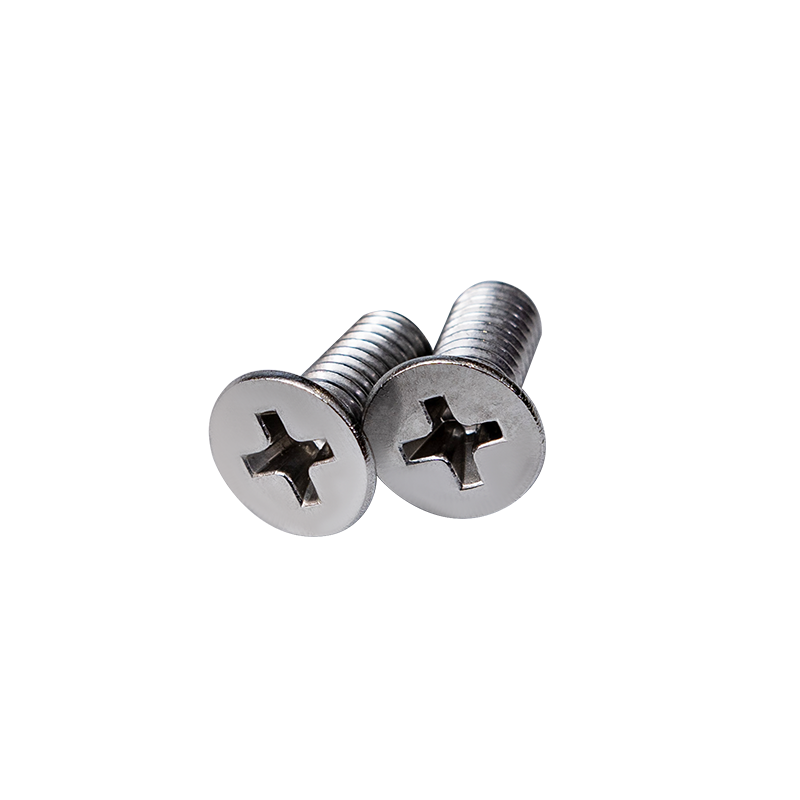 SS304 DIN965 M4 Countersunk Machine ScrewsWith a countersunk head for flush finishes, these stainless steel screws are ideal for thin metal and plastic assemblies where a clean appearance and secure fastening are required.View Product →
The M4 machine screw is the metric close equivalent to a #8 machine screw. Cross-recessed machine screws are available in multiple standards, and selecting a DIN 965 profile gives you a clean countersunk fit in thin metal and plastic assemblies.
Choosing the Right #8 Stainless Steel Screw
Beyond the pilot hole, the screw itself determines how long the connection lasts. For a #8 screw, SS304 is the standard choice for general indoor use, while SS316 offers better resistance to chlorides and marine environments. DIN-compliant screws are easier to specify when you are sending drawings to a supplier, and they simplify traceability across production batches.
When ordering, provide the application environment and the required tensile strength. A stainless steel self-tapping screw with a countersunk head can sit flush in a countersunk hole, which is useful in panel assembly and finishing work. For fasteners that will carry load, the thread type and pilot hole size must be matched to the actual screw dimension you receive, so ask your supplier for the thread minor diameter before committing to a pilot hole size.
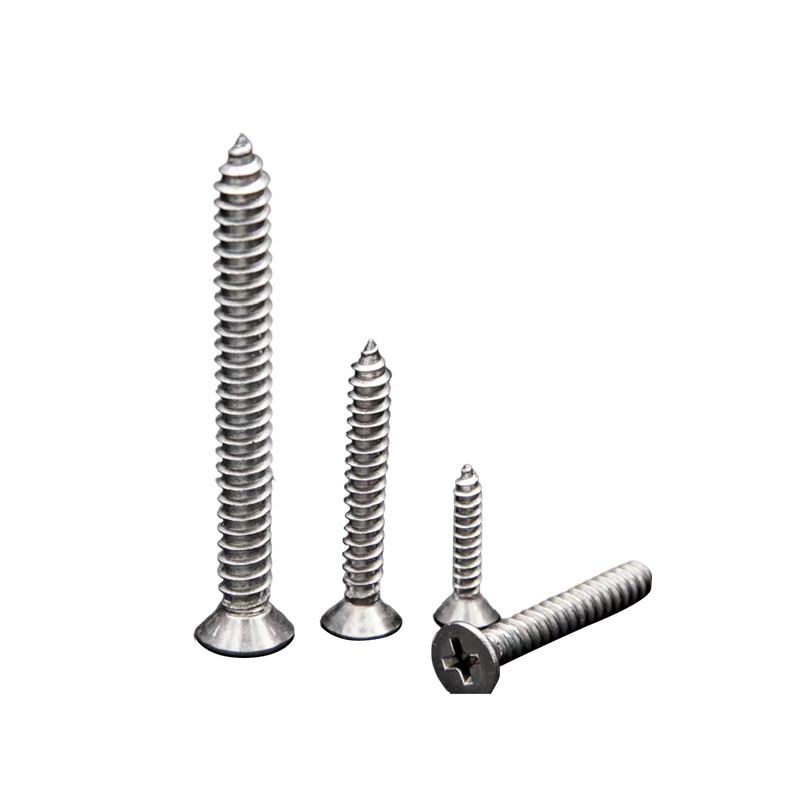 SS304 DIN7982 M4.2 Countersunk Self-Tapping ScrewsFeaturing a countersunk head for flush installation, these self-tapping screws provide corrosion resistance and efficient fastening in panel assemblies and structural applications.View Product →
Self-tapping screws in construction show how the same fastener family performs across structural assemblies, from framing to cladding.
The right 8 screw pilot hole size is not a single number; it is a range that changes with the base material and the screw type. Start with the table above, measure the actual screw's outer thread diameter, and test the fit on a scrap piece before drilling production parts. With the correct pilot hole, a #8 stainless steel screw will seat cleanly, hold firmly, and last through years of service in demanding environments.

 No. 2 Bridge, Chuangxin Road, Dainan Town, Xinghua City, Taizhou City, Jiangsu Province
  +86-17315333748(Wechat)
 +86-17315333748(Wechat/Whatsapp)

