


 русский
 Español
 عربى
عربى italiano
The fastest way to ruin a stainless steel socket head cap screw is to reach for an allen key that is almost the right size. A 5.5 mm key will not drive an M8 screw correctly, and a 6.0 mm key is the only dimension that fits the socket without excessive clearance. For M10 screws, the required key size is 8 mm; for M12, it is 10 mm. These matches are not convenient approximations. They are defined by the width across flats of the hex socket, as set out in DIN 912 and ISO 4762.
Content
- 1 Why Allen Key Dimensions Matter
- 2 Standard Allen Key Dimension Systems
- 3 Understanding the Difference Between Metric and Inch Keys
- 4 How to Match an Allen Key to a Socket Head Cap Screw
- 5 Common Tolerances and Fits
- 6 Practical Considerations for Stainless Steel Fasteners
- 7 Selecting the Right Allen Key for the Job
Why Allen Key Dimensions Matter
The hex socket in an allen bolt is not a generic shape. It has six flat surfaces arranged around a center. An allen key works by pressing against these flats. If the key is undersized, the contact is limited to the corners of the socket, which creates high localized stress. A single overtightening attempt can round the corners and make the fastener impossible to remove. If the key is oversized, it simply will not enter the socket. The dimension of an allen key, therefore, is not a style choice. It is a functional requirement.
For maintenance teams and assembly lines, a damaged socket can stop production and add unnecessary downtime. Knowing the correct allen key dimensions before you start is the cheapest way to avoid this. The size is always the width across flats, measured in millimeters for metric screws and in inches for imperial screws. It is never the bolt diameter or the outer diameter of the tool handle.
Standard Allen Key Dimension Systems
Two systems dominate the fastener industry. The metric system uses millimeter sizes and is the default for DIN, ISO, and GB socket head cap screws. The imperial system uses fractional inch sizes, such as 1/8 inch or 5/32 inch. The table below lists the most common metric allen key dimensions and the socket head cap screw sizes they match.
| Allen Key Size (mm) | Socket Head Cap Screw Size | Typical Application |
|---|---|---|
| 1.5 | M2 | Small electronic devices and precision instruments |
| 2.0 | M2.5 | Compact assemblies and control panels |
| 2.5 | M3 | Light fixtures and consumer equipment |
| 3.0 | M4 | Brackets, clamps and small machine guards |
| 4.0 | M5 | Equipment frames and pump components |
| 5.0 | M6 | Valve covers, cam followers and shaft collars |
| 6.0 | M8 | Conveyor rails, industrial doors and structural braces |
| 8.0 | M10 | Heavy machinery, flanges and lifting points |
| 10.0 | M12 | Press tooling, marine fittings and hydraulic housings |
| 12.0 | M14 | Offshore decking and large pump supports |
| 14.0 | M16 | Railway equipment, cranes and wind energy structures |
For an M8 joint, you need a 6 mm key. The socket in a stainless steel M8 DIN 912 allen bolt is machined to that exact width, with a small allowance for manufacturing tolerance. The product listing provides the full dimensional details so you can confirm the recess size before ordering.
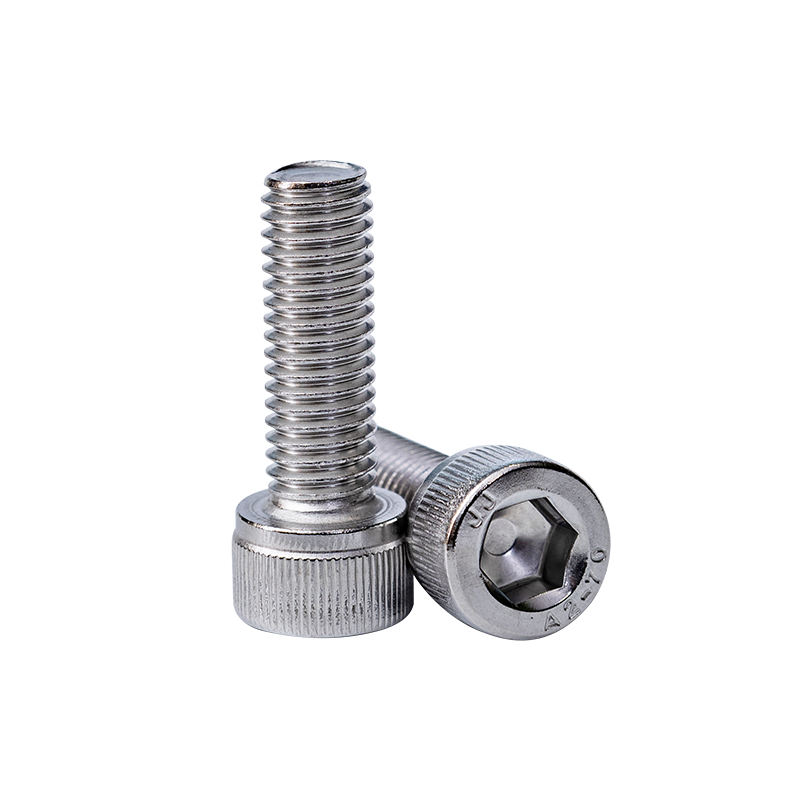 SS304 DIN912 M8 Allen BoltsThese M8 stainless steel socket head cap screws feature a 6 mm hex socket per DIN912. Ideal for confirming recess size before assembly, they suit medium-duty fastening requiring corrosion resistance.View Product →
Understanding the Difference Between Metric and Inch Keys
Inch-series allen keys are commonly used with socket head cap screws manufactured to inch standards. The sizes are expressed as fractions of an inch. A 1/8 inch key measures 3.175 mm, a 5/32 inch key measures 3.969 mm, and a 3/16 inch key measures 4.762 mm. These values are not clean conversions from metric sizes. A 5 mm metric key is not the same as a 3/16 inch key. The difference is 0.24 mm, which in a tight socket can be enough to cause a loose fit and a rounded bolt head.
When a project uses metric screws, buy metric allen keys. When it uses inch screws, buy inch keys. Mixing the two is a common reason for stripped sockets, especially in stainless steel fasteners where the material is softer and more sensitive to poor tool fit.
How to Match an Allen Key to a Socket Head Cap Screw
The surest way to find the right key is to follow a simple three-step process.
- Read the bolt size. On a DIN 912 socket head cap screw, the marking shows the nominal diameter, such as M6 or M10. The recess size is not the same as the bolt diameter, but the standard table gives you the matching key size.
- Measure the recess when precision is required. Use a caliper to measure the width across two opposite flats of the hex socket. Do not measure across corners, because that dimension is always larger. The flat-to-flat measurement is the dimension that matters for the allen key.
- Select a key whose nominal size matches that measurement. If the socket measures 8.0 mm across flats, use an 8 mm allen key. If it measures 6.0 mm, use a 6 mm key.
For an M10 bolt, the socket is manufactured to a nominal 8 mm across flats. The correct allen key is an 8 mm size. The dimensional details of an M10 stainless steel socket head cap screw are useful when you are comparing a replacement key or checking a drawing.
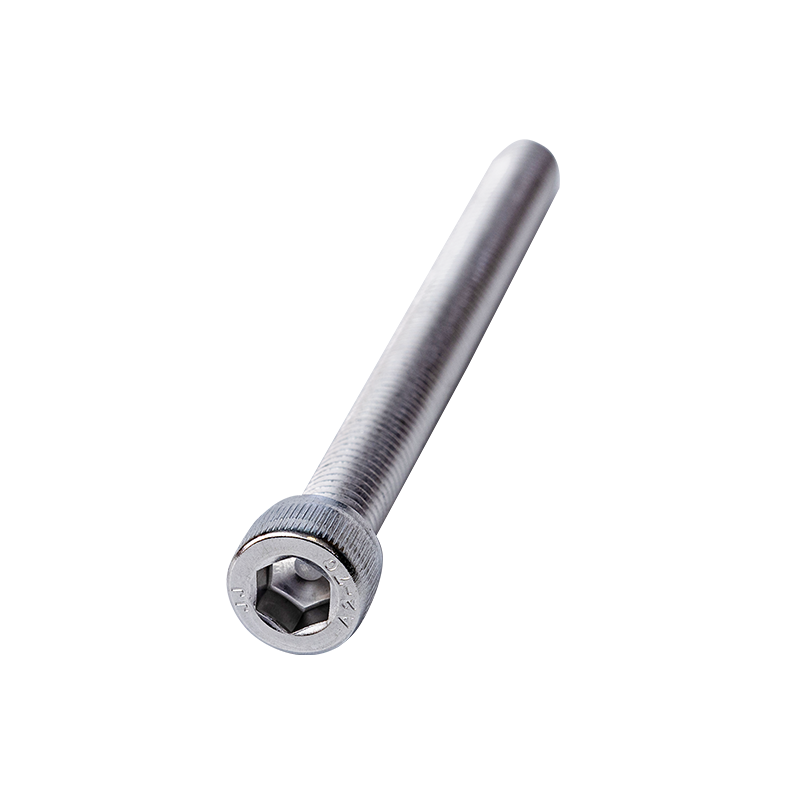 SS304 DIN912 M10 Allen BoltsThese M10 stainless steel socket head cap screws provide an 8 mm hex socket per DIN912. Suitable for heavy-duty use, they ensure proper tool fit and reliable clamping in demanding environments.View Product →
Common Tolerances and Fits
Allen keys and hex sockets are both manufactured to standard tolerances. For a 6 mm hex socket, the width across flats is typically held between 6.00 mm and 6.08 mm. A 6 mm allen key is produced to a tolerance class such as h9 or h10, which may give an actual width of 5.93 mm to 6.00 mm. This small gap is the clearance that allows the tool to enter the socket without binding.
If both parts are at opposite ends of their tolerance ranges, the fit will be loose. A loose key can slip under torque and damage the socket. If the key is on the high end and the socket on the low end, the key may wedge into the socket and require a tap to release. Good quality keys are held to tighter tolerance limits, which is one reason why a premium allen key feels different from a cheap one.
For a 5 mm key used in an M6 bolt, the same principle applies. The clearance is small but deliberate. This is why you should never substitute an undersized key with a ball-end tool for final tightening. The reduced contact area of a ball-end key can add pressure to only three corners of the socket, which may deform stainless steel.
Practical Considerations for Stainless Steel Fasteners
Stainless steel socket head cap screws are used in outdoor, marine, and chemical environments because they resist corrosion. If you are working with standard metric fasteners, the common specifications of stainless steel allen screws can help you identify the correct dimensions and materials. However, the mechanical behavior of stainless steel is different from carbon steel. It is softer and more prone to galling, which is a form of cold welding that occurs when two stainless surfaces slide against each other under pressure.
A correct allen key fit is the most direct way to reduce this risk. The key must enter the socket fully and contact all six flats. If the key is undersized or the socket has debris, the actual contact area is reduced and localized pressure can cause the socket to pick up metal from the key. Over time, this can make the bolt head nearly impossible to remove.
Keep the key and the socket clean before each use. Even a thin film of grease or dirt changes the effective dimension. Use the shortest possible lever for final tightening in confined areas, and always pull the key rather than pushing if you can, because pulling gives you a stable grip and avoids the key slipping out of the socket.
Selecting the Right Allen Key for the Job
Start by looking at the fastener you are installing. If the bolt is marked M8, choose a 6 mm key. If it is marked M10, choose an 8 mm key. If the bolt is in inch series, measure the flat-to-flat distance and convert it to the nearest fractional size that is standard for allen keys. Always match the key to the socket dimension, not to the bolt diameter.
Choose a key with a comfortable length. Long-arm keys provide extra leverage for heavy torquing, while short-arm keys are easier to rotate in tight spaces. For stainless steel fasteners, you want a key that does not flex excessively. A flexible key can twist and prevent the hex flats from seating evenly, which is another potential cause of rounded sockets.
Inspect the key before use. Worn edges or rounded corners will not transmit torque properly. The corners of a new key are sharp enough to bite into the flat surfaces of the socket. As the key wears, its corners become rounded and the effective width across flats decreases. Replacing a worn hex key is cheaper than replacing a stripped bolt.
Allen key dimensions are the bridge between the fastener and the tool. A correctly sized key makes installation simple and safe, while an incorrect one creates the risk of costly damage. For stainless steel socket head cap screws, the extra sensitivity of the material makes tool fit even more important. Use the standard match between bolt size and key size, verify with a caliper when tolerances are tight, and keep your keys in good condition. A 6 mm key for M8, an 8 mm key for M10, and a 10 mm key for M12 are the dimensions that will keep your stainless steel fastenings performing as designed.

 No. 2 Bridge, Chuangxin Road, Dainan Town, Xinghua City, Taizhou City, Jiangsu Province
  +86-17315333748(Wechat)
 +86-17315333748(Wechat/Whatsapp)

