


 русский
 Español
 عربى
عربى italiano
You are holding a replacement bolt, but the original is long gone. Or you are standing at a supply counter with a threaded rod, and you need to know whether it is M10 x 1.5 or M10 x 1.25 before committing to the matching nut. In both situations, the same question comes up: how to determine thread pitch quickly and with confidence.
The short answer is that you have three practical options, in order of reliability: a thread pitch gauge, a ruler, and a vernier caliper. A pitch gauge gives you the answer in seconds. A ruler gets you close enough for standard fasteners. A caliper is useful when you need a precise metric reading. Choose the method based on the tools you have and the accuracy you need, because matching the pitch matters as much as matching the diameter.
Content
- 1 What Thread Pitch Is and Why It Matters
- 2 The Formula Behind Thread Pitch
- 3 Method 1: Use a Thread Pitch Gauge
- 4 Method 2: Measure with a Ruler
- 5 Method 3: Use a Vernier Caliper for a Precise Reading
- 6 Metric and Imperial Thread Pitches at a Glance
- 7 Common Mistakes and Their Consequences
- 8 Selecting the Right Fastener After Measuring
- 9 Confirming the Nut Match Before Assembly
What Thread Pitch Is and Why It Matters
Thread pitch is the distance from a point on one thread to the corresponding point on the next thread, measured parallel to the axis of the screw or bolt. Metric fasteners express pitch in millimeters, so a pitch of 1.5 mm means that each full turn advances the nut 1.5 mm along the bolt. Imperial fasteners express pitch as threads per inch, which counts how many complete threads fit into one inch of threaded length.
Getting the pitch wrong is one of the most common causes of assembly failure. A bolt and nut with the same nominal diameter but different pitches will not engage cleanly. You may force one or two turns, but the threads will soon jam, and continuing to tighten will strip the internal thread, damage the external thread, or both. In load-bearing assemblies, an incorrect pitch also changes the load distribution across the threads, which accelerates fatigue in vibration or shock applications.
The Formula Behind Thread Pitch
Before reaching for any tool, understand the relationship that defines pitch. For metric threads, pitch P equals threaded length L divided by the number of thread crests n within that length. In symbols: P = L / n.
For imperial threads, the same relationship is inverted. Threads per inch TPI equals the number of crests n divided by the length L in inches. In symbols: TPI = n / L.
Here is a practical example. You measure 12 mm of threaded length on an M10 bolt and count 8 crests. The pitch is 12 / 8, which equals 1.5 mm, the standard coarse pitch for M10. The calculation gives you a reliable ballpark; a thread gauge confirms the exact standard.
Method 1: Use a Thread Pitch Gauge
A thread pitch gauge is a small tool with a series of toothed blades, each labeled with a pitch value or a TPI value. Press a blade against the unknown thread and see whether it fits without rocking or gap. When a blade seats perfectly into the thread grooves, you have identified the pitch.
This is the most reliable method because it compares the unknown thread directly to a known standard. It avoids the reading errors that come from measuring distances by eye, and it works for both metric and imperial series when the gauge set covers both systems. Keep the blades clean and replace the set if a blade tip is bent, because a damaged blade can slip into a neighboring pitch and give you a false confirmation.
A pitch gauge is inexpensive and pocket-sized, which makes it the standard tool for mechanics, maintenance teams, and quality inspectors. If you buy only one tool for thread identification, buy this one.
Method 2: Measure with a Ruler
When you do not have a pitch gauge, a ruler with millimeter and inch graduations is the next best option. The procedure is simple:
- Align the ruler along the threaded section, parallel to the thread axis.
- Measure a known length, ideally 10 mm or 1 inch, starting at a thread crest.
- Count the number of thread crests within that length.
- For metric pitch, divide the length by the number of crests. For imperial threads, count the crests in one inch.
For example, if you measure 10 mm on an M8 bolt and count 8 crests, the pitch is 10 / 8, which equals 1.25 mm, matching the standard coarse pitch for M8. The ruler method is accurate enough for standard threads, but it loses precision on fine threads and small diameters. The part can roll on the bench, the ruler can shift, and the eye can misjudge a partial crest. For a quick field check, it works. For a production decision, confirm with a gauge.
This method is especially useful for long parts such as threaded rods, where you can measure across a full 25 mm or 50 mm and average out small reading errors. Full-length stainless steel threaded rods are among the most common parts checked this way in workshops and supply stores.
Once you have confirmed the pitch, the next question is whether the rod will hold up in your operating environment. Our article on long-term reliability of threaded rods in harsh environments examines that issue in practical terms.
When you need a rod that matches your measured pitch and provides dependable corrosion resistance, an SS304 DIN975 M10 threaded rod is a straightforward option for general industrial use.
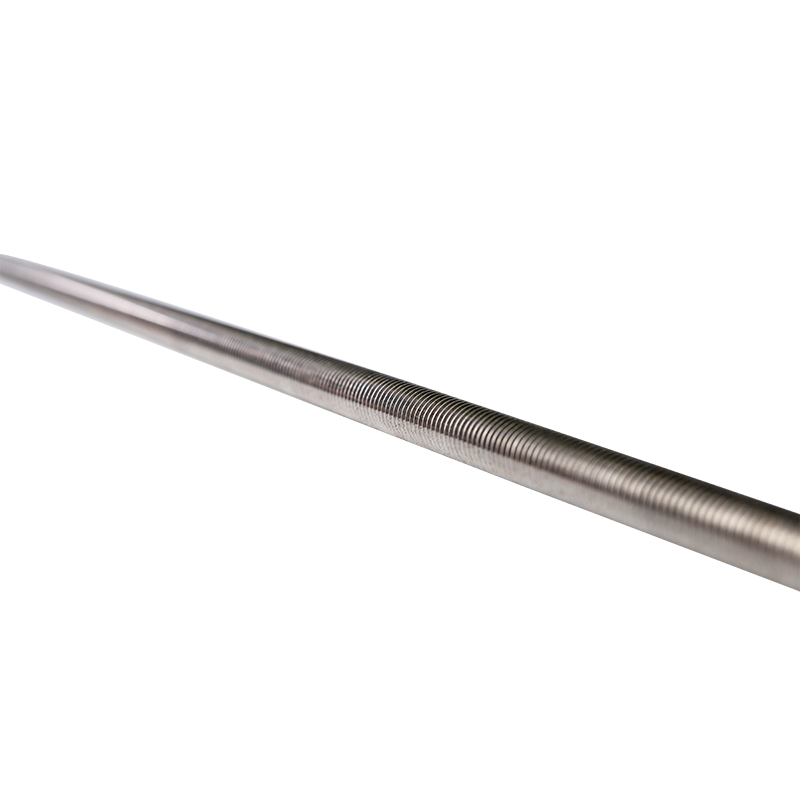 Stainless Steel 304 DIN975 M10 Threaded Rods Suppliers, Custom Company - JiangsuJiangsu Jiajie is China Custom SS304 DIN975 M10 Threaded Rods Suppliers and Company, The SS304 DIN975 Thread Rod M10*1m is a versatile co...View Product →
Method 3: Use a Vernier Caliper for a Precise Reading
A vernier caliper gives you an independent measurement of metric pitch when you want to confirm a ruler result or when you are dealing with fine threads. The technique is to measure across several thread crests and divide by the number of pitch gaps.
Zero the caliper jaws, open them, and place them on the crests of two threads that are several pitches apart. If you measure from the first crest to the sixth crest, you have covered five pitch gaps. A span of 7.5 mm corresponds to a pitch of 7.5 / 5, or 1.5 mm. Measuring a longer span reduces the relative error of the reading.
The most common mistake with this method is pressing the caliper jaws into the root of the thread instead of the crests, which produces a reading that is too small. Another is tilting the caliper relative to the thread axis, which produces a reading that is too large. Keep the jaws square to the axis and aligned with the same side of the thread crest.
Metric and Imperial Thread Pitches at a Glance
Metric and imperial threads are both common in equipment, and the visual difference between a coarse metric thread and a similar imperial thread can be subtle. To convert a metric pitch to TPI, divide 25.4 by the pitch in millimeters. A 1.5 mm metric pitch equals 25.4 / 1.5, or approximately 16.9 TPI, which is close to the imperial 3/8-16 thread. Knowing this helps you pick the correct blade from a combination thread gauge.
| Nominal Size | Coarse Pitch (mm) | Fine Pitch (mm) | Coarse TPI | Fine TPI |
|---|---|---|---|---|
| M6 | 1.0 | 0.75 | 25.4 | 33.9 |
| M8 | 1.25 | 1.0 | 20.3 | 25.4 |
| M10 | 1.5 | 1.25 | 16.9 | 20.3 |
| M12 | 1.75 | 1.25 | 14.5 | 20.3 |
| M16 | 2.0 | 1.5 | 12.7 | 16.9 |
| M20 | 2.5 | 1.5 | 10.2 | 16.9 |
Use the table as a quick reference when you measure a part and need to decide which thread standard it belongs to. Remember that coarse threads are the default for most stainless steel fasteners, and fine threads are used where more precise adjustment or better vibration resistance is required.
Common Mistakes and Their Consequences
Even experienced workshop personnel occasionally mix up pitches, usually because two fasteners look almost identical side by side. An M10 x 1.5 and an M10 x 1.25 share the same 10 mm diameter, and at a glance the threads appear similar. Forcing an M10 nut with a 1.25 pitch onto an M10 bolt with a 1.5 pitch is a classic failure scenario that cross-threads the parts within the first two turns.
Another common mistake is assuming that all fasteners of the same nominal size have the same pitch. Most size series include a coarse, a fine, and sometimes an extra-fine variant. DIN, ISO, and GB standards define these series, so a bolt from one standard may not match a nut from another even when the diameters are identical. Confirming the pitch is mandatory whenever you mix fasteners from different suppliers or standards.
The consequences go beyond a jammed thread. In structural or pressure-containing assemblies, a cross-threaded joint reduces clamp load, and under vibration the assembly can loosen. In fluid systems, it can cause leakage. In the worst case, a stripped thread during installation leaves you with a damaged component and an expensive rework.
Selecting the Right Fastener After Measuring
Once you know the diameter and pitch, material selection becomes the next decision. For stainless steel fasteners in ordinary industrial environments, SS304 offers a good balance of corrosion resistance and cost. For chloride exposure or marine conditions, SS316 is the safer choice. If you are comparing these two alloys, our guide to SS304 versus SS316 stainless steel hex bolts explains the performance difference in practical terms.
On the bolt side, the measured pitch must match the product specification. A standard hex head bolt is the default choice for most equipment assembly, and an SS304 DIN933 M10 hexagon head bolt uses the standard M10 coarse pitch of 1.5 mm. If your measured pitch is 1.25 mm, you are looking at a fine-thread variant, and the replacement must match accordingly.
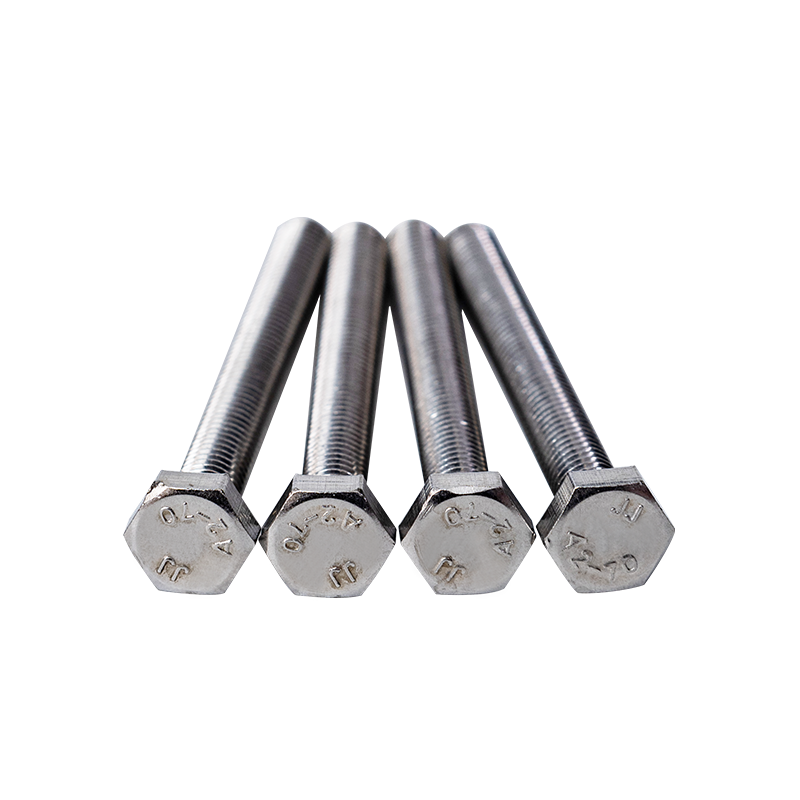 Stainless Steel 304 DIN933 M10 Hexagon Head Bolts Suppliers, Custom Company - JiJiangsu Jiajie is China Custom SS304 DIN933 M10 Hexagon Head Bolts Suppliers and Company, The M10 thread diameter ensures a secure fit an...View Product →
Confirming the Nut Match Before Assembly
The nut is the second half of the joint, and it must match the bolt in both nominal diameter and pitch. When you have confirmed a 1.5 mm pitch on an M10 bolt, choose a nut with the same pitch specification. An SS304 DIN934 M10 hex nut is made for that standard coarse pitch and will engage fully over the entire threaded length.
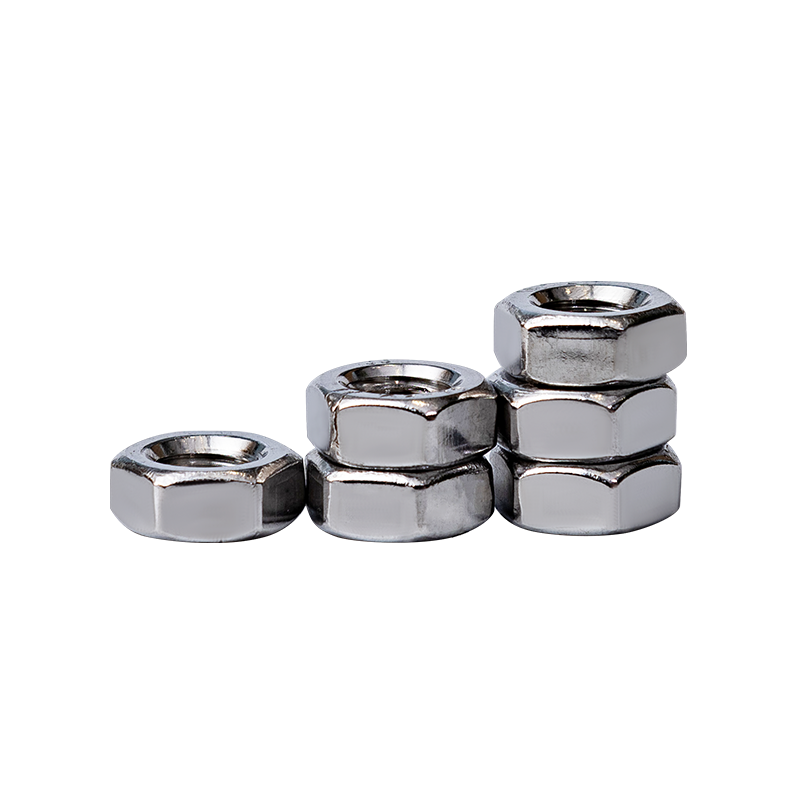 Stainless Steel 304 DIN934 M10 Hex Nuts Suppliers, Custom Company - Jiangsu JiajJiangsu Jiajie is China Custom SS304 DIN934 M10 Hex Nuts Suppliers and Company, SS304 DIN934 Hex Nut M10 offers secure clamping and reli...View Product →
If you are ever unsure between two pitch values, take the time to double-check with a gauge before assembly. Fastener manufacturers with long production experience can also help match an existing part when you provide the measured diameter, pitch, and length. Identifying the pitch correctly is a five-minute task that prevents rework, downtime, and safety problems later.

 No. 2 Bridge, Chuangxin Road, Dainan Town, Xinghua City, Taizhou City, Jiangsu Province
  +86-17315333748(Wechat)
 +86-17315333748(Wechat/Whatsapp)

