


 русский
 Español
 عربى
عربى italiano
Content
- 1 Stainless Steel Fasteners in Aluminum: Yes, With Conditions
- 2 Why Galvanic Corrosion Happens Between the Two Metals
- 3 Exposure Environment: When the Risk Becomes Real
- 4 Choosing the Right Stainless Steel Grade
- 5 Installation Practices That Protect the Joint
- 6 Fastener Types That Work Best With Aluminum
- 7 Inspection and Maintenance
- 8 Final Takeaway
Stainless Steel Fasteners in Aluminum: Yes, With Conditions
You are putting together an outdoor aluminum frame for a solar array, a handrail, or a piece of marine equipment, and the assembly drawing calls for stainless steel bolts into aluminum members. Rain will hit the joint. A fabricator down the shop floor warns you that stainless and aluminum "can't touch." Your instinct is to verify that claim before changing the design, and that instinct is correct.
The direct answer: stainless steel fasteners in aluminum are safe for the vast majority of structural and outdoor applications when three conditions are met:
- The stainless fastener area stays small relative to the aluminum surface area.
- The stainless grade matches the exposure conditions of the site.
- The joint is isolated and designed so water cannot remain in contact with both metals.
Engineers use this exact pairing every day in solar racking, architectural metalwork, and transportation equipment. With proper detailing, the joint serves for decades.
Why Galvanic Corrosion Happens Between the Two Metals
Galvanic corrosion is an electrochemical reaction. When two dissimilar metals are electrically connected through an electrolyte, the less noble metal becomes the anode and corrodes preferentially. In the stainless-to-aluminum pairing, stainless steel sits higher in the galvanic series and acts as the cathode, while aluminum acts as the anode. The aluminum slowly gives up metal to protect the stainless steel.
The Galvanic Series and the Area Ratio
The tendency to corrode matters less than the rate. That rate is controlled by the relative surface areas of the two connected metals, not just by their positions in the galvanic series. Galvanic corrosion concentrates on the anode. The same galvanic current spread across a large anode causes slow, shallow attack, while the same current concentrated on a small anode produces rapid, deep pitting.
Small Fastener Area, Large Aluminum Surface
This area relationship is why stainless steel fasteners in aluminum are normally considered safe. A single M10 stainless bolt head represents only a few square centimeters of cathode area, while the aluminum member around it can be thousands of square centimeters. The low current density on the aluminum anode keeps the corrosion rate negligible in most climates. The dangerous reverse is the configuration engineers avoid: aluminum rivets or bolts holding down a large stainless steel plate. There, a tiny aluminum anode feeds a large stainless cathode, and the aluminum fails quickly.
Exposure Environment: When the Risk Becomes Real
Without an electrolyte, the galvanic circuit is open and corrosion effectively stops. That is why the same stainless-to-aluminum joint can live quietly for years in a dry factory and fail within months on a saltwater dock. Rain, condensation, humidity, and especially chlorides activate the cell. The table below summarizes how exposure changes both the risk and the necessary precautions.
| Exposure Condition | Galvanic Risk | Recommended Grade | Interface Treatment |
|---|---|---|---|
| Dry indoor (machinery, cabinets) | Very low | SS304 | Not required; anti-seize optional |
| Sheltered outdoor (under eaves, covered structures) | Low | SS304 | Isolation washer recommended |
| Open outdoor, inland (rain, humidity) | Moderate | SS304 or SS316 | Isolation plus sealant recommended |
| Coastal, marine, road-salt exposure | High | SS316 | Isolation, sealant, and drainage required |
| Industrial atmospheres with chemical moisture | High | SS316 | Isolation plus protective coating required |
The pattern is straightforward: the more aggressive the electrolyte, the higher the risk. Even in coastal air, the fix is not to abandon stainless fasteners but to specify the right grade and seal the joint properly.
Choosing the Right Stainless Steel Grade
SS304 for General Inland Use
Type 304 austenitic stainless is the default for most inland applications. Its 18 percent chromium and 8 percent nickel provide strong resistance to atmospheric corrosion, and its cost is moderate compared with higher-alloy grades. For aluminum assemblies in dry or sheltered inland sites, 304 fasteners deliver dependable service. If you are deciding between the two most common grades, see how 304 and 316 stainless steel hex bolts compare for a practical breakdown of corrosion resistance and cost.
SS316 for Coastal and Marine Use
Type 316 adds molybdenum, typically around 2 to 3 percent, which dramatically improves resistance to chloride-induced pitting and crevice corrosion. Near the coast, on boats, under road-salt spray, or in industrial atmospheres, 316 is the responsible specification for stainless fasteners in aluminum. The small additional cost is trivial compared with the cost of replacing corroded fasteners in a live structure. For marine-grade bolting of aluminum components, SS316 hex bolts are the practical default.
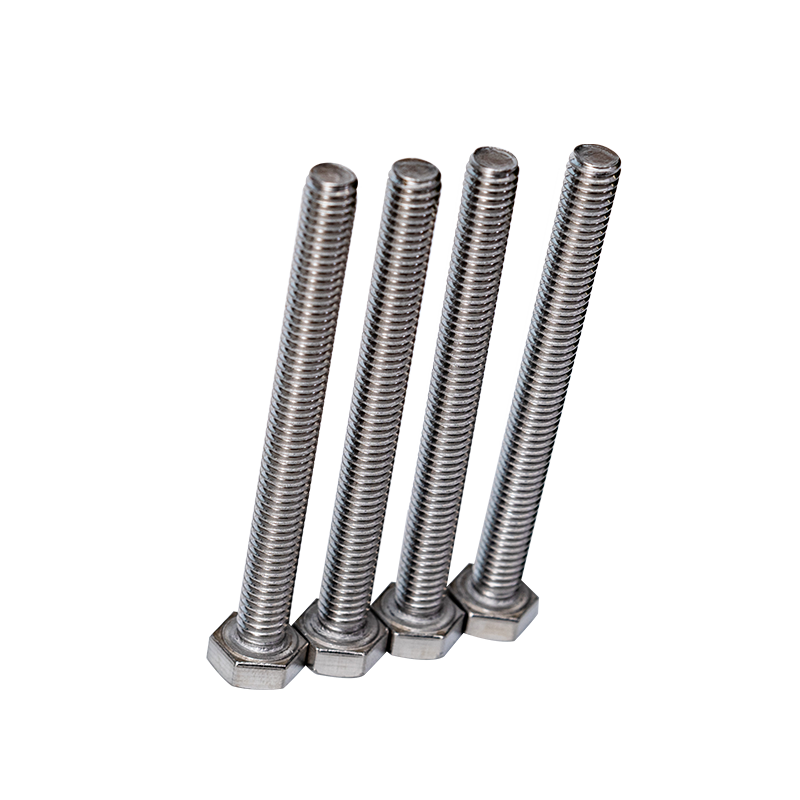 Stainless Steel 316 DIN933 M10 Hexagon Head Bolts Suppliers, Custom Company - JiJiangsu Jiajie is China Custom SS316 DIN933 M10 Hexagon Head Bolts Suppliers and Company, The M10 thread diameter ensures a secure fit an...View Product →
Installation Practices That Protect the Joint
The material selection sets the baseline; the installation details decide the outcome. Three practices matter most: break the metal-to-metal contact, keep the joint dry, and make sure it stays dry over time.
Isolate the Interface
A thin barrier between the stainless fastener and the aluminum surface interrupts the galvanic circuit. Nylon washers, EPDM gaskets, and insulating sleeves are simple, cheap, and effective. A stainless flat washer under the head or nut performs a dual role: it spreads the clamping load over a wider bearing area and provides a replaceable surface that can be paired with an isolating layer. In critical assemblies, designers use SS304 flat washers as the load-spreading element and add a nylon washer as the isolator.
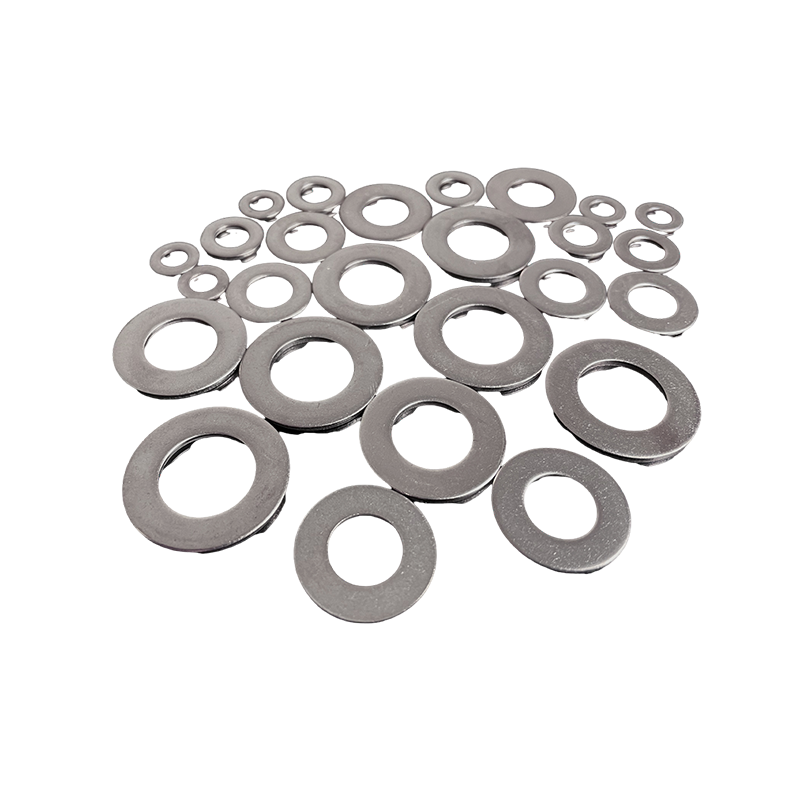 Stainless Steel 304 DIN125/GB97 M10 Flat Washers Suppliers, Custom Company - JiaJiangsu Jiajie is China Custom SS304 DIN125/GB97 M10 Flat Washers Suppliers and Company, SS304 flat washers are highly versatile componen...View Product →
Seal and Drain
Sealing keeps electrolyte out of the crevice where the fastener meets the aluminum. A corrosion-inhibiting paste, polyurethane sealant, or silicone applied to the threads and under the bolt head blocks water ingress. Drainage is equally important: position the joint so water cannot pool around the fastener, and avoid designs that trap moisture between the two metals.
Step-by-Step Joint Preparation
- Clean the aluminum surface and the fastener to remove oil, oxide, and debris.
- Place an isolation washer between the stainless head or nut and the aluminum surface.
- Apply anti-seize or sealant to the threads and the underside of the head.
- Torque the fastener to the specified value and re-check after the first thermal cycle.
- Seal the annular gap around the fastener head to keep water from entering the crevice.
For further guidance on protecting bolted joints in wet locations, how to prevent stainless steel hex bolts from rusting in wet environments applies equally to aluminum assemblies.
Fastener Types That Work Best With Aluminum
Aluminum is soft relative to steel, so load distribution and thread engagement matter. A practical rule for tapped aluminum is to aim for thread engagement of at least two times the bolt diameter, because aluminum threads strip more easily than steel threads. Where the wall is too thin to provide that depth, use a threaded insert or a through-bolt with a nut. The following fastener families cover the majority of aluminum structures.
Hex Bolts for Structural Connections
Hex head bolts remain the workhorse for structural aluminum connections. They provide reliable clamping with standard tools and allow straightforward preload control. Pair them with flat washers under the head and nut to prevent the bearing surface from digging into the aluminum.
Flange Bolts for Soft Aluminum
A hexagon flange bolt integrates the washer into the head. The larger bearing area lowers the contact pressure on the aluminum surface, which is useful when you are working with thin-wall extrusions or soft aluminum alloys. Because the flange spreads the load, SS304 hexagon flange bolts can eliminate the need for a separate washer in many applications.
Stainless Steel 304 DIN6921 M10 Hexagon Flange Bolts Suppliers, Custom Company -Jiangsu Jiajie is China Custom SS304 DIN6921 M10 Hexagon Flange Bolts Suppliers and Company, The SS304 DIN6921 Hexagon Flange Bolts M10 a...View Product →
Threaded Rods and Custom Lengths
Where a fixed bolt length is impractical, stainless threaded rods let you cut exact lengths on site and use nuts at both ends. Their long, uniform thread form also serves well when joining stacked aluminum members. Whatever the geometry, choosing stainless materials and correct isolation measures keeps the assembly durable.
Inspection and Maintenance
Even a well-designed joint deserves periodic checks in harsh environments. Look for white or gray powder around the fastener head; that residue is aluminum oxide and signals active galvanic corrosion. Light pitting around the hole edge is an early warning that the interface is wet. In coastal and industrial settings, inspect stainless-to-aluminum joints at least once a year. Early intervention, usually by re-sealing or replacing the isolation washer, extends the service life considerably.
Final Takeaway
Stainless steel fasteners in aluminum are a routine, reliable solution when the physics of galvanic corrosion are respected. Keep the stainless area small relative to the aluminum surface, match the stainless grade to the environment, isolate the interface, and design for drainage. Do those four things, and the stainless-bolted aluminum assembly will hold up in service for years.

 No. 2 Bridge, Chuangxin Road, Dainan Town, Xinghua City, Taizhou City, Jiangsu Province
  +86-17315333748(Wechat)
 +86-17315333748(Wechat/Whatsapp)

