


 русский
 Español
 عربى
عربى italiano
Content
- 1 Why It Matters to Correctly Identify Stainless Steel Screws
- 2 5 Methods to Tell If a Screw Is Stainless Steel (Ranked by Practicality)
- 3 Understanding Grade Markings: A2, A4, 304, 316 and What They Mean
- 4 How to Spot Counterfeit or Mislabeled Stainless Steel Screws
- 5 Choosing the Right Stainless Steel Screw for Your Application
- 6 Conclusion
Why It Matters to Correctly Identify Stainless Steel Screws
Using the wrong fastener in the wrong environment is one of the most common — and costly — mistakes in construction, manufacturing, and maintenance. A screw that looks like stainless steel but is actually zinc-plated carbon steel may perform identically for the first few months. Then comes the rust, the staining, the seized threads, and ultimately the structural failure or expensive rework.
The stakes are especially high in demanding environments. Outdoor decking exposed to rain, coastal structures within a few kilometers of the sea, food processing equipment cleaned with caustic chemicals, or marine hardware submerged in saltwater — all of these applications require stainless steel screws of a verified grade. Substituting a plated or lower-grade fastener creates a liability that the initial cost saving never justifies.
Fortunately, identifying whether a screw is genuinely stainless steel does not require laboratory equipment. A combination of simple, non-destructive tests conducted on-site can give you a reliable answer in under two minutes. This guide walks you through those methods in order of practicality, then covers grade markings, supplier red flags, and how to match the right grade to your application.
5 Methods to Tell If a Screw Is Stainless Steel (Ranked by Practicality)
The five methods below are arranged from the fastest and least invasive to the most definitive. For most situations, the first two or three will give you a confident answer without any special tools.
1. The Magnet Test (Fast, Non-Destructive, ~80% Reliable)
Hold a small magnet — even a fridge magnet works — against the screw. Most stainless steel grades used in screws and bolts are austenitic (grades 304 and 316), which are non-magnetic or only weakly magnetic. If the screw shows strong magnetic attraction, it is almost certainly carbon steel, alloy steel, or a low-grade ferritic stainless.
The important caveat: some ferritic stainless grades (such as 430) are magnetic, and austenitic screws that have been cold-worked during thread rolling can develop slight magnetism. A weak pull is inconclusive; a strong, positive stick is a clear negative result. Use the magnet test as a quick first filter, then confirm with a visual inspection.
2. Visual Inspection: Color, Finish, and Surface Quality
Authentic stainless steel screws have a distinctive appearance that differs from plated alternatives once you know what to look for.
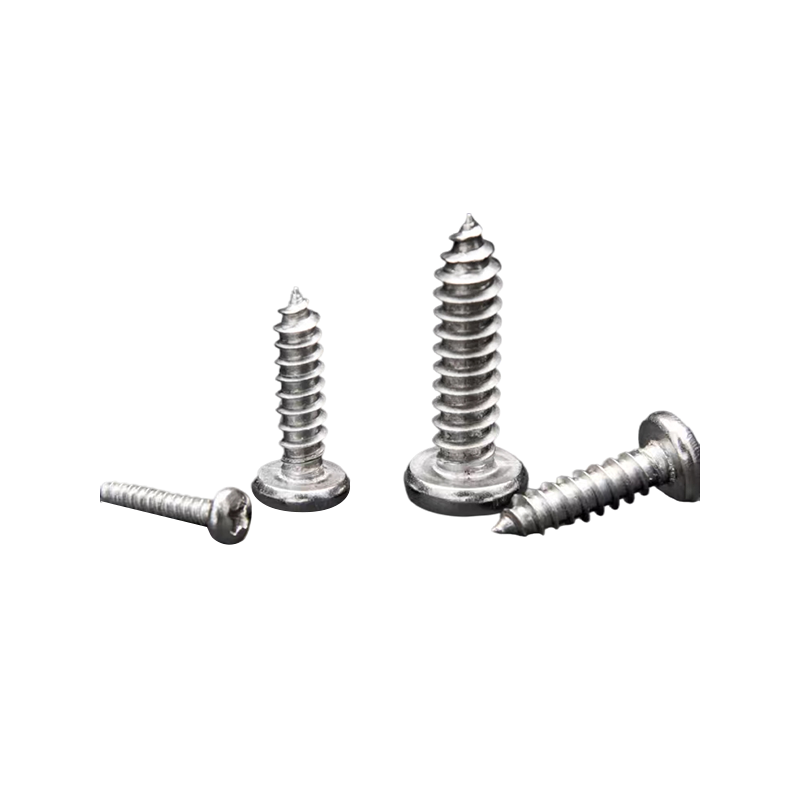
- Color: Stainless steel has a bright, neutral silver-grey tone with a subtle gradient from light to dark when viewed at different angles. Zinc-plated screws appear flatter and slightly bluer-white. Nickel-plated screws have a brighter, more uniform mirror-like shine.
- Surface finish: Stainless steel typically shows a fine, satin-like brushed texture. The surface is smooth and chip-resistant. Plated screws, particularly older or lower-quality ones, may show minor flaking, blotching, or uneven coating thickness around the thread crests.
- Thread profile: On genuine stainless screws, the threads are sharp, uniform, and free of pitting. Plated screws sometimes show slight rounding at the thread tips where the coating has built up.
Visual inspection alone is not conclusive — a freshly plated screw can closely mimic the appearance of stainless steel. However, combined with the magnet test, it eliminates the majority of non-stainless candidates.
3. Head Markings and Packaging Labels
Many stainless steel screws and bolts carry grade markings stamped or embossed on the head. Common markings include "A2," "A4," "SS," "304," or "316." These correspond to internationally recognized material standards. If no marking is present, check the product packaging, technical data sheet, or mill certificate supplied by the manufacturer.
The absence of a marking does not rule out stainless steel — many smaller screws lack head space for stamping — but the presence of a clear grade marking is the most reliable single indicator short of chemical analysis. If a supplier cannot provide documentation confirming the alloy grade and country of origin, treat that as a red flag.
4. The Spark Test (Requires a Bench Grinder, Destructive)
Briefly touch the screw to a rotating grinding wheel and observe the sparks. Carbon steel produces long, bright yellow-white sparks with forked burst patterns. Stainless steel (particularly 300-series austenitic grades) produces notably fewer, shorter, and more orange-red sparks with less branching. This method requires some experience to interpret correctly and destroys the tested fastener, so it is best suited to verifying a sample from a bulk lot rather than individual pieces.
5. Acid Spot Test (Most Definitive Field Test, Chemical Hazard)
A drop of dilute nitric acid (or a proprietary stainless steel testing solution) placed on the screw surface will react vigorously with carbon steel, producing a brown-orange stain within seconds. Stainless steel resists the acid and shows little to no reaction, maintaining a clean surface. This test is highly accurate but requires appropriate chemical handling: gloves, eye protection, and good ventilation are mandatory. It is primarily used in quality control environments or when the stakes of misidentification are especially high.
Understanding Grade Markings: A2, A4, 304, 316 and What They Mean
Identifying that a screw is stainless steel is only half the equation. The grade determines whether it will actually perform in your specific environment. The table below maps the most common fastener grade systems to their material composition and recommended applications.
| Grade (ISO / ASTM) | Equivalent | Chromium / Nickel | Key Property | Typical Use Case |
|---|---|---|---|---|
| A2 / 304 | 18/8 stainless | ~18% Cr / ~8% Ni | Good general corrosion resistance | Indoor, light outdoor, food equipment, architecture |
| A4 / 316 | Marine grade | ~16% Cr / ~10% Ni + Mo | Superior resistance to chlorides and acids | Marine, coastal, chemical processing, swimming pools |
| A2-70 / A4-70 | High-strength | Same as A2/A4 | Minimum 700 MPa tensile strength | Structural bolted joints, heavy machinery |
| 410 / Martensitic | Grade 410 | ~12% Cr / minimal Ni | High hardness, moderate corrosion resistance | Cutlery, pump shafts, dry indoor applications |
| 430 / Ferritic | Grade 430 | ~17% Cr / no Ni | Magnetic, moderate corrosion resistance | Decorative trim, mild indoor environments |
For the vast majority of outdoor construction and industrial applications, A2 (304) is the minimum acceptable grade, and A4 (316) is required wherever chloride exposure is a factor. If a screw is marketed simply as "stainless" without a grade, it may be 430 ferritic or an unspecified lower-alloy grade — not suitable for demanding environments.
How to Spot Counterfeit or Mislabeled Stainless Steel Screws
The global fastener market includes a significant volume of substandard product: carbon steel screws with a thin stainless coating, low-grade ferritic stainless sold as austenitic, and fasteners stamped "A4" that contain neither the chromium nor molybdenum content required by the specification. Knowing how to screen for these risks protects both your project and your reputation.
Common Deceptive Practices
- Thin-film coatings: A carbon steel screw coated with a thin layer of nickel or stainless-colored PVD coating will pass a visual inspection and may even resist the magnet briefly. It will fail the acid test and begin corroding within months once the coating is scratched.
- Grade exaggeration: Selling 304 as 316, or unmarked 430 as A2, is particularly common in price-driven bulk orders. The price difference between genuine A4/316 and lower-grade stainless can be 30–50%, creating a strong incentive for misrepresentation.
- Missing documentation: Reputable manufacturers supply material test reports (MTRs) or mill certificates that confirm chemical composition, mechanical properties, and batch traceability. A supplier unable or unwilling to provide these documents should be treated with extreme caution.
How to Verify Before You Buy
Request a material test report for every bulk order, and cross-check the reported chromium and nickel percentages against the relevant standard (ISO 3506, ASTM F593). For high-value or safety-critical projects, commission independent third-party testing using X-ray fluorescence (XRF) spectroscopy — a non-destructive method that identifies elemental composition within seconds and is now available through many inspection services at reasonable cost.
As a practical on-site check, apply the magnet test to multiple samples from the same lot. Inconsistent results — some screws attracting the magnet, others not — within a supposedly uniform batch is a strong indicator of mixed or mislabeled material.
Choosing the Right Stainless Steel Screw for Your Application
Once you have confirmed that a fastener is genuinely stainless steel and identified its grade, the final step is verifying it is the correct grade for the job. The following guidance covers the most common application categories.
Indoor and General Construction
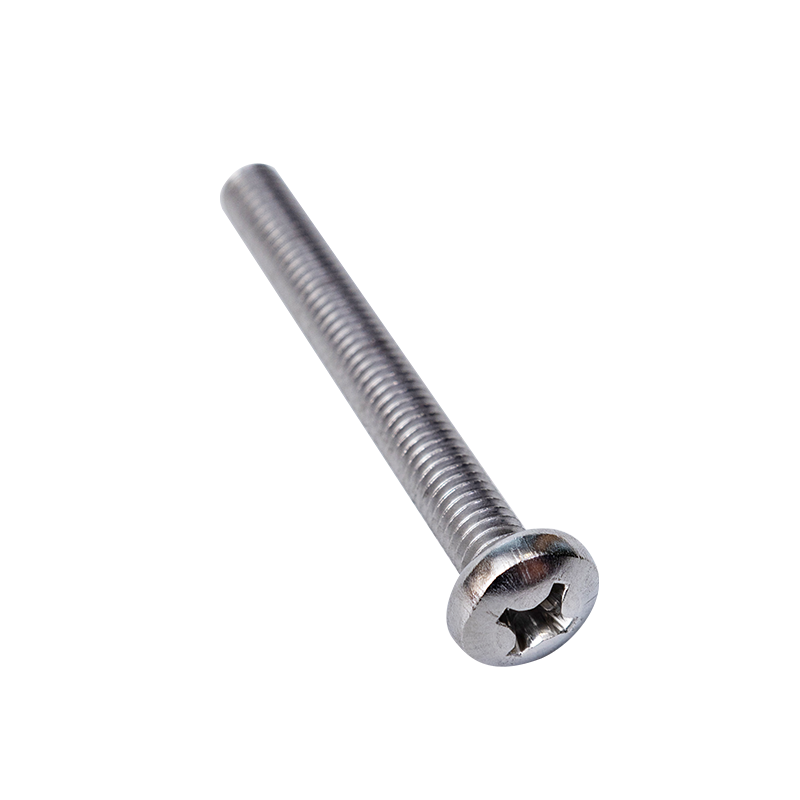
A2 (304) stainless steel is the standard choice for interior applications, light commercial construction, and environments with only occasional moisture exposure. It provides excellent corrosion resistance at a cost-effective price point. For machine assembly and structural connections, specify A2-70 or A4-70 to meet minimum tensile strength requirements. Our range of self-tapping screws in A2 grade covers the majority of sheet metal and light structural fastening needs.
Outdoor and Exposed Environments
For exterior decking, cladding, garden structures, and any application subject to rain or condensation, A2 (304) is generally sufficient in non-coastal locations. In areas within approximately 5 km of the coastline, or where the structure faces prevailing salt-laden winds, upgrade to A4 (316) without exception. The molybdenum content in 316 specifically addresses chloride-induced pitting corrosion that causes premature failure in coastal 304 installations.
Marine and Chemical Environments
A4 (316) is the minimum requirement for submerged marine hardware, boat fittings, jetties, and offshore structures. In chemical processing environments with exposure to acids, solvents, or cleaning agents, consult the chemical resistance data for the specific medium and consider duplex grades (2205) for particularly aggressive conditions. Our hexagon head bolts in A4 grade are available for structural marine and chemical plant applications.
Food Processing and Pharmaceutical
A4 (316) is the industry standard for food contact surfaces and pharmaceutical processing equipment, where regular chemical cleaning with chlorine-based sanitizers would rapidly degrade A2 fasteners. Ensure the fasteners also comply with relevant food safety standards (FDA, EC 1935/2004) and that no prohibited surface treatments have been applied.
High-Load Structural Applications
Where tensile or shear load requirements govern the fastener selection, specify the appropriate strength class: A2-70, A4-70, or A4-80. Combining hexagon head bolts with correctly rated hex nuts and hardened washers ensures the full joint assembly meets the required proof load without risk of thread stripping or head failure under dynamic loading.
Conclusion
Telling whether a screw is stainless steel comes down to a logical sequence: start with the magnet test and visual inspection for an immediate answer, then confirm with head markings and supplier documentation. For critical applications, back this up with an acid test or XRF analysis on a sample from each batch. Knowing the grade — not just the material — is equally important, since a 430 ferritic screw and a 316 austenitic screw are both technically stainless steel but perform very differently in a coastal or chemical environment.
Jiangsu Jiajie Special Screw Co., Ltd. manufactures stainless steel fasteners to ISO 3506 and customer-specified standards, with full material traceability and mill certification available for every order. If you need to verify grade compliance for an existing stock or select the right fastener for an upcoming project, contact our technical team for support and samples.

 No. 2 Bridge, Chuangxin Road, Dainan Town, Xinghua City, Taizhou City, Jiangsu Province
  +86-17315333748(Wechat)
 +86-17315333748(Wechat/Whatsapp)

