


 русский
 Español
 عربى
عربى italiano
Engineers, fabricators, and contractors ask the same question constantly: can stainless steel fasteners be used with aluminum? The short answer is yes — but only when you understand the electrochemical reaction that occurs between these two metals and take the right steps to manage it. Used carelessly, this combination silently destroys aluminum structures from the inside out. Used correctly, it performs reliably for decades across some of the most demanding environments in construction, marine, and industrial engineering.
Content
- 1 Does Stainless Steel React with Aluminum?
- 2 Why Aluminum Corrodes — Not the Stainless Steel
- 3 The Area Effect: Why Size Matters More Than You Think
- 4 When Is It Safe to Use Stainless Steel Fasteners with Aluminum?
- 5 How to Prevent Galvanic Corrosion Between Stainless Steel and Aluminum
- 6 Choosing the Right Stainless Steel Grade for Aluminum Applications
- 7 One More Risk: Thread Galling
- 8 The Bottom Line
Does Stainless Steel React with Aluminum?
Yes — stainless steel and aluminum react when they are placed in electrical contact with one another in the presence of a conductive liquid. This reaction is called galvanic corrosion, and it is one of the most common and misunderstood failure modes in mixed-metal assemblies.
Galvanic corrosion requires three conditions to occur simultaneously: two dissimilar metals, direct electrical contact between them, and an electrolyte — any conductive liquid — bridging both surfaces. Remove any one of these three elements, and the reaction stops entirely. In most real-world environments, all three conditions are easily met: rainwater, humidity, condensation, saltwater spray, and even contaminated cleaning fluids all serve as effective electrolytes. This is why galvanic corrosion between stainless steel fasteners and aluminum components is such a widespread problem in outdoor, coastal, and industrial settings.
It is important to note that the reaction does not happen the moment two metals touch. In a dry, sheltered indoor environment with controlled humidity, stainless steel fasteners can sit against aluminum surfaces for years without measurable degradation. The risk rises sharply as moisture increases — and becomes critical in marine or highly humid industrial environments.
Why Aluminum Corrodes — Not the Stainless Steel
In any galvanic pair, one metal acts as the anode and corrodes, while the other acts as the cathode and is protected. Which metal takes which role is determined by their positions in the galvanic series — a ranking of metals by their electrochemical potential in a given electrolyte.
Aluminum alloys sit at approximately −0.90 to −1.00 volts relative to a standard reference electrode in seawater. Stainless steel sits considerably higher — closer to −0.10 to +0.10 volts depending on grade and surface condition. This potential difference of roughly 0.8 to 1.0 volts is large enough to drive a meaningful galvanic current whenever the two metals are connected in a wet environment. Aluminum is always the anode in this pairing — meaning aluminum corrodes and stainless steel is protected.
At the aluminum surface, oxidation reactions dissolve metal ions into the electrolyte, causing pitting, white powdery corrosion products, and eventual structural weakening of the aluminum around the fastener hole. The stainless steel fastener itself experiences no degradation — its chromium oxide passive film remains intact, which is precisely why stainless steel is classified as a noble or cathodic metal in this context.
The Area Effect: Why Size Matters More Than You Think
The rate at which aluminum corrodes in contact with stainless steel is not fixed — it is strongly influenced by the relative surface areas of the two metals that are wetted by the electrolyte. This is known as the area effect, and it is the reason that some stainless-on-aluminum assemblies fail rapidly while others last indefinitely.
The critical rule is this: a small anode (aluminum) connected to a large cathode (stainless steel) corrodes far faster than when the area ratio is reversed. When a small stainless steel fastener is driven into a large aluminum plate, the stainless generates a corrosion current that is concentrated entirely on the small area of aluminum immediately surrounding the fastener hole. That localised attack can penetrate deeply and quickly.
Reverse the configuration — aluminium rivets or bolts holding stainless steel panels together — and the result is catastrophic. The small aluminum fasteners become heavily loaded anodes surrounded by a large cathodic surface area, and they can corrode through entirely before the surrounding structure shows any visible damage. This is why aluminum fasteners in stainless steel structures are never acceptable, while stainless fasteners in aluminum structures can be managed with appropriate precautions.
| Configuration | Anode (corrodes) | Area Ratio | Risk Level |
|---|---|---|---|
| SS fasteners in large aluminum structure | Aluminum (around fastener) | Large anode / Small cathode | Moderate — manageable with isolation |
| SS fasteners in small aluminum bracket | Aluminum bracket | Small anode / Small cathode | Moderate to High |
| Aluminum fasteners in SS panels | Aluminum fasteners | Very small anode / Large cathode | Critical — avoid entirely |
| SS fasteners in large aluminum parapet/roadway guard | Aluminum (very large area) | Very large anode / Tiny cathode | Low — often acceptable without isolation |
When Is It Safe to Use Stainless Steel Fasteners with Aluminum?
Despite the inherent electrochemical incompatibility, stainless steel fasteners are successfully used with aluminum every day across a wide range of industries. Safety depends on an honest assessment of two variables: the environment the assembly will operate in, and the relative surface areas involved.
In dry, indoor, or climate-controlled environments — electronics enclosures, interior architectural panels, laboratory equipment — the absence of a sustained electrolyte means galvanic corrosion is negligible in practice. Stainless fasteners can be used directly against aluminum without insulation in these conditions.
In moderate outdoor environments away from coastal or industrial contamination, stainless fasteners in aluminum are common and generally acceptable with basic precautions such as anti-corrosion paste and insulating washers at contact points.
In marine, coastal, or chemically aggressive environments, direct contact between stainless steel and aluminum without full isolation is a significant risk, particularly for small aluminum components. In these conditions, complete electrical separation of the two metals is mandatory, not optional.
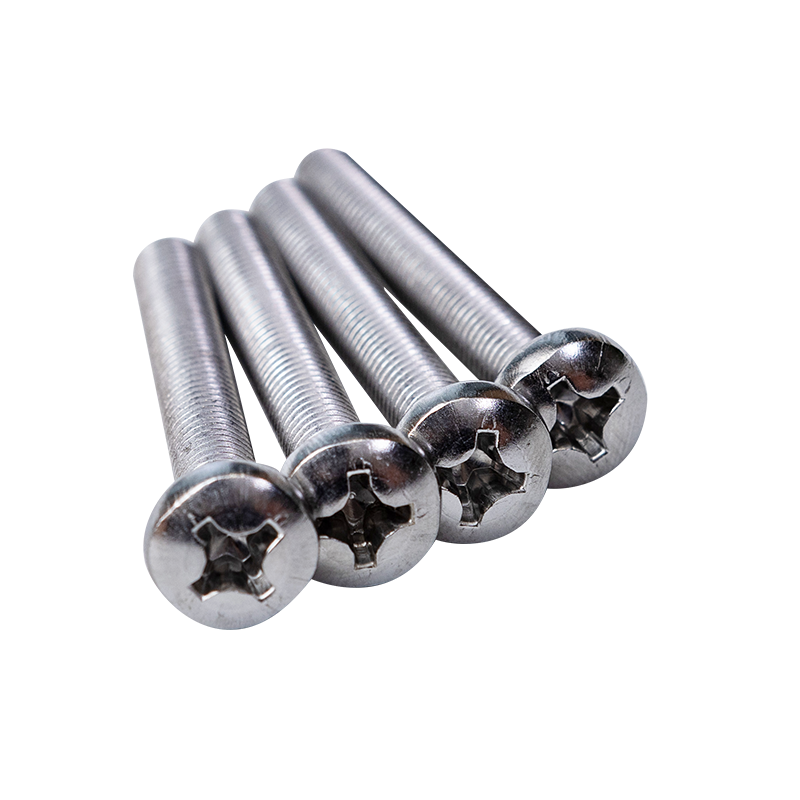
How to Prevent Galvanic Corrosion Between Stainless Steel and Aluminum
Since galvanic corrosion requires electrical contact and an electrolyte, prevention strategies target one or both of these requirements. The following methods are proven and widely used in engineering practice.
Insulating washers and gaskets. Placing a non-conductive washer — made from nylon, PTFE, rubber, neoprene, or EPDM — between the stainless fastener head and the aluminum surface breaks the direct electrical contact. This is the single most effective and practical solution for most applications. The washer must cover the entire contact interface; partial coverage leaves a conductive path and provides incomplete protection. Neoprene EPDM bonding washers are particularly effective as they also seal the joint against moisture ingress.
Anti-corrosion compounds and thread lubricants. Products such as Lanocote, TefGel, or lanolin-based pastes applied to fastener threads and bearing surfaces serve a dual function: they displace moisture from the joint and reduce the conductivity of any electrolyte that does enter. These compounds are widely specified in marine and outdoor aluminum assemblies and significantly extend service life even where full electrical isolation is not practical.
Anodizing the aluminum. Hard anodizing the aluminum component builds up a thick, dense aluminium oxide layer that is both corrosion-resistant and electrically insulating. An anodized surface substantially reduces the galvanic current available to drive corrosion at fastener contact points. This approach is common in aerospace and high-specification architectural applications.
Painting or coating the cathodic metal. Applying a dielectric coating — epoxy primer, polyurethane, or powder coat — over the stainless steel fastener for 30–50 mm beyond the joint prevents ion transport through any thin water film at the metal interface. Note that coating the anodic aluminum alone is counterproductive: any defect in the coating concentrates corrosion current at the exposed spot, accelerating localised attack. Always coat the cathodic (stainless steel) surface, or both surfaces together.
Choosing the Right Stainless Steel Grade for Aluminum Applications
While any stainless steel grade will cause galvanic corrosion in aluminum when conditions are met, grade selection still matters — primarily for the performance of the fastener itself in the service environment.
Grade 304 stainless steel is the standard choice for general-purpose applications in non-marine outdoor environments. Its chromium-nickel composition provides good corrosion resistance against moisture and mild industrial atmospheres. For most aluminum structures in temperate climates, 304 stainless fasteners with appropriate isolation measures perform reliably.
Grade 316 stainless steel adds molybdenum to the alloy, significantly improving resistance to chloride-induced pitting and crevice corrosion. In coastal environments, marine structures, or any application involving saltwater exposure or deicing chemicals, 316 stainless steel fasteners are the minimum acceptable specification. The improved performance of 316 is directed at keeping the fastener itself intact — it does not reduce the galvanic risk to the aluminum, which is managed separately through isolation.
For a full technical overview of how stainless grades, thread standards, and dimensional specifications affect fastener selection, the guide to stainless steel hex bolts covers these variables in detail across common industrial and structural applications.
One More Risk: Thread Galling
Engineers focused on galvanic corrosion sometimes overlook a second problem that occurs specifically with stainless steel fasteners in aluminum threads: galling, also called cold welding or seizure.
Galling occurs when the stainless steel fastener thread and the aluminum internal thread generate enough friction during tightening to locally weld the two surfaces together. The result is a fastener that cannot be removed without destroying the thread — a serious problem in assemblies that require periodic maintenance or disassembly. The risk is highest with fine-pitched threads, high tightening torques, and dry installation conditions.
Prevention is straightforward: apply a lubricant or anti-seize compound to the fastener threads before installation. Products containing copper, nickel, or PTFE are effective. Never install stainless fasteners into aluminum threads dry, particularly in larger diameters. Reducing tightening speed also helps, as galling is a heat-generating process — the faster the installation, the greater the frictional heat and the higher the seizure risk.
Addressing galling at the design stage is also possible: specifying a thread insert — such as a helical coil wire insert — into the aluminum parent material replaces the aluminum thread with a stainless thread, eliminating the dissimilar-metal thread interface entirely and solving both the galling and the local galvanic corrosion problem at the fastener bore simultaneously.
The Bottom Line
Stainless steel fasteners and aluminum do react — through galvanic corrosion — whenever direct metal contact and moisture are both present. Aluminum is always the metal that corrodes. But this reaction is fully preventable with the right combination of insulation, sealing compounds, grade selection, and design awareness.
The combination of stainless steel fasteners with aluminum is not inherently unsafe — it is one of the most widely used dissimilar-metal pairings in structural, marine, and industrial engineering worldwide. Success depends on understanding the conditions that drive corrosion and applying the appropriate countermeasures before the assembly enters service, not after the first signs of damage appear.

 No. 2 Bridge, Chuangxin Road, Dainan Town, Xinghua City, Taizhou City, Jiangsu Province
  +86-17315333748(Wechat)
 +86-17315333748(Wechat/Whatsapp)

