


 русский
 Español
 عربى
عربى italiano
Choosing the right fastener combination is critical in any fabrication or assembly project. Two topics that arise consistently in metalwork, automotive builds, and structural applications are the use of stainless steel screws on aluminum and the installation of threaded rivnuts. Both subjects involve important material science and installation principles that directly affect joint strength, longevity, and corrosion resistance. This guide covers both in full — explaining the risks and solutions around stainless-on-aluminum fastening, and providing a thorough overview of threaded rivnuts and where they excel.
Content
- 1 Using Stainless Screws on Aluminum: The Core Issue
- 2 How Serious Is the Galvanic Risk?
- 3 How to Prevent Galvanic Corrosion Between Stainless and Aluminum
- 4 Galling: The Other Risk with Stainless on Aluminum
- 5 What Are Threaded Rivnuts?
- 6 Types of Threaded Rivnuts
- 7 Where Threaded Rivnuts Are Used
- 8 How to Install Threaded Rivnuts Correctly
- 9 Rivnut Setting Tools: Manual vs. Powered
- 10 Combining Rivnuts with Stainless Screws in Aluminum Panels
Using Stainless Screws on Aluminum: The Core Issue
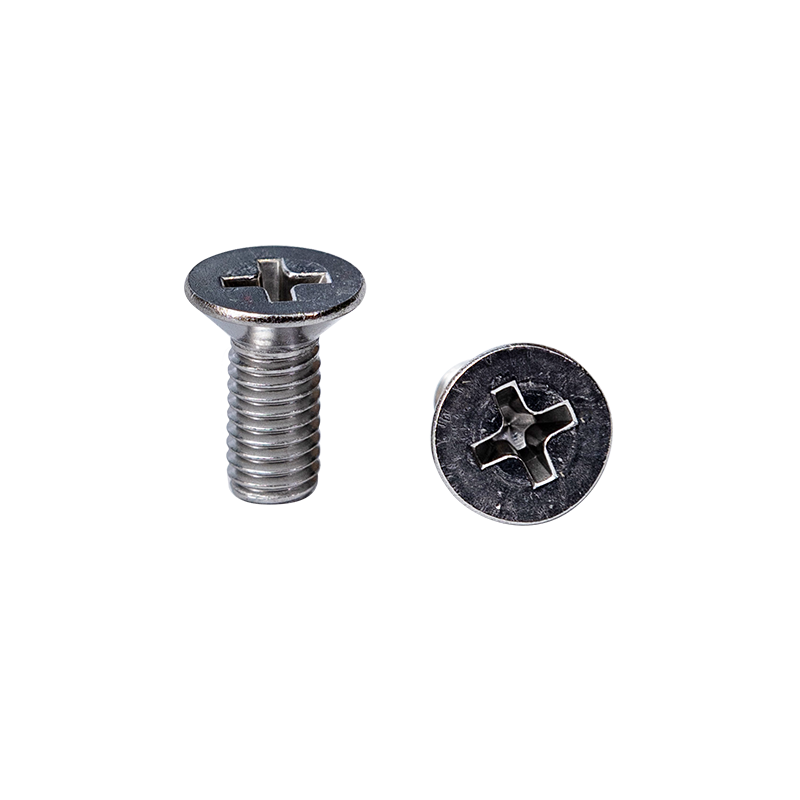
Stainless steel and aluminum are both widely respected for their corrosion resistance in isolation. However, when placed in direct contact in the presence of an electrolyte — such as moisture, rainwater, or condensation — they form a galvanic couple that accelerates corrosion of the less noble metal. In this pairing, aluminum is the less noble metal and will corrode preferentially, while the stainless steel screw remains largely unaffected.
This process is known as galvanic corrosion or bimetallic corrosion. Its severity depends on three factors: the difference in electrochemical potential between the two metals, the surface area ratio of the two metals, and the conductivity of the electrolyte present. In outdoor, marine, or high-humidity environments, galvanic corrosion between stainless and aluminum can become visible within months if no protective measures are taken.
How Serious Is the Galvanic Risk?
The galvanic potential difference between stainless steel (particularly 304 and 316 grades) and aluminum alloys is moderate — not as extreme as, for example, copper on aluminum. In dry indoor environments, galvanic corrosion between stainless screws and aluminum is rarely a practical concern because no electrolyte is present to complete the electrochemical circuit.
The risk becomes significant in the following conditions:
- Outdoor or exposed structures subject to rain, dew, or standing water.
- Marine environments where salt spray dramatically increases electrolyte conductivity, accelerating the galvanic reaction by a factor of several times compared to freshwater exposure.
- Areas where water pools around fastener heads or in threaded holes, maintaining prolonged contact between the two metals.
- Large stainless surface area relative to aluminum — a large stainless plate fastened with small aluminum inserts would corrode the aluminum rapidly, though the reverse geometry (small stainless screw in a large aluminum structure) is less aggressive.
The surface area ratio point is worth emphasising: a small stainless screw driven into a large aluminum section represents a relatively low galvanic risk because the cathode (stainless) is small relative to the anode (aluminum). The corrosion current is distributed over a large aluminum area, slowing localised attack. This is why stainless screws in aluminum are used successfully in many outdoor applications when properly treated.
How to Prevent Galvanic Corrosion Between Stainless and Aluminum
In most practical situations, stainless screws on aluminum are manageable with the right protective measures. The goal is to break the electrochemical circuit by preventing direct metal-to-metal contact or excluding the electrolyte entirely.
Use an Isolating Barrier
The most effective method is to electrically isolate the two metals using a non-conductive material. Options include nylon or plastic washers placed under the screw head, PTFE tape wrapped around screw threads, neoprene or rubber gaskets between mating surfaces, and non-conductive anti-seize compounds applied to threads before installation. Any of these breaks the galvanic circuit even if moisture is present.
Apply a Corrosion Inhibiting Compound
Zinc-based or lanolin-based corrosion inhibitors applied to the screw threads and under the head create a moisture barrier that significantly reduces galvanic activity. Products specifically formulated for bimetallic joints are available and widely used in aerospace, marine, and automotive applications. Reapplication is typically required every few years in harsh outdoor environments.
Consider Aluminum Screws or Coated Fasteners
Where structural requirements permit, using aluminum alloy screws eliminates the galvanic differential entirely. For higher-strength applications, zinc-plated steel or Dacromet-coated fasteners sit closer to aluminum on the galvanic scale than bare stainless and reduce, though do not eliminate, corrosion risk.
Design Out Water Traps
Beyond material choices, good joint design matters. Countersunk fasteners that sit flush with the surface, drainage holes near fastener locations, and sealants applied around screw heads in outdoor panels all reduce moisture retention at the joint and limit the duration of electrolyte contact.
Galling: The Other Risk with Stainless on Aluminum
Beyond galvanic corrosion, stainless steel screws driven directly into tapped aluminum threads carry a risk of thread galling — a form of adhesive wear where the screw and parent material seize together under friction during installation. This occurs because the oxide layer on stainless steel can break down under the heat and pressure of threading, causing micro-welding between the two materials.
Galling is more likely when screws are driven at high speed, when thread fit is too tight, or when threads are insufficiently lubricated. Applying an anti-seize lubricant — particularly nickel-based or copper-based compounds — before driving stainless screws into aluminum threads virtually eliminates galling risk and makes future disassembly far easier.
What Are Threaded Rivnuts?
A threaded rivnut — also known as a rivet nut, nutsert, or threaded insert — is a fastener that provides a permanent, load-bearing threaded hole in thin sheet material, hollow sections, or panels where access to the back face is impossible or impractical. The rivnut is inserted through a pre-drilled hole from the front face, then collapsed or expanded on the blind side using a setting tool, creating a secure mechanical anchor with an internal thread.
Once installed, a rivnut accepts a standard machine screw or bolt, allowing panels and components to be attached and removed repeatedly without damaging the parent material. This makes rivnuts fundamentally different from self-tapping screws, which cut their own thread directly into the substrate and progressively weaken it with each removal and reinsertion.
Types of Threaded Rivnuts
Rivnuts are manufactured in several body configurations to suit different applications and material thicknesses.
| Type | Body Style | Best Use |
|---|---|---|
| Round Body (Open End) | Smooth cylinder, full thread through | General purpose; allows longer bolt engagement |
| Round Body (Closed End) | Sealed base | Sealed panels, waterproof assemblies |
| Hexagonal Body | Six-sided outer profile | High torque resistance; prevents spin-out |
| Half-Hex Body | Partially knurled or hex section | Thin sheet with moderate torque needs |
| Flat Head (Countersunk) | Flush flange on front face | Flush surface finish requirements |
Rivnuts are available in aluminum, steel, stainless steel, and brass. Thread sizes range from M3 through M12 in metric, and from 6-32 through 3/8-16 in imperial, covering the vast majority of assembly requirements.
Where Threaded Rivnuts Are Used
The blind-side installation capability of rivnuts makes them indispensable across many industries and DIY applications:
- Automotive and motorsport: Attaching panels, brackets, and accessories to body sections, roll cages, and chassis rails where welding is impractical.
- Aerospace and aviation: Lightweight aluminum rivnuts in aircraft panels and interior structures where weight saving is critical.
- Electronics and enclosures: Providing robust screw points in thin aluminum or steel instrument enclosures.
- Marine applications: Mounting equipment, handles, and fittings to fiberglass and aluminum hulls and deck sections.
- Construction and cladding: Attaching facade panels, signage, and fixings to hollow structural sections.
- General fabrication: Any situation where a nut cannot be held behind a panel during screw installation.
How to Install Threaded Rivnuts Correctly
Correct installation is essential for rivnuts to achieve their rated pull-out and torque resistance. A poorly set rivnut will spin freely under load or pull through the panel — both of which are failure modes that require drilling out and starting again.
- Drill the correct hole diameter. Each rivnut size specifies a precise hole diameter — typically 0.1–0.3mm larger than the rivnut body outer diameter. An oversized hole prevents the compressed collar from gripping the panel adequately. Always consult the manufacturer's hole size chart for the specific rivnut being used.
- Deburr the hole. A clean, burr-free hole ensures the rivnut flange seats flush against the panel surface. Burrs can cause the flange to rock, resulting in uneven collapse of the body.
- Thread the rivnut onto the setting tool mandrel. Screw the rivnut fully onto the mandrel thread until it seats against the nose piece. Ensure the rivnut body is square to the tool.
- Insert the rivnut into the hole and set. Push the rivnut body fully through the hole until the flange is flush against the panel face. Squeeze the setting tool handle (for hand tools) or actuate the pneumatic or battery-powered tool until the body is fully collapsed. A distinct increase in resistance indicates the set is complete.
- Unthread the mandrel. Rotate the tool counterclockwise to release it from the installed rivnut. Do not pull — unscrewing is essential to avoid disturbing the fresh installation.
- Verify the installation. The rivnut should be flush, firm, and non-rotating under manual torque. If it spins, the body has not collapsed sufficiently against the panel — remove and replace with the next size up or check hole diameter.
Rivnut Setting Tools: Manual vs. Powered
Setting tool selection depends on installation volume and material thickness. For occasional use, a hand-operated lever-type rivnut tool costing £20–£60 is adequate for M3 through M8 rivnuts in thin sheet material. These tools are compact and require no power source.
For production environments or larger rivnut sizes, pneumatic or battery-powered rivnut tools are strongly recommended. These deliver consistent, calibrated setting force regardless of operator fatigue, significantly reducing installation failures. Battery-powered tools in particular have become the preferred choice in automotive and aerospace workshops due to their portability and speed — a skilled operator can set 200 or more rivnuts per hour compared to 40–60 with a manual tool.
Combining Rivnuts with Stainless Screws in Aluminum Panels
One practical solution that addresses both topics covered in this guide is the use of aluminum rivnuts installed into aluminum sheet, paired with stainless steel machine screws. This approach provides several advantages:
- The aluminum rivnut body eliminates galvanic risk at the panel interface, since like metals are in contact.
- The stainless screw threading into the rivnut's internal thread experiences limited galvanic exposure — the thread contact area is small and can be protected with anti-seize compound.
- The rivnut provides a clean, strong thread that survives repeated assembly cycles without wearing out the parent panel material.
- Load is distributed across the rivnut flange rather than concentrated on a single thread cut into thin sheet, significantly improving pull-out resistance.
For high-corrosion environments such as marine or coastal installations, stainless steel rivnuts paired with stainless screws represent the most robust combination — eliminating galvanic risk entirely while delivering the highest corrosion resistance of any standard fastener material pairing.

 No. 2 Bridge, Chuangxin Road, Dainan Town, Xinghua City, Taizhou City, Jiangsu Province
  +86-17315333748(Wechat)
 +86-17315333748(Wechat/Whatsapp)

