


 русский
 Español
 عربى
عربى italiano
Content
What Are Self-Tapping Bolts for Steel?
Self-tapping bolts for steel are fasteners engineered to create their own mating threads directly within a steel substrate as they are driven in. Rather than requiring a pre-threaded hole, these fasteners either cut away material to form a thread or displace and cold-work the surrounding steel to produce an interlocking thread form — all in a single installation step. The result is a secure, vibration-resistant connection that can be achieved faster and with fewer preparation steps than traditional bolted assemblies.
First developed for sheet metal assembly in the automotive and appliance industries, self-tapping fasteners have since become standard hardware across construction, HVAC, electrical enclosures, structural steel fabrication, and general manufacturing. Their ability to fasten steel without pre-tapping makes them especially valuable in field installations and repair work, where drilling a pilot hole and driving a self-tapper is far more practical than setting up tapping equipment.
It is worth noting a common terminology distinction: in practice, the terms self-tapping screw and self-tapping bolt are often used interchangeably for these fasteners, particularly in hex-head configurations designed for use with a wrench or socket. For the purposes of this guide, both terms refer to the same family of thread-forming or thread-cutting fasteners intended for steel substrates.
Types of Self-Tapping Bolts and When to Use Each
Not all self-tapping fasteners work the same way or perform equally across different steel thicknesses and hardness levels. Selecting the correct type is the first and most important step in any fastening application.
Thread-Cutting Self-Tappers (Type 1 and Type F)
Thread-cutting fasteners use sharp cutting edges near the tip to physically remove material and form a thread in the hole. They produce metal chips or swarf during installation, which must be cleared from blind holes. These fasteners are well suited to steel substrates thicker than approximately 1.2 mm, where there is sufficient material to support a full thread form. Because the threads are cut rather than formed, the fastener can be removed and reinserted without significant loss of holding strength — an important advantage in assemblies that require periodic disassembly for maintenance.
Thread-Forming (Cold-Forming) Self-Tappers
Thread-forming fasteners displace steel rather than cutting it, cold-working the surrounding material into a precise thread shape. No chips are produced, making them suitable for sealed enclosures and clean environments. The displaced material creates a work-hardened thread that is stronger than the original substrate, resulting in higher strip-out resistance than thread-cutting alternatives. Trilobular cross-section designs — sometimes called Plastite or Taptite variants — are widely used in this category, as the non-circular shank reduces the drive torque required while still producing a strong thread. Thread-forming is most effective in ductile steels and thinner gauges where material flow is possible without cracking.
Self-Drilling Screws (Tek Screws, Type 17)
Self-drilling fasteners combine a drill-point tip with a thread-cutting body, eliminating the need for a separate pilot hole entirely. The drill point penetrates the steel, the flutes clear the resulting chips, and the thread form engages the material in a single continuous operation. Self-drilling screws are categorized by drill-point number (1 through 5), which corresponds to the maximum steel thickness they can penetrate — from approximately 0.8 mm for a #1 point up to 12.7 mm for a #5 point. They are extremely popular in structural steel construction, metal roofing, cladding, and steel framing applications where speed of installation is critical.
| Type | Thread Action | Pilot Hole Required | Best For |
|---|---|---|---|
| Type 1 / Type F | Cutting (removes material) | Yes | Thicker steel (>1.2 mm), re-usable joints |
| Thread-Forming / Trilobular | Forming (displaces material) | Yes | Thin to medium gauge, sealed enclosures |
| Self-Drilling (Tek) | Drill + cut in one step | No | Structural steel, roofing, cladding, framing |
Key Selection Criteria for Steel Applications
Selecting the right self-tapping bolt for steel involves more than choosing the correct thread type. Several additional factors determine whether the fastener will perform reliably over its intended service life.
Steel Thickness and Hardness
The thickness of the steel being fastened directly affects thread engagement depth and therefore pull-out strength. A general guideline is to achieve a minimum of three full thread turns in the substrate. For thin-gauge sheet metal, this may require adjusting the thread pitch or using a finer thread form. Steel hardness matters equally — very hard steels may resist thread-cutting tips and require carbide-tipped or cobalt-alloyed fasteners to penetrate without tip failure.
Head Style and Drive Type
Hex washer head configurations are the most common for structural steel applications, providing a large bearing surface and high torque transfer through a socket or wrench. Pan head and flat head styles are used where a lower profile is needed. Drive recesses — Phillips, Torx, or hex socket — should be selected based on available tooling and the torque required. Torx drives offer superior cam-out resistance at high drive torques, which is particularly relevant when installing into harder steels where resistance is elevated.
Coating and Corrosion Protection
The corrosion resistance of the fastener must match the expected service environment:
- Zinc electroplate — adequate for dry interior applications; low cost
- Hot-dip galvanized — suitable for exterior and moderately corrosive environments
- Stainless steel (A2 / 304 or A4 / 316) — required for marine, coastal, chemical, or high-humidity environments
- Ceramic or polymer coating — used in roofing and cladding systems where long-term color matching and corrosion resistance are both required
Note that galvanic compatibility between the fastener coating and the steel substrate should also be considered, particularly in mixed-metal assemblies or when aluminum panels are being fastened to a steel structure.
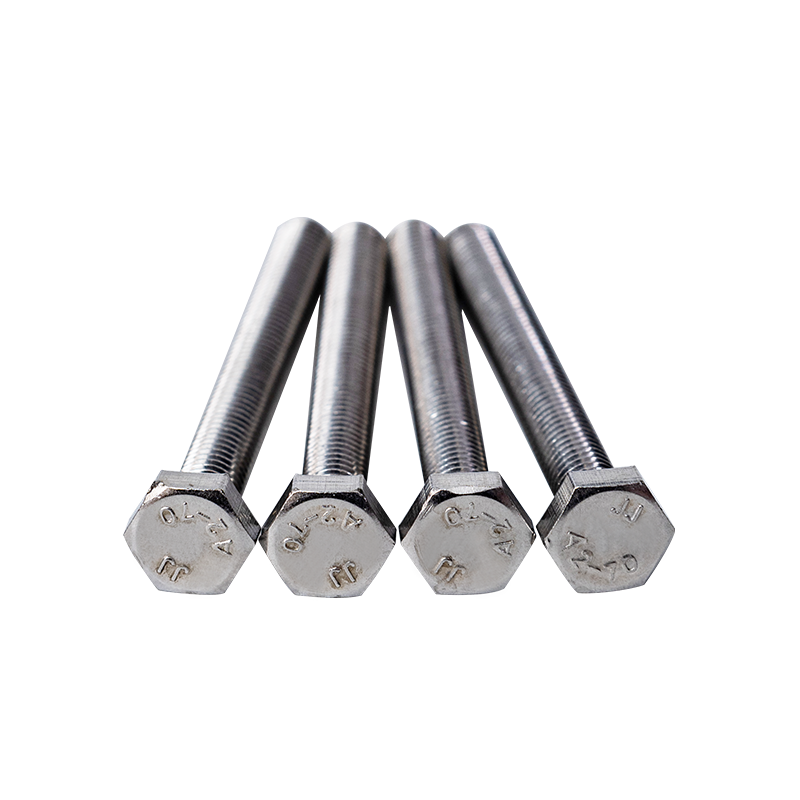
How to Tell the Grade of a Bolt
Identifying the grade of a bolt before installation is essential for ensuring the fastener is appropriate for the load, environment, and safety requirements of the assembly. Fortunately, both imperial and metric bolts carry standardized markings directly on the head that communicate grade information clearly — once you know how to read them.
SAE / Imperial Bolt Markings (Inch-Series)
Inch-series bolts manufactured to SAE standards are identified by radial lines (slash marks) stamped on the bolt head. The number of lines indicates the grade. Importantly, the lines represent grade above Grade 2, so a bolt with three lines is Grade 5, not Grade 3.
| Head Marking | SAE Grade | Min. Tensile Strength | Typical Use |
|---|---|---|---|
| No marks | Grade 2 | 74,000 psi | Light-duty, non-structural |
| 3 radial lines | Grade 5 | 120,000 psi | General structural, automotive |
| 6 radial lines | Grade 8 | 150,000 psi | High-stress, heavy machinery |
Metric Bolt Property Class Markings
Metric bolts use a two-number property class stamped directly onto the head — for example, 4.6, 8.8, 10.9, or 12.9. Unlike SAE markings which use lines, metric markings are numeric and can be read directly. The property class encodes both tensile strength and yield ratio:
- The number before the decimal × 100 gives the minimum tensile strength in MPa. For a 10.9 bolt: 10 × 100 = 1,000 MPa tensile strength.
- The number after the decimal × 10 gives the yield-to-tensile ratio as a percentage. For a 10.9 bolt: 9 × 10 = 90%, meaning the yield strength is 90% of tensile, or approximately 900 MPa.
| Property Class | Min. Tensile Strength | Min. Yield Strength | SAE Approximate Equivalent |
|---|---|---|---|
| 4.6 | 400 MPa | 240 MPa | Grade 2 |
| 8.8 | 800 MPa | 640 MPa | Grade 5 |
| 10.9 | 1,000 MPa | 900 MPa | Grade 8 |
| 12.9 | 1,200 MPa | 1,080 MPa | No direct SAE equivalent |
Stainless Steel Bolt Markings
Stainless steel fasteners do not use SAE grade lines or metric property class numbers. Instead, they are marked with an austenitic class designation:
- A2 — 304 stainless steel; suitable for general corrosion-resistant applications
- A4 — 316 stainless steel; suitable for marine, chemical, and highly corrosive environments due to molybdenum content
These markings are followed by a strength designation such as A2-70 or A4-80, where the number represents the minimum tensile strength in units of 10 MPa (e.g., A2-70 = 700 MPa minimum tensile strength).
When Markings Are Missing or Unclear
Bolts with no head markings whatsoever — particularly if they appear to be cut or machined rather than forged — should be treated as Grade 2 / Property Class 4.6 at best, and should never be used in structural or safety-critical applications without verification. In critical assemblies, material test reports or mill certificates should accompany fasteners to confirm grade compliance, particularly for Grade 10.9, Grade 12.9, or ASTM-specified structural bolts.
Matching Bolt Grade to Your Steel Application
For self-tapping bolts used in steel, grade selection matters just as much as thread type. A self-tapping fastener that is too soft will strip its own threads or deform before reaching the required clamp force. One that is too hard for the substrate may cause cracking or stress concentration in thinner steel sections.
As a practical guide:
- For light-gauge sheet metal (HVAC, enclosures, non-structural cladding): case-hardened low-carbon steel self-tappers are standard; no specific grade marking is typically applied, but the fastener hardness must exceed the substrate
- For structural steel framing and purlins: self-drilling Tek screws with a minimum hardness of HRC 36–39 are typical; look for certification to standards such as AS 3566 or ASTM C1513
- For high-load or preloaded joints: standard bolt-and-nut assemblies of Grade 8.8 or 10.9 are preferred over self-tappers; self-tapping configurations are rarely used where precise and repeatable clamp force is required
- For stainless steel substrate or corrosive service: use A2 or A4 stainless self-tappers; avoid mixing stainless fasteners with carbon steel substrates in wet environments due to galvanic corrosion risk
Installation Tips for Best Performance
Even a correctly specified self-tapping bolt will underperform if installed improperly. The following practices consistently improve joint quality and long-term reliability:
- Use the correct pilot hole diameter. Pilot holes that are too small increase drive torque and risk tip breakage or thread stripping. Pilot holes that are too large reduce thread engagement and pull-out strength. Most fastener manufacturers publish pilot hole size tables for their specific products across common steel gauges.
- Control drive speed and torque. For self-drilling screws, excessive RPM during the drilling phase generates heat that can harden the steel locally and resist thread engagement. A moderate speed of 1,500–2,500 RPM with consistent axial pressure is generally recommended. Use a torque-limiting driver where possible to avoid over-driving.
- Do not re-use self-tapping fasteners in the same hole. Once a self-tapper is removed, the threads in the steel substrate are formed to that specific fastener. Re-inserting a new fastener in the same hole risks cross-threading and significantly reduced holding strength. If disassembly and reassembly are anticipated, consider a thread insert or conventional tapped-hole approach.
- Check seating of the washer or head. In roofing and cladding applications with neoprene or EPDM-bonded washers, the washer should be compressed uniformly and visibly without being over-compressed to the point of deformation. Over-driven Tek screws in thin metal roofing are a leading cause of water infiltration at fastener locations.
- Inspect for chips in blind holes. When using thread-cutting self-tappers in closed sections or blind holes, swarf accumulation can impede full seating. Clear chips before driving the fastener to its final depth.
Following these practices ensures that the self-tapping bolt achieves the thread engagement, clamp force, and service life the design intends — and that the effort invested in selecting the right fastener grade and type translates into a reliable, long-lasting connection.

 No. 2 Bridge, Chuangxin Road, Dainan Town, Xinghua City, Taizhou City, Jiangsu Province
  +86-17315333748(Wechat)
 +86-17315333748(Wechat/Whatsapp)

