


 русский
 Español
 عربى
عربى italiano
Content
- 1 Yes, Aluminum Does React with Stainless Steel — But It's Manageable
- 2 What Makes Stainless Steel Bolts a Go-To Fastener Choice
- 3 The Galvanic Reaction Between Aluminum and Stainless Steel Explained
- 4 Risk Assessment: When Using Stainless Steel Bolts in Aluminum Is Safe vs. Problematic
- 5 How to Prevent Galvanic Corrosion When Using Stainless Steel Bolts with Aluminum
- 6 A Secondary Problem: Galling Between Stainless Steel Bolts and Aluminum Threads
- 7 Practical Installation Guidelines for Stainless Steel Bolts in Aluminum
- 8 Frequently Asked Questions About Stainless Steel Bolts and Aluminum Compatibility
Yes, Aluminum Does React with Stainless Steel — But It's Manageable
When a stainless steel bolt is used to fasten aluminum, the two metals are in direct electrical contact. Because they sit apart on the galvanic series, an electrochemical reaction can occur in the presence of an electrolyte — such as rainwater, humidity, or salt spray — causing the aluminum to corrode preferentially. The aluminum corrodes; the stainless steel bolt does not.
The good news is that this reaction — known as galvanic corrosion — is well understood, quantifiable by the surface area ratio involved, and preventable with the right isolation techniques. Millions of structural assemblies worldwide use stainless steel bolts in aluminum components successfully, provided they are designed and installed correctly. This article explains the science, the real risk levels in different environments, and exactly what to do to prevent damage.
What Makes Stainless Steel Bolts a Go-To Fastener Choice
Before addressing compatibility, it helps to understand why stainless steel bolts are so widely specified in the first place. Stainless steel fasteners — primarily grades 304, 316, and 18-8 — owe their corrosion resistance to a thin, stable chromium oxide passive layer that forms spontaneously on the surface and self-heals when scratched.
Common Stainless Steel Bolt Grades and Their Properties
| Grade | Composition | Tensile Strength | Corrosion Resistance | Typical Use |
|---|---|---|---|---|
| 18-8 (302/304) | 18% Cr, 8% Ni | ~700 MPa | Good | General construction, indoor/outdoor |
| 316 | 18% Cr, 10% Ni, 2% Mo | ~580–620 MPa | Excellent (chloride) | Marine, coastal, chemical exposure |
| 410 | 12% Cr (martensitic) | ~860 MPa | Moderate | High-load structural applications |
| A4-80 (316 equiv.) | 18% Cr, 12% Ni, 2.5% Mo | 800 MPa min. | Excellent | Marine hardware, offshore structures |
Grade 316 stainless steel bolts are the most specified fastener for aluminum assemblies exposed to outdoor or marine environments, due to the addition of molybdenum which improves resistance to chloride-induced pitting — the same mechanism that accelerates galvanic attack between dissimilar metals in saltwater environments.
The Galvanic Reaction Between Aluminum and Stainless Steel Explained
Galvanic corrosion requires three simultaneous conditions: two electrochemically dissimilar metals, electrical contact between them, and an electrolyte bridging both surfaces. Remove any one of these three, and the reaction stops entirely. Understanding this is the foundation of every prevention strategy.
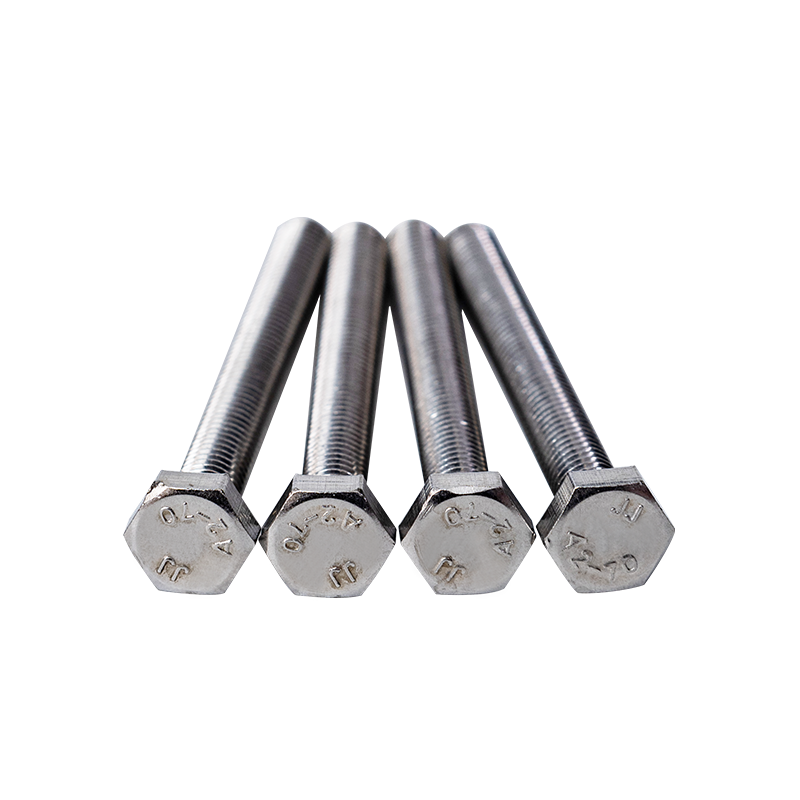
Where Aluminum and Stainless Steel Sit on the Galvanic Series
The galvanic series ranks metals by their electrochemical potential in a given electrolyte (usually seawater). Metals far apart on this scale corrode faster when coupled; metals close together are relatively compatible. Aluminum sits at approximately −0.76 V vs. SCE, while stainless steel (passive) sits at approximately −0.05 to +0.20 V vs. SCE — a potential difference of 0.5–1.0 V depending on the grade and conditions.
This gap is large enough to drive meaningful galvanic current. Aluminum, being more anodic (less noble), acts as the anode and corrodes. The stainless steel bolt, being more cathodic (more noble), is protected and remains unaffected. In practical terms: the aluminum around the bolt hole corrodes; the stainless steel bolt itself does not degrade.
Why Surface Area Ratio Is the Critical Variable
The severity of galvanic corrosion is heavily influenced by the ratio of the cathodic surface area (stainless steel) to the anodic surface area (aluminum). A large cathode driving a small anode concentrates corrosion current into a small area and produces rapid, severe attack.
- Unfavorable ratio (dangerous): A large stainless steel plate fastened with a single aluminum rivet. The aluminum rivet will corrode very rapidly — potentially failing in months in a marine environment.
- Favorable ratio (less severe): A stainless steel bolt fastening a large aluminum panel. The large aluminum area distributes the galvanic current density over a broad surface, slowing the corrosion rate significantly.
- The rule of thumb: Always use the more noble metal (stainless steel) as the smaller component — i.e., the bolt — never as the large sheet. This is why stainless steel bolts in aluminum structures are far more acceptable than aluminum bolts in stainless steel structures.
How Much Corrosion Actually Occurs — Real-World Data
A study by the European Aluminium Association found that galvanic corrosion between aluminum alloy 6061-T6 and 316 stainless steel in continuous salt spray (ASTM B117 conditions) produced measurable aluminum mass loss of approximately 0.3–0.8 mg/cm²/year at the contact zone — significant for thin sheet material, but often negligible for thick structural components. In dry inland environments with occasional moisture, attack rates drop to near zero. The environment, not just the metal pairing, determines real-world risk.
Risk Assessment: When Using Stainless Steel Bolts in Aluminum Is Safe vs. Problematic
Not all applications carry equal risk. The actual danger of galvanic corrosion between stainless steel bolts and aluminum depends heavily on exposure conditions, electrolyte availability, and the design life required. The table below provides a practical framework.
| Environment | Electrolyte Risk | Corrosion Risk | Isolation Required? |
|---|---|---|---|
| Dry indoor (climate-controlled) | Negligible | Very Low | No |
| Outdoor, inland, low humidity | Low (rainwater) | Low–Moderate | Recommended |
| Outdoor, high humidity / rain | Moderate | Moderate | Strongly recommended |
| Coastal / salt air environment | High (NaCl) | High | Mandatory |
| Submerged / splash zone (marine) | Continuous | Very High | Mandatory + sealant |
A key takeaway from the table: in dry indoor environments — electronics enclosures, furniture hardware, interior architectural fittings — stainless steel bolts can be used in aluminum without any special precautions and will not cause corrosion problems over a normal service life. The risk only becomes practically significant when a conductive electrolyte is consistently present.
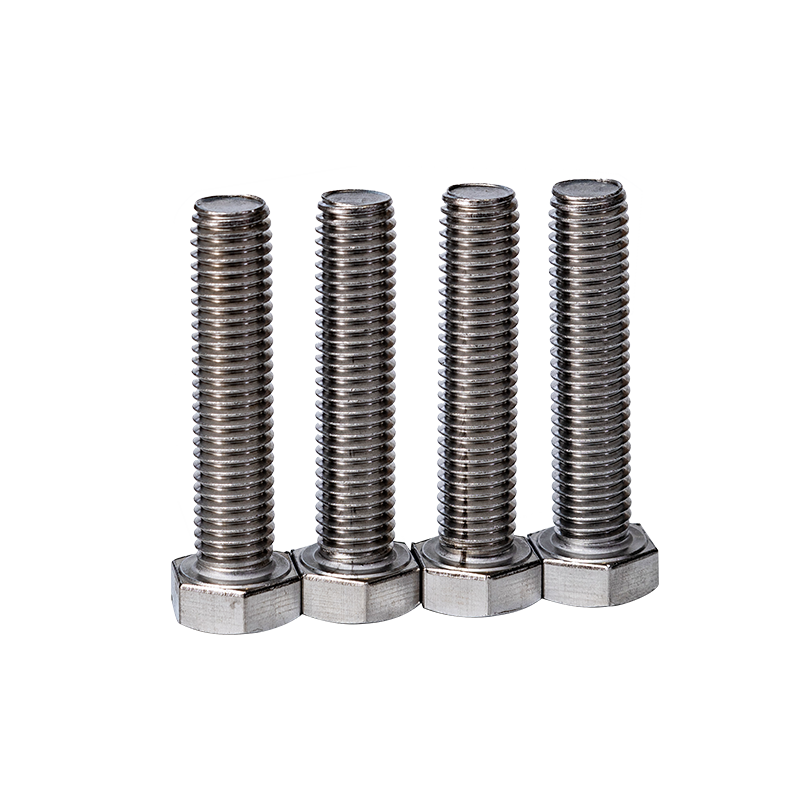
How to Prevent Galvanic Corrosion When Using Stainless Steel Bolts with Aluminum
Prevention always comes back to the three required conditions for galvanic corrosion. Eliminating any one of them — dissimilar metals, electrical contact, or electrolyte — stops the reaction. In practice, the most reliable approach combines isolation with sealant application, since eliminating the electrolyte alone in outdoor environments is rarely feasible long-term.
Isolation Washers and Sleeves
Non-conductive isolation bushings or washers made from nylon, PTFE (polytetrafluoroethylene), or neoprene are placed between the stainless steel bolt shank and the aluminum hole wall, and between the bolt head/nut and the aluminum surface. This breaks the direct metal-to-metal electrical path. PTFE isolation kits are the most durable choice for high-temperature or chemically aggressive environments, rated for continuous use up to 260°C.
- Nylon washers: low cost, suitable for ambient temperature applications below 80°C
- PTFE sleeves: chemically inert, excellent for marine and chemical environments
- Neoprene washers: flexible, good for structural joints requiring some vibration damping
Anti-Corrosion Compounds and Joint Sealants
Applying a non-conductive jointing compound or sealant to the bolt hole and contact surfaces before assembly excludes moisture from the joint, addressing the electrolyte condition directly. Commonly used materials include:
- Zinc-chromate or zinc-rich primer: Applied to the aluminum around bolt holes in structural aerospace and defense applications; provides sacrificial protection even if the coating is scratched.
- Polysulfide sealant: Used extensively in aerospace and marine aluminum structures; fills all voids and permanently excludes water from the joint interface.
- Lanolin-based anti-seize compound: A practical choice for maintenance environments where bolts will be removed periodically; also prevents the stainless steel bolt from seizing in the aluminum thread due to galling.
- Silicone sealant: A widely available option for general construction; applied around the bolt head perimeter after tightening to seal the joint perimeter against water ingress.
Anodizing the Aluminum
Anodizing produces a thick, hard aluminum oxide layer (typically 5–25 µm for Type II; 25–75 µm for Type III hard anodize) that is electrically non-conductive. An anodized aluminum surface in direct contact with a stainless steel bolt is significantly less susceptible to galvanic corrosion because the oxide layer interrupts the electrical path. However, anodizing is compromised at machined hole walls and cut edges where the base metal is exposed, so sealant application at these points is still recommended in wet environments.
Choosing a More Compatible Fastener Material
In applications where isolation is impractical or where long-term maintenance access is limited, switching to a more galvanically compatible fastener material eliminates the problem at the design stage:
- Aluminum bolts: Zero galvanic potential difference. Suitable for low-load, non-structural applications. Limited strength (~300 MPa tensile for 2024 aluminum alloy bolts vs. 700+ MPa for stainless steel).
- Titanium bolts: Sit close to stainless steel on the galvanic series, but produce less galvanic drive than stainless steel against aluminum. Used in aerospace and high-performance marine applications where weight savings justify the cost premium (typically 5–10× the price of stainless steel bolts).
- Hot-dip galvanized steel bolts: The zinc coating is anodic to both steel and aluminum, providing some sacrificial protection. A practical choice for structural steel-to-aluminum connections in construction where full isolation is not specified.
A Secondary Problem: Galling Between Stainless Steel Bolts and Aluminum Threads
Galvanic corrosion is not the only concern when threading stainless steel bolts into aluminum. Galling — also called cold welding — occurs when the stainless steel bolt thread tears and welds to the softer aluminum thread under the pressure and heat generated during tightening. The result is a seized fastener that cannot be removed without destroying the thread or the surrounding material.
Stainless steel is particularly prone to galling because its passive oxide layer breaks down under friction, exposing bare metal that cold-welds to the mating surface. When this happens in an aluminum tapped hole, the aluminum thread — being the softer material — is typically the one destroyed.
Preventing Galling in Aluminum-Threaded Connections
- Apply anti-seize lubricant: Nickel-based, copper-based, or molybdenum disulfide (MoS₂) anti-seize compound applied to the bolt thread before installation is the single most effective preventive step. It reduces the coefficient of friction by 40–60% compared to a dry assembly.
- Use threaded inserts: Stainless steel Helicoil or Keensert threaded inserts installed into the aluminum provide a stainless-to-stainless thread interface, eliminating both galling risk and aluminum thread damage. This is standard practice in aerospace and automotive aluminum assemblies.
- Control installation torque: Over-torquing dramatically increases galling risk. Always use a calibrated torque wrench and follow the manufacturer's torque specification — which for stainless steel bolts in aluminum is typically 15–25% lower than the standard stainless-to-steel torque value to account for aluminum's lower bearing strength.
- Ensure adequate thread engagement: A minimum of 1.5× bolt diameter thread engagement is recommended for aluminum to distribute load and reduce unit thread stress. For critical structural connections, 2× diameter is preferred.
Practical Installation Guidelines for Stainless Steel Bolts in Aluminum
Following a consistent installation process significantly reduces both galvanic and mechanical risks. The steps below apply to outdoor structural connections where moisture exposure is expected — the most demanding common scenario.
- Select 316 stainless steel bolts for marine or coastal applications; 304/18-8 is adequate for most other outdoor environments.
- Install PTFE or nylon isolation washers under the bolt head and nut, and a PTFE sleeve through the bolt hole if electrical isolation is required.
- Apply anti-seize compound (MoS₂ or nickel-based) to the bolt threads before insertion to prevent galling.
- Apply a bead of polysulfide or silicone sealant around the perimeter of the bolt head and nut after tightening to seal against moisture ingress.
- Torque to the specified value for the bolt grade and diameter — use a torque wrench, not an impact driver.
- Inspect the joint annually in high-exposure environments; re-apply sealant if cracking or shrinkage is observed.
Following this sequence, stainless steel bolts can be used reliably in aluminum structures for service lives of 20–30 years or more, even in coastal environments — as demonstrated by the long-term performance of aluminum-framed solar mounting systems and marine-grade architectural cladding systems worldwide.
Frequently Asked Questions About Stainless Steel Bolts and Aluminum Compatibility
Will a stainless steel bolt corrode when used in aluminum?
No. In a galvanic couple between stainless steel and aluminum, the stainless steel is the more noble (cathodic) metal and is protected. The stainless steel bolt itself will not corrode — only the surrounding aluminum may be affected. This is why stainless steel bolts remain structurally intact even in assemblies where the aluminum around the bolt hole shows signs of white powdery corrosion (aluminum hydroxide).
Is 304 or 316 stainless steel better for aluminum connections outdoors?
For general outdoor use more than 1 km from the coast, 304 stainless steel bolts are adequate and more cost-effective. Within 1 km of saltwater, or for any application exposed to deicing salts (road salt, walkway treatment), 316 stainless steel is the correct choice. The 2% molybdenum addition in 316 specifically resists chloride-induced crevice corrosion, which can occur in the tight contact zone between the bolt and aluminum even with good isolation.
Can stainless steel bolts be used with all aluminum alloys?
Yes, the galvanic relationship is consistent across aluminum alloys — all sit in the same general range on the galvanic series relative to stainless steel. However, some aluminum alloys are inherently more corrosion-resistant than others: 5000-series (marine-grade) and 6000-series alloys are significantly more corrosion-resistant than 2000-series (copper-containing) and 7000-series (zinc-containing) alloys, which are more active and corrode faster in galvanic contact with stainless steel in wet environments.

 No. 2 Bridge, Chuangxin Road, Dainan Town, Xinghua City, Taizhou City, Jiangsu Province
  +86-17315333748(Wechat)
 +86-17315333748(Wechat/Whatsapp)

