


 русский
 Español
 عربى
عربى italiano
What Are Threaded Rivets (Rivnuts) and How Do They Work?
A threaded rivet — commonly known by the trade name Rivnut® or as a blind rivet nut — is a one-piece internally threaded fastener insert designed to create a permanent, load-bearing threaded attachment point in materials that cannot be tapped, or where access to the reverse side of the workpiece is impossible. It is installed entirely from one side of the panel, making it the standard solution for what engineers call "blind" fastening situations.
The working principle is straightforward. A Rivnut is inserted into a pre-drilled hole with its threaded interior exposed on the installation side. A setting tool — either manual, pneumatic, or hydropneumatic — pulls a mandrel through the insert while holding the flange fixed against the panel face. This compressive action collapses the body of the Rivnut on the blind side, creating a mechanical bulge or flare that clamps the panel from behind. Once set, the insert provides a strong, permanent internal thread that accepts a standard bolt or machine screw — and the connection can be assembled, disassembled, and reassembled as many times as needed without damaging the insert.
As the essential guide to threaded rivet nut inserts from Bay Supply notes, threaded inserts and Rivnuts have been used extensively in aerospace, transportation, clean energy, medical, and electronics applications for decades — valued precisely because they are easy to set and provide a fast, long-lasting bond that is also ideal for repairing stripped threads.
Content
- 1 What Are Rivnuts Commonly Used For? The Key Applications
- 2 Types of Rivnuts: Body Shape, Head Style, and Material
- 3 Rivnuts in Thin Sheet Metal: Why They Outperform Tapped Threads
- 4 Stainless Steel Rivnuts: When Corrosion Resistance Is Non-Negotiable
- 5 Rivnut vs Self-Tapping Bolt: Which Should You Choose?
- 6 Installation Steps and Tooling for Rivnuts
- 7 Specifying and Sourcing the Right Rivnut
What Are Rivnuts Commonly Used For? The Key Applications
Rivnuts are deployed wherever a reliable threaded connection is needed in a location that is thin, hollow, brittle, or physically inaccessible from behind. Their application range spans virtually every manufacturing and construction sector:
- Automotive manufacturing and repair — attaching trim panels, brackets, electronics housings, and body components to thin-gauge steel or aluminum body panels. Rivnuts allow disassembly for repair or upgrade without damaging the base panel, unlike welded nuts or tapped threads in thin sheet metal. They are extensively used in door skins, underbody panels, seat track mounting, and instrument cluster surrounds.
- Aerospace and aviation — securing instrument panels, cable trays, access covers, ducting, and interior fittings to aircraft skin panels. The original Rivnut® was in fact invented in the 1930s specifically for aircraft manufacturing, where panel access from both sides is frequently impossible. Weight-optimized aluminum Rivnuts remain standard in this sector.
- Electronics and electrical enclosures — mounting circuit boards, DIN rails, cable management hardware, and component brackets inside sheet metal enclosures. The ability to create a tapped thread in a thin steel or aluminum enclosure wall — without welding or access to the interior back surface — makes Rivnuts the dominant choice for enclosure manufacturers worldwide.
- Construction and architectural metalwork — fastening cladding panels, curtain wall components, signage, and access hatches to structural frames and hollow sections. In tubular structural members, where internal access is physically impossible, Rivnuts provide the only practical method of creating a threaded connection without welding.
- Furniture and interior fitout — connecting hardware, hinges, drawer mechanisms, and structural brackets to hollow-section furniture frames, particularly in commercial and contract furniture where bolt-together assembly and disassembly for transport are required.
- Marine and transportation equipment — attaching fittings, handles, brackets, and covers to hollow structural members in boats, caravans, buses, and rail vehicles. Stainless steel Rivnuts are specified in marine applications for their resistance to saltwater corrosion.
- Thread repair — reinstating a lost or damaged threaded connection in thin panel material without replacing the base component. A Rivnut installed over a stripped or enlarged hole restores full thread strength quickly and at low cost.
Types of Rivnuts: Body Shape, Head Style, and Material
Rivnuts are not a single product but a family of fasteners with meaningful variation in geometry and material. Selecting the right configuration requires matching each design variable to the application's specific demands.
Body shape determines spin-out resistance — the tendency of the insert to rotate in the hole when torque is applied during bolt installation:
- Round body — the standard form, suitable for round drilled holes. Relies on the compressive grip of the set bulge for retention. Adequate for most general applications but can spin in the hole if the bolt is tightened to very high torque in a soft base material.
- Hexagonal body — fits a hex-shaped punched hole and provides complete resistance to rotation under torque. Specified for heavy-duty applications where maximum clamp force is required, or where the base material is too soft to resist round-body spin-out reliably.
- Knurled body — a round body with longitudinal knurling on the outer surface. The knurls bite into the hole wall to provide intermediate spin-out resistance without requiring a hex-punched hole.
Head style affects the bearing surface and installation-side appearance:
- Flanged (standard) head — a flat collar that seats on the panel surface, distributing clamping load and preventing the insert from pulling through. The most common configuration for general use.
- Countersunk head — sits flush with the panel surface when installed in a countersunk hole. Used where a smooth, projectionless surface is required — consumer electronics, automotive exterior panels, or visible architectural surfaces.
- Small flange / low-profile head — for applications with restricted installation-side clearance, where a standard flange would interfere with mating components.
Material determines mechanical performance and corrosion behavior:
| Material | Strength | Corrosion Resistance | Best Applications |
|---|---|---|---|
| Aluminum | Moderate | Good (non-marine) | Aerospace, electronics, lightweight structures |
| Carbon steel (zinc plated) | High | Moderate (indoor/dry) | Automotive body, general fabrication |
| Stainless steel 304 | High | Excellent (atmospheric) | Outdoor construction, food equipment, architecture |
| Stainless steel 316 | High | Superior (marine/chemical) | Marine, coastal, chemical processing |
Rivnuts in Thin Sheet Metal: Why They Outperform Tapped Threads
Tapping threads directly into thin sheet metal is a common approach — and a frequent source of premature joint failure. The fundamental problem is thread engagement length. A standard M6 thread requires a minimum engagement of approximately 6mm (one bolt diameter) for full load-bearing capacity. A 1.5mm steel panel provides exactly 1.5mm of engagement: 25% of the minimum requirement. The tapped thread will strip under any significant axial or transverse load.
Rivnuts solve this problem structurally. The deformed body of the set Rivnut clamps the panel mechanically between the flange and the collapsed bulge on the blind side. The thread load is transferred not into the thin panel material but into the Rivnut's own body, which is designed and sized to carry it. The result is a thread that can sustain full bolt-clamp loads regardless of the base panel thickness — a capability that tapped threads in thin sheet simply cannot replicate.
Additionally, the Rivnut installation creates no chips or debris on the blind side of the panel — an important operational advantage in sealed enclosures, food processing equipment, and electronics assemblies where contamination control matters.
Stainless Steel Rivnuts: When Corrosion Resistance Is Non-Negotiable
In environments where moisture, salt, chemicals, or humidity are present, the material of the Rivnut is as important as its size and geometry. A carbon steel Rivnut installed in a coastal architectural panel will begin to corrode within months, staining the surrounding surface and eventually losing its mechanical grip as the body section corrodes away.
Stainless steel Rivnuts — particularly Grade 316 — provide corrosion resistance that is inherent throughout the body of the fastener, not dependent on a surface coating that can be scratched during installation or abraded in service. The passive oxide layer that gives stainless steel its corrosion resistance reforms automatically when damaged, maintaining protection across the full operational life of the fastener.
Specification guidance: Grade 304 stainless Rivnuts are appropriate for outdoor architectural, construction, and general industrial environments where chloride exposure is limited. Grade 316 is required for marine structures, coastal installations, swimming pool surrounds, chemical processing equipment, and any environment where chloride concentrations are elevated. For the full framework of stainless steel grade selection by environment and load class, the stainless steel bolt grades and material selection guide provides the ISO 3506 and ASTM standards context needed for confident specification. For stainless fasteners across the full product range, stainless steel fasteners for corrosion-resistant assemblies covers compatible hardware in the same material grades.
Rivnut vs Self-Tapping Bolt: Which Should You Choose?
Both Rivnuts and self-tapping bolts create threaded connections in thin metal without requiring access to the back face. The right choice depends on the specific requirements of the joint — particularly reusability, load type, and panel thickness.
| Criterion | Rivnut (Threaded Insert) | Self-Tapping Bolt |
|---|---|---|
| Blind-side access required | No — installs from one side | No — installs from one side |
| Disassembly and reassembly | Unlimited — insert is permanent, bolt is removable | Limited — thread degrades with repeated removal |
| Thread strength in thin panels | Full load-bearing — independent of panel thickness | Limited by panel thickness and thread engagement depth |
| Installation tooling required | Yes — setting tool (hand, pneumatic, or hydropneumatic) | Minimal — standard power driver |
| Pull-out resistance | High — mechanical clamp between flange and bulge | Moderate — depends on thread engagement length |
| Panel thickness range | 0.5mm to 8mm+ depending on insert series | Up to ~6mm for standard types |
| Cost per joint | Higher (insert + setting tool) | Lower (bolt only) |
| Best suited for | Structural joints, frequent disassembly, hollow sections | Light-duty, one-time or rare disassembly, production assembly |
For a directly comparable analysis across blind fastener types including barrel nuts, Rivnuts, and stainless-into-aluminium configurations, the article on choosing between barrel nuts, rivnuts, and stainless into aluminium provides a practical decision framework for the most common blind fastening scenarios.
Installation Steps and Tooling for Rivnuts
Correct installation is essential to achieving the full mechanical performance of a Rivnut. An under-set insert will not develop full clamping force; an over-set insert can crack or deform unpredictably. The process has five steps:
- Drill the hole — the hole diameter must match the Rivnut's nominal body diameter. Undersized holes prevent insertion; oversized holes reduce grip strength. Use the manufacturer's specified hole diameter for the insert series being installed.
- Insert the Rivnut — thread the setting mandrel of the installation tool into the Rivnut's internal threads, then insert the body into the prepared hole until the flange is flush against the panel surface.
- Set the insert — operate the setting tool to pull the mandrel while the nose piece holds the flange fixed. The body collapses on the blind side, forming the mechanical bulge that locks the insert in place.
- Release and inspect — reverse the mandrel to disengage from the installed insert. Check that the flange sits flat against the panel and that the insert does not rotate when torque is applied by hand.
- Install the fastening bolt — thread the appropriate bolt or machine screw into the installed insert. Apply torque to specification; do not exceed the insert's rated maximum torque.
Tooling options range from simple manual lever tools for low-volume or field use, through pneumatic tools for production line installation, to hydropneumatic systems for large-diameter or high-strength inserts in heavy manufacturing. For stainless steel inserts in thick panels, manual tools are generally inadequate — pneumatic or hydropneumatic tools ensure consistent set force and prevent under-setting.
Specifying and Sourcing the Right Rivnut
When specifying Rivnuts for a project, the key parameters to define are: thread size (M4, M5, M6, M8, M10, etc.), grip range (the range of panel thicknesses the insert will accommodate), body style (round, hex, or knurled), head style (flanged, countersunk, or low-profile), and material grade. Always verify that the Rivnut's rated pull-out and push-out loads exceed the maximum expected joint loads with an appropriate safety factor.
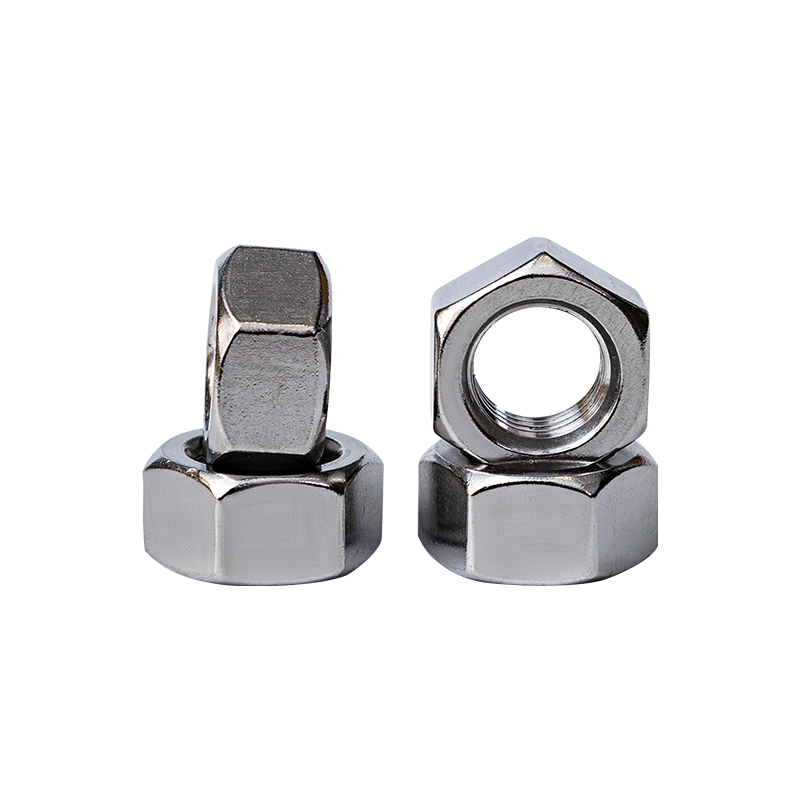
For assemblies where the Rivnut will be mated with a standard hex bolt, sourcing compatible fasteners in the same material grade is essential to avoid galvanic corrosion at the thread interface. Stainless steel hex nuts as mating fasteners in matching 304 or 316 grade complete the corrosion-resistant joint specification for outdoor and industrial applications. Getting the full fastener system — insert, bolt, and nut — from a single supplier with consistent material certification simplifies procurement and eliminates the material mismatch risk that is one of the most common sources of premature joint failure in corrosive environments.

 No. 2 Bridge, Chuangxin Road, Dainan Town, Xinghua City, Taizhou City, Jiangsu Province
  +86-17315333748(Wechat)
 +86-17315333748(Wechat/Whatsapp)

